
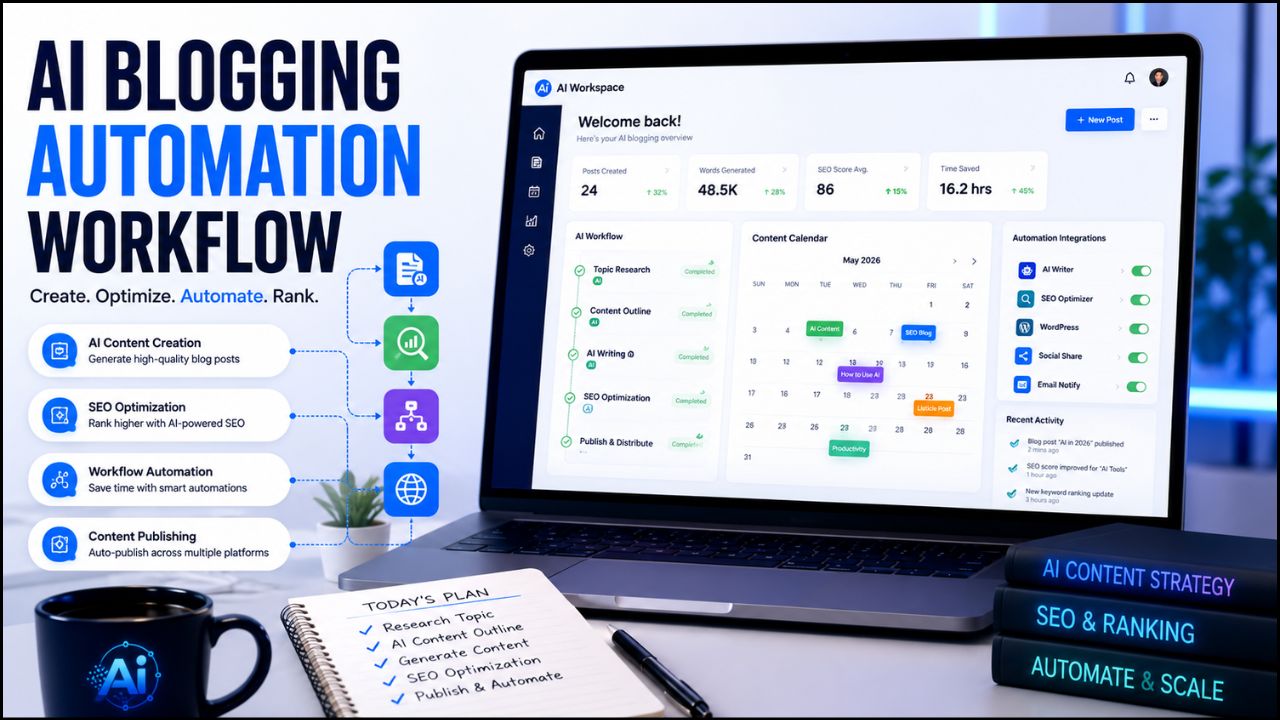
Upgrade Your AI Tools in 2026: 7 Smart Ways to Build a Better AI Workflow

Upgrade Your AI Tools

Your AI tools should make your work easier, not add more confusion to your day.

But that is exactly what happens to many bloggers and creators in 2026. They start with one writing tool, then add a design tool, then try an automation platform, then test a video tool, then subscribe to something else because everyone online says it is “essential.” After a few weeks, their browser is full of bookmarks, their budget is stretched, and their workflow is still messy.

That is why it is important to upgrade your AI tools with a clear strategy instead of chasing every new launch.

Upgrading does not always mean buying more expensive software. Sometimes it means removing tools you do not use. Sometimes it means replacing three average tools with one better platform. Sometimes it means building a simple workflow where writing, visuals, SEO, publishing, and promotion finally connect properly.
 

Upgrade Your AI Tools


In this guide, you will learn how to upgrade your AI tools in a practical way, especially if you are a blogger, affiliate marketer, creator, freelancer, or small business owner. We will cover what upgrading really means, when your current AI stack is outdated, which tools to improve first, common mistakes, and how to build a cleaner workflow that saves time without making your content feel robotic.

Upgrade Your AI Tools in 2026: What It Really Means

To upgrade your AI tools means improving the way you use AI to complete real work. It is not only about switching from a free plan to a paid plan. It is about making your workflow faster, cleaner, more reliable, and easier to repeat.

A real upgrade can include:

  • Choosing better tools for writing, research, design, video, SEO, or automation
  • Removing duplicate tools that do the same job
  • Creating reusable prompts and templates
  • Connecting tools so tasks move smoothly from one step to another
  • Adding quality checks before publishing AI-assisted content
  • Tracking which tools actually help you save time or earn money

For example, a beginner blogger may start with ChatGPT for writing ideas and Canva for images. That is enough at the beginning. But once the blog grows, the same person may need a better content calendar, a workflow automation tool, a stronger SEO process, and a consistent system for updating old posts.

That is when upgrading makes sense.

The goal is not to look advanced. The goal is to reduce friction. If your tools help you publish better content more consistently, they are doing their job.

Why Upgrading AI Tools Matters for Bloggers and Creators

AI is now part of almost every content workflow. Bloggers use it for outlines, research, draft writing, image ideas, social captions, email sequences, video scripts, and automation. But the quality of your results depends heavily on the quality of your system.

A weak system creates weak output.

If your AI workflow is random, you may publish content that sounds generic, misses search intent, uses outdated facts, or repeats the same phrases across multiple posts. That can hurt trust with readers and make your site feel less useful.

A stronger workflow does the opposite. It helps you create content that is structured, edited, fact-checked, visually consistent, and easier for readers to understand.

Google’s own guidance focuses on helpful, reliable, people-first content. That means your AI tools should support real usefulness, not just produce more words. You can read Google’s official guidance on creating helpful, reliable, people-first content if you want to understand how search quality is framed from Google’s side.

For AI Sage Labs, this matters because the audience is not only looking for tool names. They want practical systems. They want to know which tools are worth using, how to use them, and how those tools can help with blogging, affiliate marketing, content creation, or online income.

That is why a smarter AI setup can become a real advantage.

Signs Your Current AI Tool Stack Is Outdated

You do not need to change your AI stack every time a new product launches. But there are clear signs that your current setup is slowing you down.

1. You Use Too Many Tools for the Same Task

If you have three writing tools, two image tools, three SEO tools, and four automation accounts, your workflow may be heavier than it needs to be.

Too many tools create decision fatigue. You spend more time choosing where to work than actually finishing the work.

A better approach is to pick one main tool for each job. One writing assistant. One design platform. One SEO process. One automation platform. You can test alternatives, but your daily workflow should stay simple.

2. Your AI Content Sounds Generic

If every post starts the same way, uses the same phrases, and gives the same basic advice, your AI workflow needs improvement.

This often happens when you rely too much on basic prompts like “write a blog post about this topic.” The AI produces a clean draft, but it does not know your audience, your site structure, your monetization strategy, or your personal judgment.

Instead, use prompts that include audience, search intent, tone, examples, internal links, CTA rules, and fact-checking requirements. This single change can make a big difference.

3. You Still Do Repetitive Tasks Manually

If you manually copy every new post into a tracker, manually create social captions, manually format every outline, and manually repeat the same publishing checklist, you may be ready for automation.

Automation does not need to be complicated. Even a simple workflow can save hours each month.

For example, after publishing a WordPress post, you can create a task to design Pinterest pins, add the URL to a spreadsheet, and prepare a social media draft. Tools like Zapier, Make, or n8n can help with this kind of workflow.

4. Your Visuals Do Not Match Your Brand

AI tools can create images quickly, but fast visuals are not always good visuals. If every featured image looks different, your blog may feel less professional.

A better setup uses brand colors, repeatable layouts, consistent image sizes, and a clear thumbnail style. Canva, Leonardo AI, and Stable Diffusion can all help, but the real upgrade is having a visual system.

5. You Do Not Track Results

If you do not know which tools save time, which posts get clicks, which CTAs convert, or which workflow steps create bottlenecks, your tool decisions become guesses.

Before buying more software, track your process for a few weeks. Note how long research takes, how long writing takes, how long editing takes, and which tools you actually open every week.

Data makes upgrading easier.

7 Smart Ways to Upgrade Your AI Tools

The best way to upgrade your AI tools is to improve one part of your workflow at a time. Do not rebuild everything in one weekend. Start with the area that creates the most friction.

1. Start With a Workflow Audit

Before upgrading anything, write down your current workflow.

For a blogger, the workflow may look like this:

  • Choose a topic
  • Research the keyword
  • Create an outline
  • Write the draft
  • Edit the article
  • Add images
  • Add internal links
  • Add affiliate CTAs
  • Publish in WordPress
  • Promote the post
  • Track performance

Now mark the slowest steps. Maybe research takes too long. Maybe images delay publishing. Maybe internal linking is always forgotten. Maybe social promotion never happens.

Upgrade the bottleneck first.

If writing is slow, improve your writing assistant and prompt system. If visuals are slow, improve your Canva templates or AI image workflow. If promotion is slow, add automation. This keeps your upgrades practical instead of random.

2. Build a Smaller, Cleaner AI Stack

A beginner does not need twenty AI tools. Most bloggers can start with a simple stack:

Workflow Area Tool Type Example Tools
Writing and planning AI writing assistant ChatGPT, Claude, Writesonic
Design AI design tool Canva, Leonardo AI
Video AI video tool Pictory, InVideo AI, Synthesia
Automation No-code automation tool Zapier, Make, n8n
SEO and publishing SEO plugin or content tool Rank Math, Google Search Console


You can add advanced tools later, but the foundation should stay clean. The best stack is the one you actually use every week.

If you are still building your beginner setup, this internal guide can help: how to use AI tools for beginners in 2026.

3. Upgrade Your Prompt System Before Buying New Tools

Many people think their AI tool is weak when the real problem is their prompt.

A weak prompt gives weak direction. A strong prompt gives the AI a clear task, audience, format, tone, and rules.

Instead of writing:

“Write a blog post about AI tools.”

Use:

“Create a beginner-friendly outline for a 3000-word blog post about upgrading AI tools in 2026. The audience is bloggers and affiliate marketers. Use simple US English, practical examples, RankMath-friendly H2/H3 structure, two internal link opportunities, one trusted external source, and natural CTA placements. Do not use hype.”

That is a much better instruction.

Before paying for another tool, build prompt templates for your common tasks:

  • Blog outline prompt
  • Product review prompt
  • FAQ prompt
  • Meta description prompt
  • Internal linking prompt
  • CTA placement prompt
  • Human editing prompt

Good prompts make almost every AI tool more useful.

4. Add a Real Internal Linking Process

Internal links should not be an afterthought. They help readers discover related content and help search engines understand how your site is connected.

The problem is that many bloggers publish posts first and think about internal links later. That creates broken anchors, missing related posts, and weak content clusters.

A better process is simple:

  • Before writing, choose two related posts to link inside the article
  • Use natural anchor text, not random “click here” text
  • Link to posts that actually help the reader continue the journey
  • Keep a spreadsheet of post titles, slugs, focus keywords, and categories
  • Update old posts when you publish a strong new pillar post

For example, this post naturally connects with 7 trending AI tools in 2026 because readers who want to upgrade their stack also need tool ideas that are useful for bloggers.

This kind of internal linking is cleaner than forcing unrelated posts into the article.

5. Upgrade Your Visual Workflow

Visual content is no longer optional for bloggers. Your post needs a featured image, and your content can often be repurposed into Pinterest pins, YouTube thumbnails, LinkedIn graphics, and short video visuals.

The simplest upgrade is to create reusable templates.

For example, create a template for:

  • Blog featured images
  • Tool review thumbnails
  • Comparison graphics
  • Pinterest pins
  • YouTube thumbnails

Then use AI to support the design process instead of starting from scratch each time.

Canva can help with templates and quick editing. Leonardo AI can help with creative images. Stable Diffusion can help advanced users who want more control. The tool matters, but the system matters more.

If your blog visuals look consistent, readers start recognizing your brand. That builds trust.

6. Add Automation Only After the Workflow Is Clear

Automation is powerful, but it can also create confusion if you use it too early.

Do not automate a messy workflow. First, repeat the task manually a few times. Once the steps are clear, automate the boring parts.

Good beginner automations include:

  • Adding new post URLs to a Google Sheet
  • Creating social media tasks after publishing
  • Sending yourself a reminder to update old posts
  • Saving form submissions into a CRM or spreadsheet
  • Creating draft email newsletters from new blog posts

If you want a deeper beginner explanation, read this guide on what AI automation tools are.

Automation should support your content system. It should not become another complicated project that distracts you from publishing useful content.

7. Create a Quality Control Checklist

The final way to upgrade your AI tools is to add a review process before publishing.

AI can help you move faster, but it can also create mistakes. It may repeat phrases, miss context, use outdated information, or sound too generic. A simple checklist protects your content quality.

Before publishing, check:

  • Does the article answer the reader’s main question?
  • Is the focus keyword used naturally?
  • Does the post include helpful examples?
  • Are internal links connected to real posts?
  • Is there at least one trusted external source?
  • Are affiliate links relevant and not spammy?
  • Does the intro sound different from your other posts?
  • Did you remove hype and generic AI phrases?
  • Is the final verdict clear?
  • Is the affiliate disclosure included at the end?

This checklist is simple, but it makes your AI-assisted content feel more human and more useful.

Best AI Tools to Upgrade First

If you cannot upgrade everything at once, start with the tool category that affects your output most directly.

Writing and Research Tools

Writing tools usually create the biggest time savings for bloggers. They help with topics, outlines, drafts, FAQs, meta descriptions, and content repurposing.

But do not treat them as automatic article machines. Use them for structure and speed, then add your own research, examples, judgment, and editing.

Good writing upgrades include better prompts, saved templates, brand voice instructions, and a consistent editing workflow.

Design and Image Tools

If your blog looks unprofessional, readers may not trust it even if the writing is helpful.

Design tools can help you create better featured images, social graphics, and thumbnails. For most beginners, Canva is the easiest starting point. For AI image generation, Leonardo AI and Stable Diffusion are useful depending on your skill level.

Use these tools to create a recognizable visual style, not random images for every post.

Video Tools

Video tools matter because one blog post can become multiple content assets. A written article can turn into a YouTube script, short video, social clip, or explainer video.

Pictory, InVideo AI, Synthesia, Runway, and Descript all serve different video workflows. The right choice depends on whether you want blog-to-video, avatar videos, advanced editing, or text-based editing.

For bloggers, the first upgrade is usually a blog-to-video tool or a simple editing tool.

Automation Tools

Automation tools help connect apps and reduce manual work. Zapier is beginner-friendly, Make is flexible, and n8n is useful for more technical users who want control.

Start with one simple automation. Do not build a giant system before your content process is stable.

SEO and Tracking Tools

SEO tools help you improve content, but they cannot replace useful writing. Rank Math, Google Search Console, and keyword research tools can help you understand what is working.

For WordPress users, Rank Math is helpful because it turns on-page SEO into a checklist. Just remember that a green score is not the same as a helpful article. Use the score as a guide, not as the final goal.

Recommended AI Workflow for Bloggers

Here is a practical workflow you can use after you upgrade your AI tools:

  1. Choose one topic based on your content plan.
  2. Check the search intent and existing internal link opportunities.
  3. Create an outline with your AI writing assistant.
  4. Add your own examples, notes, and monetization angle.
  5. Draft the article section by section.
  6. Edit manually for clarity and human tone.
  7. Add two internal links to relevant existing posts.
  8. Add one trusted external source where it helps the reader.
  9. Create a 16:9 featured image in your visual tool.
  10. Add natural CTAs for relevant tools, services, books, or hosting.
  11. Publish in WordPress and track performance.
  12. Update the article after 60 to 90 days if needed.

This is simple enough to repeat every week, but strong enough to support long-term growth.

Recommended Setup for AI Bloggers

If you want to turn your AI workflow into a real blog or affiliate site, you need a reliable place to publish your content. Social platforms are useful, but your own website gives you more control over SEO, branding, email capture, and affiliate monetization.

For beginners, WordPress is still one of the best foundations because it is flexible, searchable, and easy to monetize over time.

Build Your AI Blog on a Strong Foundation

If your goal is to publish AI tool reviews, tutorials, and affiliate content, start with a self-hosted WordPress site. Hostinger is a beginner-friendly option for launching a blog without making the setup too complicated.

Start your AI blog with Hostinger

When You Should Hire Help Instead of Doing Everything Yourself

Sometimes the smartest way to upgrade is not another subscription. It is getting help from someone who already knows the workflow.

For example, you may want help with:

  • Setting up WordPress properly
  • Creating a blog design system
  • Building AI automation workflows
  • Designing featured image templates
  • Fixing SEO and internal linking issues
  • Creating video content from blog posts

If you are stuck for weeks trying to set up something technical, hiring help can save time and reduce frustration.

Need Help Building Your AI Workflow?

If you do not want to set up every tool yourself, you can hire freelancers for WordPress setup, AI automation, SEO cleanup, Canva templates, or blog workflow systems.

Find AI and WordPress freelancers on Fiverr

Recommended Book for Thinking Better About AI

Tools change quickly, but good thinking stays useful. If you want to understand how AI fits into real work, decision-making, and creativity, a helpful book to explore is Co-Intelligence: Living and Working with AI by Ethan Mollick.

This book is a good fit for bloggers, creators, and business owners who want to use AI thoughtfully instead of treating it like a magic button.

Recommended Reading

If you want a deeper understanding of how to work with AI in a practical way, this book is a strong next step.

Check Co-Intelligence on Amazon

Common Mistakes to Avoid

Buying Tools Before You Have a Workflow

Do not buy a tool just because it is trending. First, know the task it will solve. If you cannot explain where the tool fits in your workflow, wait before paying.

Using AI to Publish Generic Content

AI can help you write faster, but generic content will not build a strong blog. Add examples, opinions, comparisons, screenshots, and real judgment whenever possible.

Ignoring Internal Links

Internal links should be part of the writing process, not a task you postpone for later. Add them while drafting so your content cluster grows naturally.

Trusting AI Facts Without Checking

AI tools can be wrong. Always check pricing, features, claims, and important facts from official sources before publishing.

Making Every CTA Feel Like a Sales Pitch

Affiliate links should appear where the reader has a clear next step. Hosting makes sense when the reader needs a website. Fiverr makes sense when they need help. Amazon makes sense when they want deeper learning.

Final Verdict

You should upgrade your AI tools when your current setup is slowing you down, creating generic output, wasting money, or making your workflow harder than it needs to be.

But do not confuse upgrading with collecting tools.

The best AI setup is not the biggest stack. It is the cleanest system that helps you create useful content consistently. For bloggers, that usually means one strong writing workflow, one visual workflow, one SEO process, one publishing checklist, and simple automation added only when needed.

If you are a beginner, start small. Improve your prompts. Create reusable templates. Fix your internal linking process. Add a trusted external source where it helps. Build your website on a solid foundation. Then add better tools only when your workflow proves that you need them.

That is how you upgrade your AI tools without wasting money or losing the human quality that makes readers trust your content.

Frequently Asked Questions

What does upgrading AI tools mean?

It means improving your AI workflow so your tools help you work faster, create better content, reduce manual tasks, and publish more consistently. It can include better prompts, better software, automation, templates, or a cleaner tool stack.

Do I need paid AI tools as a beginner?

No. Beginners can start with free or low-cost tools. Upgrade only when you clearly understand the limitation you are trying to solve, such as low AI credits, missing templates, weak automation, or slow content production.

What AI tool should bloggers upgrade first?

Most bloggers should upgrade their writing and planning workflow first because it affects every article they publish. After that, improve visuals, SEO, and automation based on your biggest bottleneck.

Are too many AI tools bad for productivity?

Yes, they can be. Too many tools create confusion, duplicate costs, and scattered workflows. A smaller stack with clear roles is usually better than a large stack you do not use consistently.

How can I make AI content sound more human?

Use specific examples, edit manually, vary your introductions, include real opinions, avoid hype, and write for one clear audience. AI should help with structure and speed, not replace your judgment.

Should I automate my blog workflow?

Yes, but only after the workflow is clear. Start with simple automations like tracking published posts, creating promotion tasks, or preparing newsletter drafts. Do not automate a messy process too early.

How often should I review my AI tool stack?

Review your tools every 60 to 90 days. Check which tools you use regularly, which ones save time, which ones cost money without clear value, and which workflow steps still feel slow.

Conclusion

AI tools are powerful, but they only become valuable when they fit into a real workflow.

If you want to build a better blogging system in 2026, do not chase every new AI launch. Start with your actual problems. Where are you losing time? Where is your content weakest? Where are your links missing? Where does publishing slow down?

Answer those questions first. Then upgrade the tools that solve those problems.

For most bloggers, the smartest path is simple: improve your writing workflow, create better visuals, connect related posts properly, use trusted sources, add automation slowly, and keep your final content useful for real readers.

That is how AI becomes a serious advantage instead of another distraction.

Affiliate Disclosure

As an Amazon Associate, I earn from qualifying purchases. Some links in this article are affiliate links, which means I may earn a commission at no extra cost to you if you buy through them. I only recommend tools, books, and services that may help beginners learn, build, or grow their online work more effectively.


How to Use AI Tools in 2026: 9 Simple Steps for Beginners

How to Use AI Tools

Most beginners do not fail with AI because the tools are too hard. They fail because they try to use too many tools at once.

One day they test ChatGPT. The next day they open Canva. Then they hear about Pictory, Runway, Zapier, Make, SurferSEO, Frase, Claude, Gemini and ten more apps. After a week, they have many accounts but no clear workflow.

That is not a beginner problem. That is a system problem.

If you want to learn how to use AI tools in 2026, the first thing to understand is simple: AI is no longer only for technical people. Bloggers, creators, freelancers, students, small business owners and affiliate marketers now use AI tools every day to write faster, design better visuals, create videos, research topics, automate tasks and build online income systems.

But you do not need every AI tool. You need one clear goal, a small beginner stack and a repeatable workflow.


How to Use AI Tools


This guide will show you how to use AI tools in a practical way, even if you have zero technical experience. We will focus on the use cases that matter most for AI Sage Labs readers: blogging, content creation, design, video, SEO, automation, affiliate marketing and online business.

How to Use AI Tools Without Getting Overwhelmed

The best way to start with AI tools is to pick one clear goal first.

Do not begin by asking, “What is the best AI tool?”

Begin by asking, “What do I want AI to help me do this week?”

For most beginners, the answer is usually one of these:

  • Write blog posts faster
  • Create social media content
  • Design thumbnails or featured images
  • Edit videos
  • Research keywords
  • Automate repetitive tasks
  • Build a blog or online business

Once you know the task, choosing the tool becomes easier.

A beginner does not need a giant AI stack on day one. Start with one writing tool and one design tool. Add video, SEO and automation tools only when you have a real workflow that needs them.

Task Beginner Tool Type Example Tools
Writing and ideas AI writing assistant ChatGPT, Claude, Writesonic
Blog visuals AI design tool Canva AI
Video repurposing AI video tool InVideo AI, Pictory, Runway, Synthesia
Grammar and polish AI editing tool Grammarly
Automation Workflow automation tool Zapier, Make
SEO improvement AI SEO tool Rank Math, SurferSEO, Frase, NeuronWriter


Simple rule: one goal, one tool, one workflow.

What Are AI Tools?

AI tools are software applications that use artificial intelligence to help you complete tasks faster, better, or more automatically.

They can help with writing, editing, design, research, data analysis, video creation, audio editing, image generation, customer support, coding and workflow automation.

For beginners, the easiest way to understand AI tools is this:

AI tools take your instruction and produce an output.

Your instruction is called a prompt. The output could be a blog outline, article draft, image idea, video script, email, table, summary, social caption or workflow plan.

For example, you can write:

Write a beginner-friendly blog outline about AI tools for bloggers in 2026.

The AI tool may give you an organized article structure with headings, subheadings and key talking points.

That is the basic pattern. You give direction. AI gives a draft or suggestion. You review, improve and publish the final version.

The most important thing to understand is that AI tools are assistants, not replacements for your judgment. They can speed up the work, but you still need to decide what is accurate, useful and right for your audience.

Common Types of AI Tools Beginners Should Know

Before you learn how to use AI tools, it helps to understand the main categories. You do not need every category right away, but knowing the difference will save you from wasting time and money.

AI Writing Tools

AI writing tools help you create outlines, introductions, blog posts, emails, product descriptions, YouTube scripts, newsletters and social media captions.

For bloggers, this is usually the first category to learn because writing touches almost every online business workflow.

The best use case is turning ideas into structured drafts faster. The real limitation is that AI writing still needs editing, fact-checking, examples and human experience.

AI Design Tools

AI design tools help you create graphics, thumbnails, featured images, social media posts, Pinterest pins, logos and visual templates.

For bloggers, visuals matter because they affect trust, click-through rate and social sharing.

Canva AI is the easiest starting point for many beginners because it combines templates, text, images, and AI features in one simple design workspace.

AI Video Tools

AI video tools help you turn written content into videos, generate captions, edit footage, create voiceovers or produce short clips for social platforms.

For bloggers, this creates a strong repurposing opportunity. One blog post can become a YouTube video, a short Instagram Reel, a TikTok clip, a Pinterest idea pin or a LinkedIn video summary.

Examples include InVideo AI, Pictory, Runway and Synthesia.

AI Automation Tools

AI automation tools connect different apps and make tasks happen automatically.

For example:

New blog post published → create social media task → update Google Sheet → add task to content calendar.

Tools like Zapier and Make are useful because they save time on repetitive work.

If automation is new for you, this guide on what AI automation tools are explains the basics in a simple way.

AI SEO Tools

AI SEO tools help you plan and improve content for search engines.

They can help with keyword research, content briefs, heading suggestions, related terms, internal linking and on-page optimization.

For bloggers, SEO is where AI becomes more valuable because ranking content can generate traffic for months or years.

The limitation is that SEO tools give recommendations, but they cannot replace real expertise, helpful content, original examples and reader trust.

Why Beginners Should Use AI Tools in 2026

AI is no longer optional for online creators.

That does not mean every piece of content should be generated by AI. It means every serious blogger should understand how AI fits into the workflow.

The biggest benefit is speed.

A beginner who used to spend three hours brainstorming blog ideas can now create a draft topic map in minutes. A blogger who struggled with featured images can create a professional-looking design in Canva. A creator who avoided video can turn articles into short video drafts with AI video tools.

But the real benefit is not only speed. The real benefit is consistency.

Most blogs fail because the owner stops publishing. AI tools make it easier to keep going because they reduce friction at every step.

If you can create outlines faster, write first drafts faster, design thumbnails faster and repurpose content faster, your chances of staying consistent improve.

That is where AI becomes valuable for bloggers.

Step 1: Pick One Clear Goal

The first step in learning how to use AI tools is choosing one goal.

This is where most beginners make the first mistake. They start with tools instead of outcomes.

Do not ask, “Which AI tool should I use?”

Ask, “What do I want AI to help me achieve this week?

Good beginner goals include writing one blog post, creating five Pinterest pins, turning one blog post into a YouTube script, building a list of blog topic ideas, creating a content calendar, improving an old article, automating social sharing, or writing better email subject lines.

Once the goal is clear, the right tool becomes easier to choose.

If your goal is writing a blog post, start with ChatGPT, Claude, or Writesonic. If your goal is creating visuals, start with Canva AI. If your goal is turning articles into videos, start with InVideo AI or Pictory. If your goal is saving time on repetitive tasks, start with Zapier or Make.

Step 2: Start With a Beginner AI Stack

Do not try 15 tools in your first week.

That creates confusion, subscription waste, and half-finished workflows.

Start with a small beginner stack that covers the basics.

Writing: ChatGPT, Claude or Writesonic

Use an AI writing assistant for idea generation, outlines, drafts, FAQs, intros, meta descriptions and social captions.

Create a beginner-friendly blog outline for a 3000-word article about [topic]. Include SEO headings, FAQs and a practical conclusion.

Design: Canva AI

Use Canva AI for blog featured images, Pinterest pins, Instagram posts, YouTube thumbnails, and simple brand graphics.

Create a blog featured image concept for an article titled [title]. Use a clean tech-blog style with AI icons and readable headline text.

Editing: Grammarly

Use Grammarly or another editing tool to improve clarity, grammar and tone before publishing.

A simple workflow is:

Draft with AI → edit manually → polish with Grammarly → publish.

Automation: Zapier or Make

Use automation only after you already have a repeatable task.

A beginner workflow could be:

New WordPress post → add row to Google Sheet → create social media task → notify yourself by email.

Blogging Foundation: WordPress and Hosting

If you want to turn AI tools into a real online business, you need somewhere to publish. A WordPress blog on reliable hosting is still one of the best foundations for SEO and affiliate marketing.

For beginners, Hostinger is a practical starting point because it is WordPress-friendly and easy to set up.

Build Your AI Blog Foundation

If you want to use AI tools for blogging, affiliate reviews, or online income, start with a real WordPress site where your content can rank and convert.

Start your AI blog with Hostinger

Step 3: Learn Prompting

Prompting is the most important beginner AI skill.

A prompt is simply the instruction you give to an AI tool.

Bad prompts produce weak results. Clear prompts produce useful drafts.

The easiest prompt formula is:

Task + Context + Format + Tone

Here is what that means:

  • Task: What do you want the AI to do?
  • Context: Who is it for and why?
  • Format: What should the output look like?
  • Tone: How should it sound?

Bad prompt:

Write about AI tools.

Better prompt:

Write a 300-word beginner-friendly introduction for a blog post about how AI tools help bloggers in 2026. Use simple English, short paragraphs, and a practical tone.

Even better prompt:

Write a 300-word introduction for AI Sage Labs readers. The audience is beginner bloggers and creators who feel overwhelmed by AI tools. Explain the problem, promise a step-by-step solution, and avoid hype.

The better prompt gives the AI a role, audience, purpose, structure, and style. That is why the output will usually be stronger.

Step 4: Create Your First Blog Outline

The safest way to use AI tools for blogging is to begin with outlines.

Do not ask AI to write a full article immediately. Start by asking it to organize your ideas.

Create a detailed SEO outline for a 3000-word blog post titled “How to Use AI Tools in 2026.” The audience is beginner bloggers and creators. Include step-by-step guidance, tool examples, common mistakes, FAQs, and a final checklist.

Then review the outline yourself.

Ask these questions:

  • Does this answer the reader’s real problem?
  • Are the headings clear?
  • Is anything missing?
  • Is the order logical?
  • Can I add personal examples or tool experience?

This is where human judgment matters. AI can organize quickly, but you decide what belongs in the final post.

If you want tool ideas for your stack, read this guide on trending AI tools in 2026.

Step 5: Turn the Outline Into a Draft

Once you have a strong outline, write section by section.

This is important because long AI outputs often become repetitive, generic, or shallow.

Instead of asking for one long article, use a section-by-section workflow.

Write the section “Step 3: Learn Prompting” for this blog post. Keep it beginner-friendly, practical, and around 350 words. Include one bad prompt, one better prompt, and one improved prompt.

This gives you better control.

After each section, edit manually. Add examples, remove weak sentences, and check accuracy.

AI should help you create a first draft, not replace the editing process.

The best AI-assisted blog posts usually follow this workflow:

Outline → section draft → manual edit → SEO check → final polish → publish.

Step 6: Use AI for Blog Images and Graphics

Images make your blog feel more professional.

For AI blogs, you should create at least one featured image for every post. You can also create simple comparison graphics, workflow diagrams, and Pinterest pins.

Good blog visuals can help with click-through rate, social sharing, brand trust, Pinterest traffic, and reader engagement.

A beginner visual workflow looks like this:

  1. Write your blog title.
  2. Ask AI for a featured image concept.
  3. Create the image in Canva AI or another design tool.
  4. Add your brand colors and title overlay.
  5. Compress the image before uploading to WordPress.

You do not need perfect design skills. You need clean, readable visuals that match the article and help the reader understand the topic.

Step 7: Use AI for Video Creation

Video is one of the easiest ways to repurpose blog content in 2026.

If you already wrote a blog post, you have the raw material for a video.

You can ask AI to turn your article into a YouTube script, short video script, list of talking points, voiceover script, storyboard, or social media video caption.

Turn this blog post section into a 60-second YouTube Shorts script. Keep it beginner-friendly, include a strong hook, and end with a simple call to action.

Tools like InVideo AI and Pictory can help turn written content into video drafts with visuals, captions, and voiceover.

This is useful because it helps bloggers reach audiences beyond Google Search.

One article can become several content assets:

  • Blog post for SEO
  • YouTube video for discovery
  • Short clip for Instagram or TikTok
  • Pinterest pin for visual traffic
  • LinkedIn post for authority

That is how AI tools multiply the value of one piece of content.

Step 8: Automate the Repetitive Parts

Automation is powerful, but beginners should use it carefully.

Do not automate before you understand the task manually. First, repeat the task a few times. Then automate the parts that are boring and predictable.

Good beginner automations include saving new blog post ideas into Google Sheets, creating social media tasks after publishing, tracking affiliate content updates, sending reminders, or organizing lead information.

Example workflow:

New WordPress post published → add post title and URL to Google Sheets → create task to make Pinterest pins → send reminder to create social captions.

This kind of automation does not replace strategy. It removes repetitive admin work.

Need Help With AI Automation?

If you do not want to set up workflows yourself, you can hire help for WordPress, Zapier, Make, AI automation, or content systems.

Find AI automation and WordPress experts on Fiverr

Step 9: Combine AI Tools Into a Blogging System

The real power of AI tools comes when you combine them into a simple system.

Here is a beginner AI blogging workflow:

  1. Use ChatGPT, Claude or Writesonic to brainstorm topics.
  2. Use an SEO tool to choose one target keyword.
  3. Use AI to create a blog outline.
  4. Write the draft section by section.
  5. Edit manually and polish with Grammarly.
  6. Create a featured image in Canva AI.
  7. Publish on WordPress.
  8. Use AI to create social posts from the article.
  9. Use Zapier or Make to track and distribute the content.
  10. Update the article after 60 to 90 days based on performance.

This workflow is simple, but it covers the full content cycle.

Most beginners fail because they use AI randomly. They ask for one caption, one outline or one idea, then move on.

A system is different. A system helps you repeat the process every week.

That is how AI tools become useful for blogging and online business.

Best Beginner AI Workflow for Bloggers

If you are not sure where to begin, use this simple workflow for your first few posts.

Stage Tool Type Beginner Action
Idea AI writing assistant Generate 10 topic ideas
SEO Keyword or SEO tool Pick one target keyword
Outline AI writing assistant Create article structure
Draft AI writing assistant Write section by section
Edit Manual editing or Grammarly Improve clarity and accuracy
Visual Canva AI Create featured image
Publish WordPress Add post, links, and images
Promote AI and automation Create captions and tasks
Track Search Console or spreadsheet Review performance


If you are just starting, use this workflow for one post per week. Once it feels easy, increase publishing frequency.

Common Mistakes Beginners Make With AI Tools

Using Too Many Tools

More tools do not automatically mean better results.

Start with one writing tool, one design tool, and one editing tool. Add more only when you feel a real bottleneck.

Copying AI Content Without Editing

AI drafts often sound clear but generic.

Always edit before publishing. Add examples, opinions, screenshots, comparisons, and real experience wherever possible.

Ignoring SEO

AI can write content quickly, but fast content without search intent does not automatically get traffic.

Before writing, understand the keyword, reader problem, and competing pages.

Trusting AI Facts Without Checking

AI can make mistakes. It can also give outdated pricing, wrong feature lists, or invented statistics.

Always verify pricing, tool features, and important claims from official sources before publishing.

Automating Too Early

Automation works best when the workflow is already clear.

If you automate a messy process, you create faster confusion.

How to Use AI Tools for Online Income

AI tools can support online income, but they do not create income by themselves.

This is important.

You do not make money because you opened an AI tool. You make money when AI helps you support a real business model.

For bloggers and affiliate marketers, AI tools can help you create review posts, comparison articles, tutorials, email content, social posts, video scripts, digital product ideas and content updates.

For freelancers, AI tools can help with proposals, client research, service delivery, design drafts, content writing, SEO reports and workflow automation.

For creators, AI tools can help repurpose one idea into multiple formats.

The income comes from the system around the tool: audience, content, offer, trust, traffic and consistency.

Recommended AI Tools to Start With

If you want to test tools without overthinking, start with a small stack.

Try a Simple Beginner AI Stack

Start with one writing tool, one design tool, and one automation tool. Once your workflow is working, add video and SEO tools only when needed.

Try ChatGPT for writing and planning

Try Canva for blog visuals

Try Zapier for simple automation

Recommended Resource Before You Finish

Want a Faster AI Tools Starter Path?

If you feel overwhelmed by too many AI tools, start with a simple checklist instead of buying random subscriptions. Your first goal should be one blog post, one featured image, one social caption and one basic automation.

Access the AI Tools Beginner Starter Checklist

Recommended Book for AI Beginners

If you want to understand the business side of using AI and digital tools, a useful book to explore is Co-Intelligence: Living and Working with AI. It is a helpful read for understanding how AI can fit into real work instead of treating it like a shortcut.

Learn Practical AI Thinking

If you want to understand how to work better with AI tools, this book is a strong next step for bloggers, creators and online business owners.

Check Co-Intelligence on Amazon

The Honest Truth About AI Tools for Beginners

AI tools can save time, but they do not remove the need to think.

This is the biggest truth beginners need to understand.

AI can help you write faster. It can suggest ideas. It can create images. It can turn articles into videos. It can automate repetitive tasks.

But it cannot decide your real audience for you. It cannot build trust automatically. It cannot replace personal experience. It cannot guarantee traffic or income just because you publish more content.

The bloggers who win with AI in 2026 are not the ones blindly copy-pasting AI articles.

They are the ones using AI to do more of the right work: better research, better outlines, faster drafts, cleaner visuals, more consistent publishing, smarter repurposing, and stronger updates.

AI is not the business. AI is the productivity layer on top of the business.

If you use it that way, it becomes extremely powerful.

Final Beginner Checklist

Before you start using AI tools seriously, follow this checklist:

  • Pick one clear goal.
  • Choose one writing tool.
  • Choose one design tool.
  • Learn the basic prompt formula.
  • Create one blog outline.
  • Draft one post section by section.
  • Edit manually before publishing.
  • Create one featured image.
  • Publish on WordPress.
  • Repurpose the post into social content.
  • Track what works.

Do not make the process complicated.

One finished post is more valuable than ten unfinished tool experiments.

Final Words:

Yes, beginners should absolutely learn how to use AI tools in 2026.

AI tools can help you save time, create better content, design visuals, repurpose posts, automate workflows and build a stronger online business foundation.

But the smartest approach is simple: start small.

Pick one goal. Choose one or two tools. Learn prompting. Create your first workflow. Improve it over time.

If your goal is blogging, the best beginner path is:

WordPress blog → AI writing tool → Canva AI → Grammarly → SEO basics → automation later.

That is enough to begin.

Once your workflow is working, you can add advanced tools like SurferSEO, Zapier, Make, Pictory and InVideo AI.

The goal is not to collect AI tools. The goal is to build a system that helps you create useful content consistently.

That is how beginners turn AI from a confusing trend into a practical advantage.

Frequently Asked Questions

Are AI tools free to use?

Many AI tools offer free plans, but advanced features usually require paid plans. Beginners can start with free versions of writing, design and editing tools, then upgrade only when a limitation slows down their workflow.

Do I need coding skills to use AI tools?

No. Most beginner AI tools do not require coding skills. Writing tools, design tools, video tools and automation platforms are built for regular users. Coding knowledge can help with advanced workflows, but it is not required to start.

Which AI tool should I start with?

Start with an AI writing assistant because writing and planning are useful in almost every workflow. After that, add Canva AI for visuals and Grammarly for editing. Bloggers can later add SEO, video and automation tools.

Can AI tools replace human writers?

AI tools can assist writers, but they should not replace human judgment. The best content still needs real experience, editing, examples, fact-checking and a clear understanding of the reader.

Are AI tools good for blogging?

Yes. AI tools are useful for blogging when used properly. They can help with topic ideas, outlines, drafts, editing, images, SEO, social captions and content repurposing. The key is to use AI as an assistant, not as a copy-paste content machine.

How long does it take to learn AI tools?

Basic AI tool usage can be learned in a few days. Building a complete workflow for blogging, design, video and automation may take a few weeks of practice. The fastest way to learn is to use AI on one real project from start to finish.

Can I make money with AI tools?

Yes, but not just by using AI tools randomly. AI tools can help you create content faster, build affiliate blogs, design digital products, automate services and repurpose content. Income comes from a real business model, not the tool itself.

Conclusion

Learning how to use AI tools is one of the most useful skills a beginner can build in 2026.

You do not need to become technical. You do not need to subscribe to every tool. You do not need to automate your entire business in one week.

Start with one problem. Choose one tool. Create one workflow. Finish one real project.

That is how AI becomes useful.

For bloggers, the goal is not to publish more generic content. The goal is to create helpful articles faster, design better visuals, repurpose content smarter, and stay consistent long enough for your work to compound.

Use AI as a helper, not a shortcut. Keep the strategy human. Keep the editing human. Keep the final judgment human.

That is the best way to use AI tools without losing quality, trust, or direction.

How We Checked This Guide

Before updating this guide, we checked Google’s publishing guidance for helpful AI-assisted content and Google’s beginner AI learning resource. This helps keep the article practical, safe, and useful for readers who are learning how to use AI tools for real work.

Affiliate Disclosure

As an Amazon Associate, I earn from qualifying purchases. Some links in this article are affiliate links, which means I may earn a commission at no extra cost to you if you buy through them. I only recommend tools, books and services that may help beginners build better blogs, create useful content, or grow their online work more effectively.