
Best AI Agents for Affiliate Marketing in 2026 (Agent X Full Guide)

Best AI Agents for Affiliate Marketing

AI agents are becoming one of the loudest trends in affiliate marketing.

The promise sounds tempting: instead of writing reviews, building funnels, creating emails, designing pages, and managing traffic manually, you use an AI agent to automate large parts of the workflow.

That is why products like Agent X are getting attention.

The sales pitch around Agent X is bold. Vendor and review pages describe it as a voice-powered AI automation platform for affiliate marketers, with claims around thousands of bots, done-for-you websites, marketing templates, affiliate campaigns, and traffic automation.

But this kind of product needs a careful review.

 

Best AI Agents for Affiliate Marketing


Any tool promising fast income, automated commissions, or thousands of bots should be evaluated with realistic expectations. AI agents can save time, organize work, and speed up campaign creation. They do not remove the need for product research, traffic strategy, compliance, affiliate disclosure, landing page quality, and conversion testing.

In this guide, we will look at the best AI agents for affiliate marketing, using Agent X as the main example. You will learn what AI agents can actually do, how Agent X is positioned, what to verify before buying, how affiliate marketers can use AI agents safely, and the downsides you should understand before trusting any “automated income” claim.

Best AI Agents for Affiliate Marketing: What Does That Mean?

An AI agent is a software system that can perform tasks based on instructions, goals, data, and automation rules.

For affiliate marketing, an AI agent may help with:

  • Product research
  • Affiliate review outlines
  • Landing page drafts
  • Email swipe creation
  • Social post ideas
  • Funnel structure
  • Campaign tracking
  • Workflow automation
  • Repurposing content

The key word is “help.”

The best AI agents for affiliate marketing should make your workflow faster and more organized. They should not be treated as magic employees that create guaranteed commissions without strategy.

Affiliate marketing still depends on three things:

  1. A product people actually want.
  2. Useful content or traffic that reaches the right audience.
  3. A trustworthy recommendation that helps the reader make a decision.

AI agents can support those pieces, but they do not replace them.

When comparing the best AI agents for affiliate marketing, focus on practical workflow support instead of the biggest automation claims.

If you are new to this topic, start with this guide to AI affiliate marketing for beginners. This article focuses on AI agents and Agent X specifically.

What Is Agent X?

Agent X is marketed as an AI-powered automation platform for affiliate marketers.

Public sales and review pages describe Agent X as a voice-powered AI agent system that helps users build affiliate campaigns, create websites, generate marketing assets, and automate repetitive tasks.

Some pages claim Agent X includes:

  • Voice-powered commands
  • Thousands of AI bots or automation tasks
  • Done-for-you affiliate websites
  • Sales page and funnel templates
  • Email swipe copy
  • Video or script generation
  • Affiliate campaign automation
  • Traffic and commission-focused templates
  • A 60-day refund guarantee

Because Agent X is promoted with aggressive income language in some places, beginners should review the official offer page carefully before buying.

Check what is actually included, what integrations are supported, whether hosting is included, how the refund works, what training is provided, and whether income claims are backed by reliable evidence.

This review does not treat vendor earnings claims as guaranteed results.

How Agent X Is Supposed to Work

The basic idea behind Agent X is simple.

You give the platform an instruction, often described as a voice command or goal. The system then helps create or organize parts of an affiliate campaign.

A typical workflow may look like this:

  1. Choose an affiliate product or niche.
  2. Tell Agent X what campaign you want to create.
  3. Generate a landing page or affiliate website draft.
  4. Create review content, sales copy, or email swipes.
  5. Add affiliate links and campaign assets.
  6. Use templates or bots to speed up promotion tasks.
  7. Track results and improve the campaign.

This can sound powerful, especially for beginners who feel overwhelmed by the moving parts of affiliate marketing.

But there is a big difference between generating campaign assets and building a profitable affiliate business.

Generated pages still need fact-checking. Email swipes still need compliance. Product reviews still need trust. Traffic still needs a real source. Affiliate links still need disclosure. Claims still need evidence.

That is the realistic way to think about Agent X.

Why AI Agents Matter for Affiliate Marketers in 2026

Affiliate marketers manage many repetitive tasks.

A single campaign may need:

  • Product research
  • Keyword research
  • Review page copy
  • Comparison tables
  • Emails
  • Bonuses
  • Landing pages
  • Social posts
  • Tracking links
  • Follow-up content

This is where AI agents can help.

Instead of switching between many tools and starting from a blank page each time, an AI agent-style workflow can create first drafts, organize tasks, suggest campaign structures, and repurpose content faster.

The benefit is workflow speed.

The risk is false confidence.

That is why the best AI agents for affiliate marketing should be judged by output quality, transparency, and control, not only by the number of bots advertised.

If you publish everything the AI creates without review, you may end up with generic content, weak claims, compliance problems, or affiliate pages that do not convert.

If you want a broader tool stack, this guide to the best AI tools for affiliate marketing explains writing, design, email, automation, and tracking tools in more detail.

Agent X Features to Review Carefully

Because Agent X is promoted through bold claims, the smartest approach is to evaluate each feature practically.

1. Voice-Powered Commands

Voice control can be convenient if it lets you create tasks or campaigns quickly.

But voice input alone is not the value.

The value depends on what the platform does after receiving the command. Does it generate usable campaign assets? Does it save settings? Does it connect to your real workflow? Does it create content you can edit and export?

Before buying, check whether voice commands are core to the product or mainly a marketing angle.

2. Affiliate Website Creation

Agent X marketing materials mention done-for-you affiliate websites or campaign pages.

This can help beginners move faster, but you should check:

  • Can you edit the website?
  • Can you use your own domain?
  • Is hosting included?
  • Can you export content?
  • Is the page SEO-friendly?
  • Can you add disclosures?
  • Can you control affiliate links?

A website that looks finished is not automatically a strong affiliate asset.

It still needs useful content, trust signals, disclosure, speed, and traffic.

3. Review and Content Generation

AI can help create affiliate reviews, but reviews need more than text.

A trustworthy review should include who the product is best for, who should skip it, pricing notes, real limitations, alternatives, screenshots where possible, and a human final verdict.

If Agent X generates reviews, treat them as drafts.

Use this guide on writing affiliate review posts with AI if you want a safer review workflow.

4. Email Swipes and Follow-Up Copy

Email swipes can save time, especially when promoting affiliate products.

But email copy can easily become too aggressive.

Check whether the tool creates:

  • Clear subject lines
  • Helpful educational emails
  • Disclosure-friendly copy
  • Low-pressure CTAs
  • Compliance-safe wording

Avoid emails that make guaranteed-income claims or pressure readers with fake urgency.

5. Templates and Campaign Assets

Agent X promotional pages mention large template libraries.

Templates can be useful if they save setup time.

But ask these questions:

  • Are the templates editable?
  • Are they current?
  • Are they generic or niche-specific?
  • Can you use them commercially?
  • Do they include proper disclosure sections?
  • Do they look like templates everyone else is using?

Templates are a starting point, not a complete strategy.

This is another reason the best AI agents for affiliate marketing should let you edit, export, and customize campaign assets.

6. Traffic Automation Claims

This is the feature to treat most carefully.

Any tool promising traffic or commissions should be evaluated with skepticism.

Ask:

  • Where does the traffic come from?
  • Is it organic, paid, social, email, or bot-generated?
  • Does it follow affiliate program rules?
  • Does it comply with platform policies?
  • Are the visitors real and targeted?
  • Can you see analytics?

Traffic that violates platform or affiliate-program rules can damage your account.

Real affiliate income comes from targeted traffic and trust, not random clicks.

Can Agent X Really Make Money for Beginners?

Agent X sales copy and third-party review pages may mention large income examples.

Be careful with those claims.

The FTC has repeatedly warned about deceptive money-making claims and business opportunity promotions. Any earnings claim should be backed by clear, reliable evidence and should not make typical beginners believe income is guaranteed or easy.

A realistic answer is this:

Agent X may help affiliate marketers create campaign assets faster, but it does not guarantee sales, commissions, or daily income.

Your results depend on:

  • The product you promote
  • The quality of your offer
  • Your traffic source
  • Your content quality
  • Your niche
  • Your email list
  • Your landing page conversion rate
  • Your compliance with affiliate program rules
  • Your testing and follow-up

AI agents can make the work faster.

They cannot remove the business fundamentals.

Who Agent X May Be Best For

Agent X may be worth considering for users who already understand the basics of affiliate marketing and want a faster way to create campaign assets.

It may be a fit for:

  • Affiliate marketers who need faster first drafts
  • Beginners who want campaign templates
  • Creators testing simple affiliate funnels
  • Marketers who want to experiment with AI agent workflows
  • Users who are willing to edit and fact-check everything

The strongest fit is someone who sees Agent X as a productivity tool, not an automatic income machine.

Who Should Skip Agent X

Agent X may not be the right fit if you expect effortless income.

You should be careful or skip it if:

  • You have no niche or product strategy
  • You expect guaranteed income
  • You do not want to edit AI-generated content
  • You are uncomfortable checking affiliate rules
  • You do not know where your traffic will come from
  • You are buying only because of large earnings claims
  • You cannot afford to test a tool that may not fit your workflow

Beginners should start with realistic expectations.

A tool can help you build faster, but it cannot choose a profitable niche, earn trust, or guarantee customers.

Agent X vs Normal AI Tools

Agent X is positioned as an all-in-one AI agent platform, while many common AI tools focus on one job.

Tool Type Best For Main Limitation
Agent X-style AI agent platform Creating campaign assets and automating affiliate workflows Claims need verification; output still needs editing
ChatGPT or Claude Research, outlines, drafts, prompts, brainstorming No built-in affiliate campaign system
Canva Affiliate graphics, thumbnails, pins, lead magnets Not a campaign automation tool
Make.com or Zapier Workflow automation and app connections Requires setup and logic planning
Email marketing platform List building and follow-up sequences Needs traffic and good copy

If Agent X works as advertised, its advantage is having many affiliate campaign pieces inside one system.

The tradeoff is that all-in-one tools can still produce generic output if you do not customize them.

How to Use AI Agents for Affiliate Marketing Safely

Whether you use Agent X or another AI agent, follow a trust-first workflow.

  1. Choose one niche.
  2. Choose one product you understand.
  3. Research the product from official sources.
  4. Use the AI agent to create an outline.
  5. Generate landing page and email drafts.
  6. Edit claims, pricing, and examples manually.
  7. Add clear affiliate disclosure.
  8. Use compliant traffic sources.
  9. Track clicks, opt-ins, and conversions.
  10. Improve the campaign based on real data.

This workflow keeps the human in control.

AI handles structure and speed. You handle judgment, accuracy, and trust.

Used this way, the best AI agents for affiliate marketing become assistants for safer execution rather than shortcuts around business fundamentals.

Best Use Cases for AI Agents in Affiliate Marketing

The best AI agents for affiliate marketing are most useful when they support specific tasks.

Affiliate Review Drafting

Use the agent to create a review outline, pros and cons, FAQ ideas, and comparison sections. Then add research, screenshots, and your human verdict.

Email Sequence Creation

Use the agent to draft a three-email sequence that teaches first and recommends second.

Landing Page Structure

Use the agent to create a first draft of a landing page, then edit for clarity, compliance, and stronger CTAs.

Bonus Page Creation

Affiliate marketers often use bonus pages. An AI agent can help organize bonuses, explain them, and create delivery instructions.

Content Repurposing

Turn one affiliate review into social captions, YouTube script ideas, newsletter sections, or Pinterest descriptions.

Campaign Tracking

Use automation to track published pages, links, CTAs, email campaigns, and update dates.

Recommended Setup for Affiliate Bloggers

If you are serious about affiliate marketing, build on a platform you control.

Social media can drive attention, but a blog gives your reviews, comparison posts, email opt-ins, and landing pages a long-term home.

Build Your AI Affiliate Campaigns on a Real Blog

A self-hosted WordPress site gives your affiliate reviews, landing pages, disclosure pages, and email opt-ins a foundation you control.

Start your affiliate blog with Hostinger

When to Hire Help Instead of Trusting Full Automation

AI agents can create drafts and assets, but they may not solve everything.

Consider hiring help for:

  • WordPress setup
  • Landing page design
  • Funnel building
  • Email automation
  • Affiliate tracking setup
  • Copy editing
  • Compliance review
  • Technical troubleshooting

Want Help Building a Safer Affiliate Funnel?

A freelancer can help with WordPress setup, landing pages, email systems, tracking sheets, and campaign cleanup so you are not relying blindly on AI output.

Find affiliate funnel help on Fiverr

Recommended Resource Before the Verdict

Want an AI Agent Affiliate Campaign Checklist?

A checklist can help you review your product research, affiliate links, disclosure, landing page, email sequence, traffic source, and tracking before launching a campaign.

Access the AI Sage Labs AI agent affiliate checklist.

Downsides and Red Flags to Understand Before Buying Agent X

This is the section beginners should read carefully.

Big Earnings Claims Need Proof

Some Agent X promotional pages mention large daily income or high hourly earnings. Treat these as marketing claims unless the seller provides clear proof, typical-user data, and a written earnings disclosure.

Do not buy any tool only because of income screenshots or dramatic sales copy.

Thousands of Bots Does Not Mean Thousands of Results

A large bot count may sound impressive, but the real question is whether the workflows are useful, current, editable, and relevant to your niche.

Traffic Automation Can Be Risky

If a tool sends low-quality or non-compliant traffic, your affiliate accounts or platform profiles may be at risk.

Always understand where traffic comes from.

Generic Campaigns Do Not Convert Well

If many users generate similar pages and emails, the output can feel generic. You still need unique angles, examples, and better positioning.

Refund Terms Must Be Checked

Do not rely only on a headline saying “60-day guarantee.” Read the exact refund terms, conditions, support process, and purchase platform policies.

AI Can Invent or Exaggerate Claims

AI-generated reviews, emails, and landing pages may include unsupported claims. You are responsible for what you publish.

Affiliate Marketing Is Not Fully Passive

Even with AI agents, you still need product selection, traffic, testing, compliance, content updates, and customer trust.

Agent X Review Verdict: Is It Worth Trying?

The balanced verdict is this: Agent X may be interesting for affiliate marketers who want to experiment with AI agent-style campaign automation, but it should not be treated as a guaranteed income system.

The best reason to consider it is workflow speed.

If the platform can help create affiliate pages, email drafts, templates, and campaign assets faster, it may save time.

The biggest reason to be cautious is the marketing language.

Claims around thousands of bots, automated commissions, or large earnings can make beginners think the tool will do the business for them. That is not realistic.

Use Agent X only if you are willing to:

  • Check every claim
  • Edit every campaign
  • Add disclosures
  • Use real traffic sources
  • Track results honestly
  • Accept that income is not guaranteed

For beginners, a safer first step may be learning affiliate fundamentals, building a blog, and using AI tools for research, outlines, and content editing before trusting a full automation platform.

For experienced affiliate marketers, Agent X may be worth testing if the current offer, refund policy, and feature set match your workflow.

FAQs About Agent X and AI Agents for Affiliate Marketing

What is Agent X?

Agent X is marketed as a voice-powered AI automation platform for affiliate marketers. Public sales and review pages describe features such as campaign creation, affiliate websites, templates, emails, and automation bots.

What are AI agents for affiliate marketing?

AI agents for affiliate marketing are tools or workflows that help automate tasks such as research, content drafting, landing page creation, email copy, tracking, and campaign organization.

Can Agent X make money automatically?

No tool can guarantee automatic income. Agent X may help create campaign assets faster, but affiliate income depends on traffic, product fit, trust, compliance, and conversion testing.

Is Agent X good for beginners?

Agent X may be beginner-friendly in terms of interface, but beginners should be careful with income claims and should learn affiliate marketing basics before relying on automation.

Does Agent X include websites and templates?

Promotional pages mention websites, templates, and campaign assets. Check the official offer page before buying to confirm what is currently included.

Is traffic automation safe?

It depends on the traffic source and method. Avoid anything that violates affiliate program rules, platform policies, or creates fake engagement. Real targeted traffic is safer than random or automated clicks.

What should I check before buying Agent X?

Check current features, refund terms, purchase platform, support access, hosting details, export options, commercial rights, traffic methods, and whether income claims are properly supported.

What is a safer alternative to full automation?

A safer approach is to build a WordPress blog, create useful affiliate reviews, use AI for outlines and editing, and automate only repetitive tasks after your workflow is proven.

Conclusion

AI agents are becoming more useful for affiliate marketers in 2026.

They can help with research, review drafts, email copy, campaign structure, landing pages, and workflow automation.

Agent X is one of the more aggressively marketed examples of this trend, with claims around voice-powered automation, large bot libraries, templates, affiliate sites, and campaign creation.

That does not automatically make it bad.

It does mean beginners should evaluate it carefully.

The best AI agents for affiliate marketing are not the ones that promise the biggest income. They are the ones that help you build useful, compliant, trustworthy campaigns faster.

Use AI agents for leverage.

Keep strategy, accuracy, and trust in human hands.

Start your affiliate blog with Hostinger

Hire affiliate funnel help on Fiverr

How We Checked This Guide

Before writing this guide, we checked public Agent X sales and review pages, FTC guidance around endorsements and money-making claims, and Google guidance about AI-assisted content. Agent X features, pricing, and refund terms may change, so check the official offer page before buying.

Affiliate Disclosure

Some links in this article are affiliate links, which means I may earn a commission at no extra cost to you if you purchase through them. I only recommend tools, books, and services that may help beginners build better blogs, improve their affiliate content, or grow their online work more effectively.
What Is an AI Agent? The Ultimate Beginner’s Guide (2026)

What Is an AI Agent

Imagine opening your laptop in the morning and finding that the boring parts of yesterday’s work are already handled.

Your email inbox is sorted. Your calendar is updated. A blog outline is waiting in Google Docs. Competitor notes are summarized. Pinterest pin ideas are ready. A weekly performance report is sitting in your inbox.

You did not hire a full-time assistant.

You did not stay awake all night.

An AI agent handled the workflow.

That is why so many people are asking the same question in 2026: what is an AI agent, and how is it different from ChatGPT, chatbots and normal AI tools?

The short answer is simple.

An AI agent is AI that can work toward a goal. It can understand a task, make a plan, use tools, take actions, check progress and return a finished result with less step-by-step prompting from you.


What Is an AI Agent


That does not mean AI agents are magic. They still make mistakes. They still need permissions, good instructions, safe data access and human review. But they represent an important shift from AI that only answers questions to AI that can help complete work.

This beginner guide explains what is an AI agent in plain language, how AI agents work, how they compare with chatbots, real-world examples, risks, beginner tools, and how bloggers, affiliate marketers, freelancers, and small businesses can start using them safely.

By the end, you should be able to explain what is an AI agent to a beginner without using technical jargon.

What Is an AI Agent?

An AI agent is a software system that can understand a goal, plan steps, use available tools, and take actions to complete a task or workflow for a user.

In simpler words, an AI agent is like a digital worker that does more than reply to a prompt.

A chatbot answers.

An AI agent works toward an outcome.

For example, if you ask a normal chatbot:

Write a blog post about AI automation.

It may generate a draft and wait for your next instruction.

An AI agent-style workflow could go further:

  • Research the topic
  • Analyze competing articles
  • Create an outline
  • Draft the article
  • Suggest internal links
  • Write SEO metadata
  • Create image prompts
  • Draft social posts
  • Save the output into your workspace

That is the key difference.

The agent is not only generating text. It is trying to complete a larger goal.

IBM describes AI agents as systems that autonomously perform tasks by designing workflows with available tools. AWS describes AI agents as software programs that can interact with an environment, collect data and perform self-directed tasks toward goals. Those definitions are useful, but for beginners the simplest explanation is this:

An AI agent is AI that can plan and act, not just chat.

A Simple Analogy

Imagine you are opening a small coffee shop.

A chatbot is like asking a friend for advice.

You ask:

How should I market my coffee shop?

The friend gives suggestions. Maybe they say to post on Instagram, offer a launch discount and create a loyalty card.

Helpful, but the conversation stops there.

An AI agent is more like assigning the task to a junior operations manager.

You say:

Help me launch the coffee shop marketing plan.

The manager might research competitors, create a launch calendar, draft promotional emails, prepare social posts, organize local partnership ideas, track responses and send you a summary.

That is the mental model.

A chatbot gives answers. An AI agent coordinates work.

Why AI Agents Are Becoming Popular in 2026

AI agents are becoming popular because modern work is full of repetitive digital tasks.

People spend hours every week:

  • Organizing emails
  • Researching information
  • Updating spreadsheets
  • Creating reports
  • Writing first drafts
  • Scheduling content
  • Answering common questions
  • Moving information between apps
  • Checking analytics
  • Creating similar documents again and again

Most of those tasks follow patterns.

AI agents are designed to handle those patterns so humans can spend more time on strategy, creativity, relationships and decisions.

This is especially important for solo creators, bloggers, affiliate marketers, freelancers and small businesses because they usually do not have large teams. A good AI agent workflow can feel like adding a small digital teammate without hiring a full employee.

If you want the practical blogging side of this idea, our guide to AI automation tools for bloggers explains the tools that help connect content, email, social and workflow systems.

How Do AI Agents Work?

AI agents can look complicated, but the basic workflow is easy to understand.

Most AI agents follow six stages.

1. Goal

Everything starts with a goal.

Instead of giving the AI every tiny instruction, you describe the outcome you want.

Examples:

  • Create a weekly content plan.
  • Research the best AI video tools.
  • Summarize customer feedback.
  • Prepare an email newsletter from my latest blog post.
  • Find broken affiliate links and create an update checklist.

The goal tells the agent what success should look like.

2. Context

The agent needs context to do useful work.

Context may include:

  • Your audience
  • Your brand voice
  • Previous documents
  • Project rules
  • Company data
  • Examples of good output
  • Tool permissions

Without context, an agent may still produce something, but it will often feel generic or misaligned.

3. Planning

A good AI agent does not jump straight to the final answer.

It breaks the goal into smaller steps.

For example, if the goal is to publish a blog post, the plan might be:

  1. Review the keyword and search intent.
  2. Collect research from trusted sources.
  3. Create a blog outline.
  4. Draft sections.
  5. Add examples and FAQs.
  6. Suggest internal links.
  7. Create a final publishing checklist.

This planning step is one reason AI agents feel more useful than basic chatbots.

4. Tool Use

Tool use is where agents become powerful.

An AI model alone can mostly generate text. An AI agent connected to tools can do work across software.

Tools may include:

  • Web search
  • Email
  • Calendars
  • Documents
  • Spreadsheets
  • CRMs
  • Databases
  • Automation platforms
  • Design tools
  • Code editors

Google Cloud describes enterprise agent platforms around building, deploying, governing, and optimizing AI agents and model-based solutions. That enterprise framing matters because serious agents need more than clever prompts. They need access control, testing, monitoring, and governance.

5. Action

After planning and choosing tools, the AI agent performs actions.

Examples:

  • Drafting a document
  • Updating a spreadsheet
  • Sending a summary
  • Creating a task
  • Running a search
  • Calling an API
  • Generating a report
  • Creating a workflow step

Action is what separates an agent from a passive assistant.

6. Review and Feedback

AI agents should check progress.

They may ask:

  • Did the output match the goal?
  • Is more information needed?
  • Did a tool fail?
  • Should the plan change?
  • Does this need human approval?

This feedback loop helps agents handle multi-step work. But it does not remove the need for human review.

Important content, customer messages, code, affiliate claims, pricing details, and business decisions should still be checked by a person.

AI Agent vs ChatGPT

Many beginners ask whether ChatGPT is an AI agent.

The answer is: sometimes, depending on how it is used.

ChatGPT is primarily an AI assistant and conversational interface. It can answer questions, generate ideas, explain concepts, write drafts, and help with reasoning.

But a basic chat conversation is not the same as a full AI agent.

The difference is workflow and action.

Feature ChatGPT-style assistant AI agent
Main job Respond to prompts Work toward goals
Workflow User guides each step Can plan multiple steps
Tool use May use tools if enabled Designed around tool use
Autonomy Usually waits for instructions Can continue through a task within limits
Best for Ideas, explanations, drafts Workflows, automation, multi-step tasks


Think of ChatGPT as a powerful conversation engine. Think of an AI agent as a workflow built around an AI model, tools, memory, permissions and a goal.

AI Agent vs Chatbot vs AI Assistant

These terms overlap, which creates confusion.

Here is the simple difference.

Chatbot

A chatbot usually answers questions or follows a conversation. Older chatbots often followed fixed rules. Modern chatbots use large language models and can be much smarter, but many still depend on user prompts.

AI Assistant

An AI assistant helps with individual tasks such as writing, summarizing, brainstorming, scheduling, or answering questions.

AI Agent

An AI agent is more goal-focused. It can plan, use tools, take actions, and continue through a multi-step workflow.

In simple terms:

  • A chatbot talks.
  • An AI assistant helps.
  • An AI agent works through a goal.

That is why the question what is an AI agent is not just a vocabulary question. It is about a shift from conversation to execution.

The Five Core Parts of an AI Agent

Most AI agents include five core parts.

1. Reasoning Engine

This is the “brain” of the agent. It understands the goal, processes information, compares options, and decides what to do next.

2. Memory

Memory helps the agent remember useful information such as your writing style, audience, brand rules, past tasks, or project details.

Memory can be useful, but it also creates privacy considerations. Do not connect sensitive data unless you trust the platform and understand its data policies.

3. Planning

Planning turns one big goal into smaller steps. This is what lets agents handle longer workflows instead of giving one quick answer.

4. Tools

Tools let the agent interact with the digital world. Without tools, the agent mostly writes. With tools, it can search, update, send, retrieve, create, or trigger actions.

5. Guardrails

Guardrails include permissions, approvals, limits, policies, logs, and human review steps.

Beginners often forget this part, but it is critical. The more power an agent has, the more important guardrails become.

Types of AI Agents

Not every AI agent is built for the same job.

Task Automation Agents

These agents handle repetitive work such as updating spreadsheets, moving data between apps, creating tasks or sending routine summaries.

Research Agents

Research agents gather information, summarize sources, compare competitors, monitor trends and organize notes.

Content Agents

Content agents support blog posts, scripts, newsletters, social captions, email sequences and SEO workflows.

Customer Support Agents

Support agents answer common questions, route tickets, summarize conversations and help human support teams respond faster.

Coding Agents

Coding agents can help developers write code, debug errors, review pull requests, generate tests and explain technical problems.

Sales and CRM Agents

These agents help organize leads, summarize calls, draft follow-ups, update CRM records, and prioritize outreach.

Multi-Agent Systems

A multi-agent system uses several agents together. One agent may research, another may write, another may check SEO, another may create social posts, and another may prepare reports.

This is powerful, but beginners should not start here. Multi-agent systems can become confusing quickly if the workflow is not clear.

Real-World AI Agent Examples

AI agents are easiest to understand through examples.

1. Blogging Agent

A blogging agent could help research keywords, analyze competitors, create outlines, draft sections, suggest internal links, write meta descriptions and create promotion ideas.

This does not replace the blogger’s judgment. It reduces repetitive preparation work.

For a practical content system, start with our guide to what AI automation tools are, then build one workflow around your current blogging process.

2. Affiliate Marketing Agent

An affiliate marketing agent could monitor product launches, organize review notes, draft comparison tables, suggest FAQs, check older posts for update opportunities and prepare email promotion drafts.

It should not invent personal experience, fake results or make unsupported income claims.

If you monetize with affiliate content, our AI affiliate review writing guide is the safer starting point.

3. Pinterest Marketing Agent

A Pinterest agent could turn a blog post into pin titles, descriptions, board suggestions, image prompt ideas and a weekly publishing plan.

4. Customer Support Agent

A customer support agent could answer common questions, summarize tickets, route requests and prepare draft replies for human review.

5. Research Agent

A research agent could monitor a niche, collect trusted sources, summarize changes, compare competitors and prepare a weekly briefing.

6. Coding Agent

A coding agent could inspect a codebase, suggest changes, write tests, fix bugs and explain what it changed.

7. Local Business Agent

A local business agent could help prepare appointment reminders, summarize customer messages, draft review responses and update task lists.

How Bloggers and Affiliate Marketers Can Use AI Agents

Blogging and affiliate marketing are strong use cases because they involve repeated workflows.

A blogger may repeat the same process every week:

  • Choose topic
  • Research search intent
  • Create outline
  • Draft article
  • Edit
  • Add images
  • Add internal links
  • Add affiliate disclosure
  • Create pins
  • Write newsletter
  • Update tracker

An AI agent can help coordinate parts of that process.

For example:

Goal: Prepare a complete publishing package for my article about AI video tools.

The agent-style workflow might create:

  • Article outline
  • FAQ ideas
  • Internal link suggestions
  • Featured image prompt
  • Pinterest titles
  • Newsletter draft
  • Social captions
  • Publishing checklist

That is the practical answer to what is an AI agent for bloggers: it is a workflow helper that reduces repeated steps while you keep control over final decisions.

If you are building affiliate income, this guide on AI tools for affiliate marketing shows the broader stack around writing, design, email, automation and conversion.

Benefits of AI Agents

They Save Time

AI agents can handle repetitive research, summarizing, drafting, organizing and reporting tasks faster than doing everything manually.

They Reduce Context Switching

Instead of jumping between many apps, an agent can coordinate several steps in one workflow.

They Help Small Teams Do More

Creators, freelancers and small businesses can use AI agents to reduce administrative load without hiring a full team immediately.

They Make Workflows More Consistent

A repeatable agent workflow can help ensure the same checklist is followed every time.

They Support Better Decisions

Agents can summarize data, compare information and surface patterns. Humans still make the final call.

Risks and Limitations of AI Agents

AI agents are useful, but they are not perfect.

This section is important because the hype around agents can make them sound more reliable than they are.

AI Agents Can Make Mistakes

They can misunderstand instructions, use outdated information, miss context or produce confident but wrong outputs.

Bad Inputs Create Bad Outputs

If your goal is vague, your data is messy or your instructions are unclear, the agent’s work may be weak.

Tool Access Creates Risk

An agent connected to email, files, payments, publishing tools or customer systems can do real damage if configured poorly.

Privacy Matters

Do not connect private documents, customer data, financial information or sensitive business systems without understanding how the platform handles data.

Not Every Task Should Be Automated

Do not fully automate legal advice, medical decisions, financial decisions, final hiring decisions, crisis communication, sensitive customer responses or public publishing without review.

NIST’s AI Risk Management Framework is useful here because it encourages organizations to manage AI risks intentionally rather than treating AI as a harmless toy.

Are AI Agents Safe?

AI agents can be safe when they are used with clear limits.

Use these beginner guardrails:

  • Start with low-risk tasks.
  • Keep human approval for publishing, payments, deletions, and customer messages.
  • Limit access to sensitive data.
  • Check facts before using outputs.
  • Use reputable platforms.
  • Review privacy and data policies.
  • Keep logs of important actions.
  • Test the workflow before using it in real business operations.

Safe AI agent use is not about fear. It is about giving the agent the right level of responsibility.

Best AI Agent Tools and Platforms to Know in 2026

The AI agent tool market changes quickly, so think in categories instead of chasing every new launch.

General AI Assistants

Tools like ChatGPT, Claude, Gemini and Perplexity are good starting points for research, writing, summarizing, planning and learning.

They are not always full agents by default, but they can support agent-like workflows.

Workflow Automation Platforms

Make.com, Zapier and n8n help connect apps and automate repeatable workflows. These are useful when you want AI to move information between tools.

Our Make.com review explains why visual automation can be a practical starting point for bloggers.

Enterprise Agent Platforms

Google Cloud, AWS, Microsoft, IBM and other enterprise providers offer platforms for building, deploying and governing AI agents at scale.

These are more technical and usually more relevant for developers or companies than beginner bloggers.

Customer Support Agents

Support tools use AI agents to answer FAQs, summarize conversations, route tickets and assist human support teams.

Coding Agents

Coding agents help with software development tasks such as editing files, debugging, writing tests and reviewing code.

Content and Marketing Agents

These tools help marketers generate content briefs, create social posts, refresh old articles, organize campaigns, and prepare reports.

For beginners, the best agent platform is usually not the most advanced one. It is the one that solves one real workflow without creating more complexity.

Beginner Roadmap: How to Start Using AI Agents

If you are new, do not try to automate your entire business in one weekend.

Start with this roadmap.

Step 1: Learn One AI Assistant Well

Use ChatGPT, Claude, Gemini, or Perplexity for research, outlines, summaries, and planning.

Step 2: Choose One Repetitive Task

Pick something low-risk:

  • Blog outlines
  • Meeting summaries
  • Email organization
  • Social post drafts
  • Weekly reports
  • Content tracker updates

Step 3: Write the Workflow Manually

Before automating, write the steps down.

If you cannot explain the workflow clearly, the AI agent will struggle too.

Step 4: Add AI Support

Use AI to draft, summarize, classify or suggest next steps.

Step 5: Add Automation Later

Once the workflow works manually, connect tools with Make.com, Zapier, n8n, or another automation platform.

Step 6: Keep Human Review

Review the output before publishing, sending, deleting, buying or making decisions.

This is the beginner-friendly path from simple AI assistance to real AI agent workflows.

Recommended Setup for Bloggers

If you want to use AI agents for blogging, affiliate marketing, or an AI-focused website, your own blog is still the foundation.

Social platforms are useful for distribution, but your website gives you control over SEO, internal links, lead magnets, affiliate disclosures and long-term content updates.

Build Your AI Agent Content Hub on WordPress

If you plan to publish AI tutorials, automation guides, reviews or affiliate content, start with a fast blog you control.

Start your AI blog with Hostinger

If setup feels technical, do not force yourself to learn everything at once. Hiring help for WordPress setup, automation workflows, email forms or technical cleanup can save a lot of time.

Need Help Building Your First AI Workflow?

A freelancer can help set up WordPress, connect automation tools, design content templates or build simple AI workflows so you can focus on strategy.

Find AI automation experts on Fiverr

Recommended Learning Resource

If you want a deeper technical understanding after this beginner guide, a book on AI agents, LLM apps, retrieval and knowledge graphs can help you understand how modern agent systems are built.

Want to Go Deeper Into AI Agents?

For readers who want more technical depth, a focused AI agents book can help explain LLM apps, RAG, memory and agent architecture beyond beginner definitions.

Explore an AI agents book on Amazon

Common Myths About AI Agents

Myth 1: AI Agents Replace Everyone

AI agents can automate repetitive tasks, but most serious work still needs human judgment, context, taste, ethics and accountability.

Myth 2: AI Agents Never Make Mistakes

They make mistakes. Sometimes they make them confidently. Review important output.

Myth 3: AI Agents Are Only for Big Companies

Large companies have advanced agent systems, but beginners can use simple agent-like workflows for research, writing, summaries and automation.

Myth 4: More Autonomy Is Always Better

More autonomy also means more risk. The right level of autonomy depends on the task.

Myth 5: AI Agents Are Just Chatbots With a New Name

Some products use the term loosely, but real AI agents involve goals, planning, tools, action and review loops.

Final Checklist Before Using an AI Agent

Before giving an AI agent a task, ask:

  • What exact goal do I want completed?
  • What information does the agent need?
  • Which tools should it access?
  • Which tools should it not access?
  • What can it do without approval?
  • What requires human review?
  • How will I check the result?
  • What happens if the agent makes a mistake?

If you cannot answer those questions, start with a smaller workflow.

Frequently Asked Questions

What is an AI agent in simple words?

An AI agent is software that can understand a goal, plan steps, use tools and help complete tasks with less step-by-step prompting from a human.

Is ChatGPT an AI agent?

ChatGPT is mainly an AI assistant, but it can be part of agent-like workflows when it uses tools, memory, instructions and automation. A normal chat conversation is not always a full AI agent.

What is the difference between an AI agent and a chatbot?

A chatbot usually answers questions. An AI agent works toward a goal and may plan steps, use tools, take actions and check progress.

Can beginners use AI agents?

Yes. Beginners can start with simple use cases such as blog outlines, email summaries, research organization, social content drafts and weekly reports.

Do AI agents need coding?

Not always. Some AI agent workflows can be built with no-code tools and automation platforms. More advanced custom agents may require APIs, coding, databases and security knowledge.

Are AI agents safe?

AI agents can be safe when used with good guardrails. Start with low-risk tasks, limit permissions, avoid sensitive data and keep human approval for important actions.

What are examples of AI agents?

Examples include research agents, coding agents, customer support agents, sales agents, content workflow agents, calendar agents and automation agents that connect apps together.

What should bloggers use AI agents for first?

Bloggers should start with research organization, content outlines, internal link suggestions, FAQ drafting, social repurposing and content tracker updates.

Will AI agents replace jobs?

AI agents are more likely to change tasks inside jobs than replace every job. People who learn to use AI agents may become more productive because they can delegate repetitive digital work.

Conclusion

What is an AI agent? It is one of the most important AI concepts beginners should understand in 2026.

An AI agent is not just a chatbot. It is a goal-focused AI system that can plan, use tools, take action and help complete workflows.

For bloggers, creators, affiliate marketers, freelancers, developers and small businesses, AI agents can save time and make work more consistent.

But they are not magic.

They need clear goals, good context, safe tool access, privacy awareness and human review.

The smartest way to start is simple: choose one repetitive workflow, use AI to improve it, review the output and only automate more once the process works.

That is how AI agents become useful digital teammates instead of another overhyped tool.

If someone asks you what is an AI agent, the honest answer is this: it is a useful system for turning goals into workflows, as long as humans stay responsible for the final judgment.

How We Checked This Guide

Before writing this guide, we checked official and primary sources from IBM, AWS, Google Cloud, Anthropic and NIST to ground the explanation of AI agents, tool use, agent platforms and responsible AI risk management. AI agent platforms change quickly, so verify official documentation before choosing a tool for business-critical workflows.

Affiliate Disclosure

Some links in this article are affiliate links, which means I may earn a commission at no extra cost to you if you purchase through them. I only recommend tools, books and services that may help beginners build better blogs, improve their affiliate content, or grow their online work more effectively.
Claude Managed Agents Review 2026: $0.08/Hour AI Agents Explained

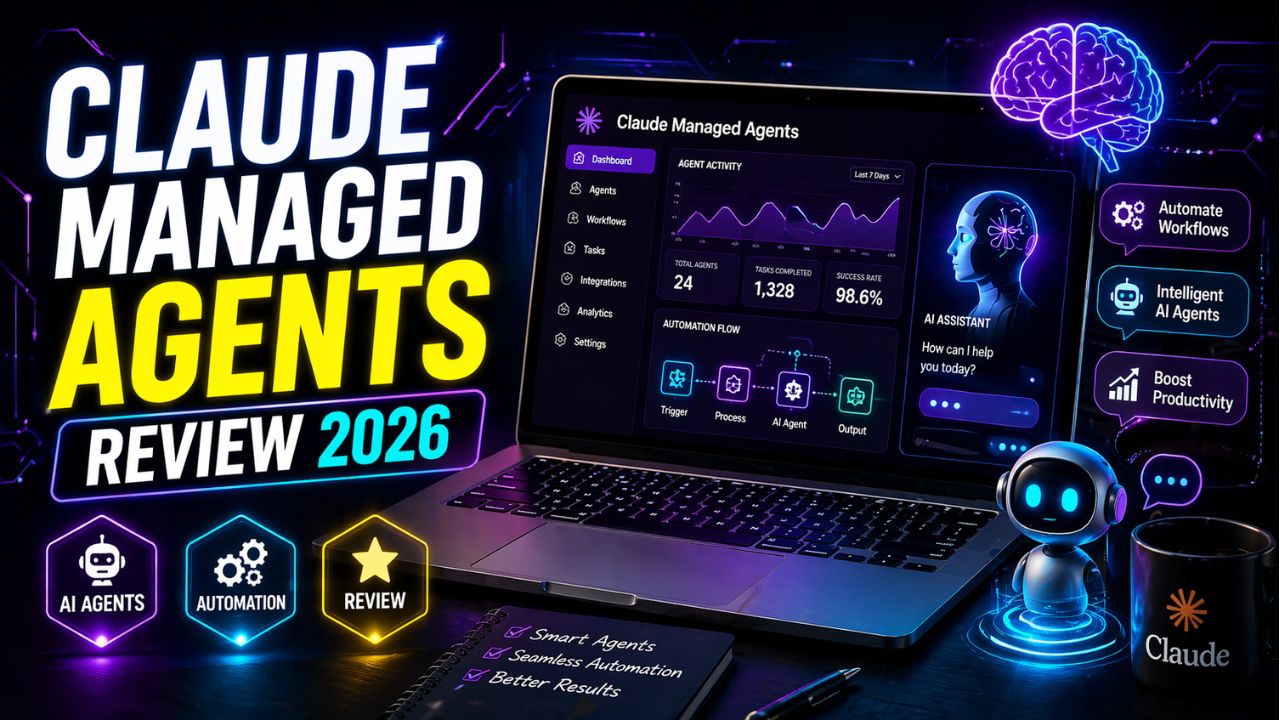
Claude Managed Agents Review 2026

AI agents are easy to demo and hard to ship.

That is the problem Claude Managed Agents is trying to solve.

For the last few years, teams have been able to build impressive agent prototypes: an agent that researches a topic, writes code, checks a file, updates a task, or calls a tool. But turning those demos into reliable production systems usually requires a lot of extra engineering.

You need sandboxed execution, permissions, state management, session recovery, credential handling, tracing, error handling, cost control, and monitoring. In other words, you need to build the agent and the infrastructure around the agent.

On April 8, 2026, Anthropic launched Claude Managed Agents in public beta to reduce that infrastructure burden.


Claude Managed Agents Review 2026


In this Claude Managed Agents review 2026, we will explain what Claude Managed Agents is, how the $0.08 per session-hour pricing works, what features matter most, who should use it, who should avoid it, and whether it is worth building on in 2026.

Claude Managed Agents Review 2026: What Is It?

Claude Managed Agents is a managed agent runtime from Anthropic for building and deploying cloud-hosted AI agents at scale.

In simple words, it lets developers define an AI agent, give it tools and permissions, and run it inside Anthropic’s managed cloud environment instead of building all the infrastructure themselves.

Anthropic describes it as a suite of composable APIs for building and deploying cloud-hosted agents at scale. It combines an agent harness, managed infrastructure, sandboxed tool execution, stateful sessions, credential management, scoped permissions, checkpointing, and tracing.

That matters because real agents need more than a smart model.

A production agent needs:

  • A clear job definition
  • Tools it is allowed to use
  • Safe execution boundaries
  • Durable session state
  • Credential and permission controls
  • Event logs and observability
  • A way to recover from errors

Claude Managed Agents tries to handle much of that runtime layer so teams can focus more on what the agent should do.

If you need the beginner concept first, read this guide on what an AI agent is. If you want simpler no-code automation tools, this guide on AI automation tools for bloggers is easier to start with.

Claude Managed Agents in Plain English

Think of Claude Managed Agents as a hosted workspace where an AI agent can work for longer than a normal chat response.

Instead of sending one prompt and getting one answer, you can create an agent with tools, start a session, stream events, and let the agent work through a task inside a managed environment.

A simple mental model looks like this:

  • Agent: the job description, model, tools, and instructions.
  • Environment: the managed place where tools and code can run.
  • Session: the actual work session where the agent performs the task.
  • Events: the stream of updates that shows what happened.

That is why Claude Managed Agents is different from a normal chatbot. It is designed for tasks that may take time, use tools, persist state, and need visibility into what happened.

It is also not the same as Claude Code. Claude Code is focused on coding workflows. Claude Managed Agents is a broader platform for long-running, tool-using agents that can power production applications.

Why Claude Managed Agents Matters in 2026

Claude Managed Agents matters because the AI industry is moving from chat to workflows.

A chatbot can answer a question. An agent can work toward a goal.

For developers and product teams, that shift creates a new problem. The model can reason, but the surrounding system still has to manage tools, permissions, files, state, retries, and logs.

Anthropic is trying to make that easier by providing a managed runtime.

This is useful for teams building:

  • Research agents
  • Customer support agents
  • Developer tools
  • Workflow automation agents
  • Content operations agents
  • Internal business process agents
  • Multi-step SaaS features

Early adopters named in Anthropic’s launch materials include companies such as Notion, Asana, Rakuten, and Sentry.

For small builders and agencies, the bigger idea is this: agent infrastructure is becoming a platform layer. You may not need to build every piece from scratch.

How Claude Managed Agents Works

At a high level, Claude Managed Agents works through APIs on the Claude Platform.

Anthropic’s docs say Claude Managed Agents is currently in beta and that endpoints require the managed-agents-2026-04-01 beta header. The SDK sets the beta header automatically.

The basic workflow looks like this:

  1. Create or define an agent.
  2. Give it instructions, tools, and permissions.
  3. Create an environment where it can run.
  4. Start a session.
  5. Stream events as the agent works.
  6. Review outputs, logs, traces, and results.

The important part is that the agent runs inside Anthropic’s managed runtime instead of a custom agent loop you build and host yourself.

That can reduce setup time, but it does not remove engineering responsibility. You still need to design the agent carefully, choose tools wisely, scope permissions, monitor costs, and test workflows before using them in production.

That is why this Claude Managed Agents review 2026 looks at both the upside and the operational tradeoffs.


ChatGPT Plus
Canva Pro
Midjourney
Claude Pro
⚡ SAVE 80%
Market: ₹15,000 → ₹2,999/year

132+ Premium AI Tools
Instant
Verified
24/7


Key Features of Claude Managed Agents

The most important part of this Claude Managed Agents review 2026 is understanding what the platform actually gives developers.

1. Managed Agent Runtime

The main feature is the managed runtime itself.

Instead of building the agent loop, infrastructure, sandboxing, event streaming, and operational layer manually, developers can use Anthropic’s managed APIs.

This can save time for teams that already know what kind of agent they want to build but do not want to spend months building the runtime.

It is especially useful for teams moving from prototype to production.

2. Sandboxed Tool Execution

One of the hardest parts of production agents is safety.

An agent that can run tools, write files, call APIs, or execute code can be powerful. It can also be risky if permissions are too broad.

Claude Managed Agents is designed around sandboxed execution, scoped permissions, and managed credentials so agents can work with tools more safely.

This does not mean you can ignore security. It means Anthropic provides infrastructure that can make safer tool execution easier to design.

3. Long-Running Stateful Sessions

Normal chat APIs are often request-response. You send a request, get a response, and manage the rest yourself.

Claude Managed Agents supports sessions that can run over time and maintain state during the task.

This matters for tasks that take minutes or hours, such as research, file generation, code changes, document processing, customer case work, or multi-step automation.

For developers, stateful sessions can reduce the burden of managing agent memory and progress manually.

4. Event Streaming and Tracing

Production agents need observability.

You need to know what the agent did, which tools it called, what outputs were produced, and where something went wrong.

Claude Managed Agents exposes events so developers can follow the session as it progresses. Anthropic also highlights end-to-end tracing and governance as part of the managed system.

This is important for debugging, compliance, safety review, and user trust.

5. Scoped Permissions and Credentials

Agents should not have unlimited access to every system.

Claude Managed Agents is designed to work with scoped permissions and credential management, so developers can define what the agent is allowed to touch.

For example, a support agent might be allowed to read certain support tickets but not modify billing data. A content agent might be allowed to draft files but not publish them without approval.

This is one of the most important production design decisions for agent systems.

6. Multi-Agent Coordination

Anthropic’s docs say certain features, including multiagent features, are in research preview.

The idea is that one agent may be able to coordinate or delegate work to helper agents for complex tasks.

This could be useful for workflows like research, code review, data processing, or content operations where subtasks can run in parallel.

Because this is research preview, teams should treat it as emerging functionality, not a stable promise for every production workflow yet.

7. Outcome-Based Workflows

Anthropic also lists outcomes as a research preview area in the Managed Agents docs.

The idea is to move beyond “respond once” and toward “work until the task meets a defined success condition.”

This is important because real business tasks usually have success criteria. A report should be complete. A file should pass checks. A summary should follow a format. A customer workflow should reach the correct final state.

Outcome-style workflows are promising, but because they are preview features, teams should test carefully before relying on them for critical work.

Claude Managed Agents Pricing in 2026

Pricing is one of the biggest reasons people are paying attention to Claude Managed Agents.

Anthropic’s official pricing docs say Claude Managed Agents is billed on two dimensions: tokens and session runtime.

1. Standard Claude Token Rates

You still pay for the input and output tokens used by the Claude model during the session.

That means model choice matters. Using a more expensive model for a long, tool-heavy session will cost more than using a cheaper model for a smaller task.

2. $0.08 Per Session-Hour Runtime

On top of tokens, Claude Managed Agents charges $0.08 per session-hour for active runtime.

The pricing docs describe metering based on the session’s running status duration.

That means you are paying for the runtime while the agent is actively working, similar to paying for managed cloud infrastructure.

3. Web Search Costs

Anthropic’s pricing docs also state that web search triggered inside a session incurs the standard $10 per 1,000 searches, in addition to tokens.

So the real cost depends on three things:

  • Model token usage
  • Active runtime duration
  • Tool usage such as web search

What Does $0.08/Hour Actually Mean?

The $0.08 per session-hour runtime fee is low compared with human labor, but it is not the total cost.

Here are simple runtime-only examples:

Session Length Runtime Fee Only Important Note
20 minutes About $0.027 Token and tool costs still apply
1 hour $0.08 Plus model tokens
8 active hours $0.64 Useful for longer workflows
24 active hours $1.92 Runtime only, not total usage


The takeaway is simple: Claude Managed Agents can make long-running agent runtime affordable, but you still need to track token usage, tool calls, and workflow design.

Do not look only at the $0.08/hour number. Look at the full task cost.

For this Claude Managed Agents review 2026, the runtime price is attractive, but cost modeling should include tokens and tool calls from the beginning.

Need Help Building AI Agents?

If you would rather have an expert handle your Claude agent setup, tool integrations, prompts, permissions, and automation design, you can hire AI workflow developers instead of building everything alone.

Find AI automation experts on Fiverr

Who Should Use Claude Managed Agents?

Claude Managed Agents is not a beginner toy. It is mainly for developers, product teams, technical founders, and agencies building real agent workflows.

It is a good fit for:

  • SaaS teams building AI teammates or copilots
  • Developer teams that want managed agent infrastructure
  • Agencies building AI workflow systems for clients
  • Teams already using Claude models
  • Startups building long-running tool-using agents
  • Businesses that need better observability and governance

If you are comfortable with APIs, tools, permissions, and application architecture, Claude Managed Agents is worth exploring.

Who Should Skip Claude Managed Agents?

Claude Managed Agents is not the right choice for everyone.

You may want to skip it if:

  • You have no technical background at all.
  • You only need a simple chatbot.
  • You need fully on-prem or self-hosted infrastructure.
  • You cannot accept beta platform behavior.
  • You need a fixed monthly cost with no usage variability.
  • Your workflow is simple enough for Zapier, Make, or a normal API call.

For many bloggers and small creators, no-code automation tools may be a better starting point. Claude Managed Agents becomes more relevant when you are building custom software or serious workflow automation.

In other words, the practical takeaway from this Claude Managed Agents review 2026 is that the product is powerful, but it is still a developer platform.

Real-World Use Cases

Claude Managed Agents can support many practical agent workflows.

Customer Support Agents

A support agent could review tickets, search documentation, draft replies, summarize customer history, and escalate complex cases to humans.

Important actions should still require review, especially when refunds, account changes, or sensitive customer data are involved.

Research Agents

A research agent could collect sources, summarize findings, create structured reports, and produce briefing documents.

This is useful for analysts, marketers, consultants, and content teams.

Developer Workflow Agents

An agent could inspect files, run tests, generate implementation notes, and assist with repeated engineering tasks.

For code changes, human review remains important before merging or deploying.

Content Operations Agents

A content agent could update old posts, check broken links, prepare SEO briefs, summarize analytics, or create publishing checklists.

For a site like AI Sage Labs, this kind of workflow could eventually help manage review updates, internal links, affiliate disclosures, and content refreshes.

Business Process Agents

An internal business agent could help with onboarding, document processing, report generation, CRM updates, or recurring admin workflows.

These use cases are strongest when the task has clear steps, clear permissions, and review points.

Claude Managed Agents vs Building Your Own Agent Stack

The biggest decision is whether you want Anthropic to manage the runtime or whether you want to build your own stack.

Option Main Benefit Main Tradeoff
Claude Managed Agents Faster production setup with managed infrastructure Less infrastructure control and beta dependency
Build your own stack Maximum control over runtime, hosting, and architecture More engineering work and maintenance


If your team needs speed and already trusts Claude’s platform, Managed Agents is attractive.

If you need full infrastructure control, custom deployment, or strict self-hosting, building your own stack may still make sense.

How Bloggers and Creators Can Benefit Indirectly

Most beginner bloggers will not use Claude Managed Agents directly on day one.

But the platform still matters because it shows where AI workflows are going.

In the near future, bloggers may use agent-powered tools that can:

  • Check old posts for outdated links
  • Prepare SEO update briefs
  • Suggest internal links
  • Summarize affiliate product changes
  • Create content calendars
  • Update spreadsheets and task lists
  • Generate reports from analytics data

You may not build directly on Claude Managed Agents, but SaaS tools and agencies may use it behind the scenes to power smarter workflows.

Build an AI Tools Blog Around This Trend

Agent platforms are becoming a major AI category. If you want to publish reviews, tutorials, and affiliate content around AI tools, start with a reliable blog foundation.

Start your AI tools blog with Hostinger

How to Make Money With Claude Managed Agents

Claude Managed Agents does not automatically make money for you, but it can support serious business models.

AI Agent Development Services

Developers and agencies can offer managed agent setup, tool integration, prompt design, permission design, and workflow implementation.

SaaS Features

Founders can build agent-powered features into SaaS products without building every infrastructure layer from scratch.

Internal Automation Consulting

Consultants can help businesses identify workflows where agents can save time, then design safe human-in-the-loop systems.

Training and Education

As managed agents become more common, developers who understand them can create courses, tutorials, templates, and implementation guides.

Content and Affiliate Marketing

Bloggers can create guides, reviews, comparisons, and tutorials around AI agents, automation tools, and developer platforms.

The safest angle is education, not hype. Teach readers what the technology can do, where it fits, and where it is risky.

Common Mistakes to Avoid

Looking Only at Runtime Price

The $0.08/hour runtime fee is only part of the cost. Token usage and tool calls still matter.

Giving Agents Too Much Access

Scoped permissions are important. Do not give an agent broad access to sensitive systems unless the workflow truly requires it.

Skipping Human Review

Agents can make mistakes. Keep human review for publishing, payments, customer communication, deletion, account changes, and other high-impact actions.

Using Beta Features Like Stable Production Guarantees

Claude Managed Agents is in public beta, and some features are research preview. Build with that in mind.

Building Agents Without Clear Success Criteria

An agent needs a clear job. Vague agents create vague results. Define the task, tools, permissions, and output format clearly.

Recommended Resource Before the Verdict

Want a Claude Agent Starter Checklist?

If you plan to build with Claude Managed Agents, start with a checklist for agent goals, tools, permissions, session design, cost tracking, human review points, and logging.

Access the Claude Agent Starter Checklist

Recommended Book for AI Agent Builders

If you want to understand how modern AI applications are built, a useful book to explore is AI Engineering by Chip Huyen.

It is a better fit for developers and builders than a general AI productivity book because it focuses on building systems with language models.

Recommended Reading

If you are serious about building AI products or agent workflows, this book can help you understand the engineering side of AI applications.

Check AI Engineering on Amazon

Claude Managed Agents Review 2026 Verdict: Is It Worth It?

After researching this Claude Managed Agents review 2026, my honest verdict is that Claude Managed Agents is one of the most important developer releases for production AI agents in 2026.

The $0.08 per session-hour runtime fee makes the product interesting from a cost perspective, but the bigger value is infrastructure. Anthropic is giving developers a managed way to run long-lived, tool-using agents with sandboxing, sessions, tracing, and governance.

It is not for everyone.

Complete beginners may find it too technical. Teams that need self-hosted or on-prem deployments may prefer building their own stack. Businesses with strict cost predictability should model token and tool usage carefully.

But for developers, agencies, SaaS teams, and technical founders who want to build real agent systems faster, Claude Managed Agents is worth serious attention.

Explore Claude Managed Agents

If you are comfortable with APIs and want to build production-style agents, start with Anthropic’s official Managed Agents documentation and test a small workflow first.

Read the Claude Managed Agents docs

Frequently Asked Questions

What is Claude Managed Agents?

Claude Managed Agents is Anthropic’s managed runtime for building and deploying cloud-hosted AI agents at scale. It includes managed infrastructure for long-running, tool-using agents.

When did Claude Managed Agents launch?

Anthropic launched Claude Managed Agents on April 8, 2026, and made it available in public beta on the Claude Platform.

How much does Claude Managed Agents cost?

Claude Managed Agents costs $0.08 per session-hour for active runtime, plus standard Claude token rates. Web search inside a session is billed separately at the standard web search rate.

Is Claude Managed Agents beginner-friendly?

It is beginner-friendly compared with building a full agent runtime from scratch, but it is still a developer product. You need basic API, tool, permission, and application architecture knowledge.

Is Claude Managed Agents the same as Claude Code?

No. Claude Code focuses on coding workflows. Claude Managed Agents is a broader managed runtime for long-running, tool-using agents.

Can bloggers use Claude Managed Agents?

Most beginner bloggers will not use it directly. However, developers and agencies can build tools that help bloggers automate content operations, link checks, research, and update workflows.

Can I make money with Claude Managed Agents?

Yes, if you build real services or products around it. Possible paths include AI agent development services, SaaS features, automation consulting, training, and educational content.

Is Claude Managed Agents production-ready?

Claude Managed Agents is in public beta, and some features are research preview. Teams should test carefully, monitor costs, and avoid relying on preview features for critical workflows without review.

Conclusion

This Claude Managed Agents review 2026 shows why managed agent infrastructure is becoming a major AI category.

Claude Managed Agents is not just another chatbot feature. It is Anthropic’s attempt to move higher in the AI application stack by giving developers a managed way to run agents that use tools, maintain state, stream events, and work inside safer boundaries.

The pricing is attractive, but the real value is operational. Developers can spend less time building runtime scaffolding and more time designing useful agent workflows.

Still, this is not a magic solution. You need clear agent goals, scoped permissions, careful testing, human review, and cost monitoring.

If you are a developer, technical founder, or agency building AI workflows, Claude Managed Agents is worth exploring in 2026.

How We Checked This Review

Before updating this review, we checked Anthropic’s official Claude Managed Agents launch post, Claude API docs, and official Claude pricing documentation. This helps keep the article accurate, practical, and safer for readers considering developer tools or agent infrastructure.

Affiliate Disclosure

As an Amazon Associate, I earn from qualifying purchases. Some links in this article are affiliate links, which means I may earn a commission at no extra cost to you if you buy through them. I only recommend tools, books, and services that may help beginners, creators, developers, and online business owners build better workflows or grow their work more effectively.