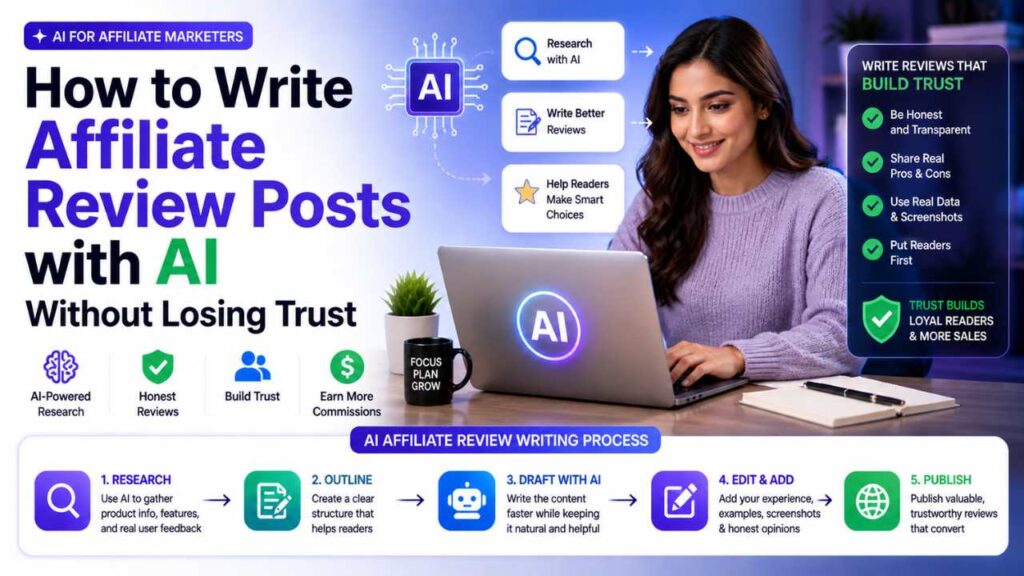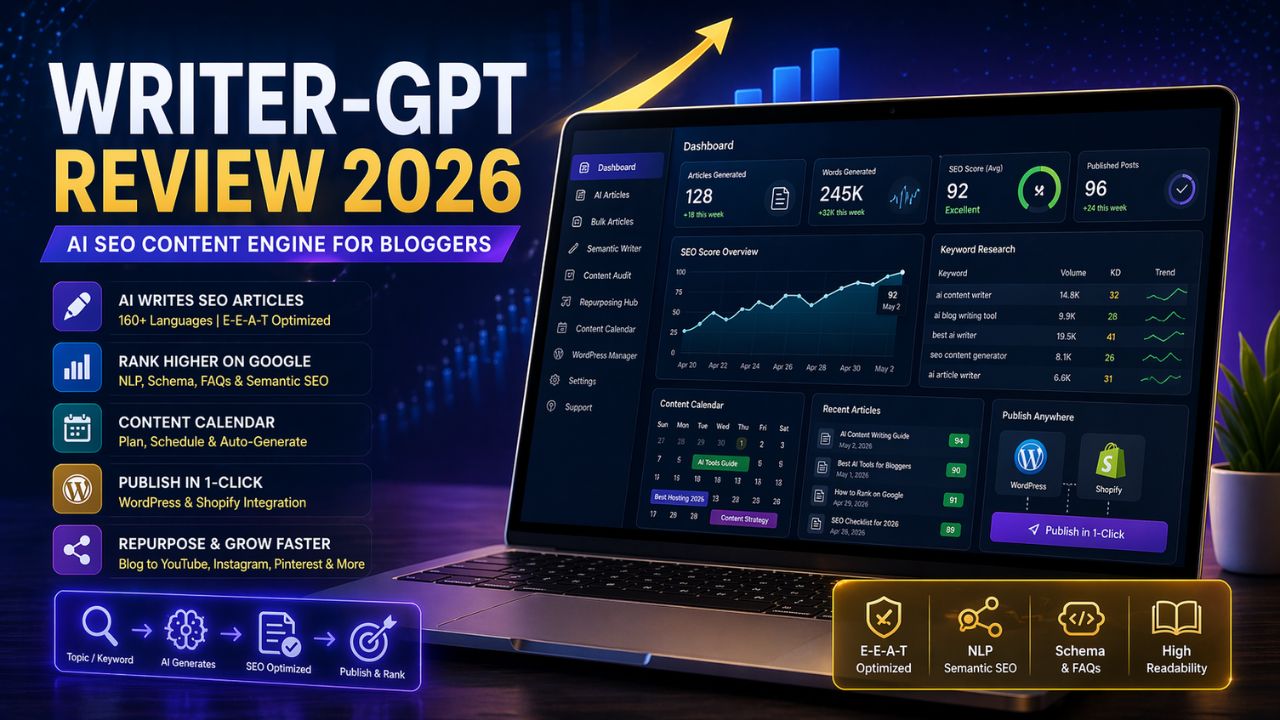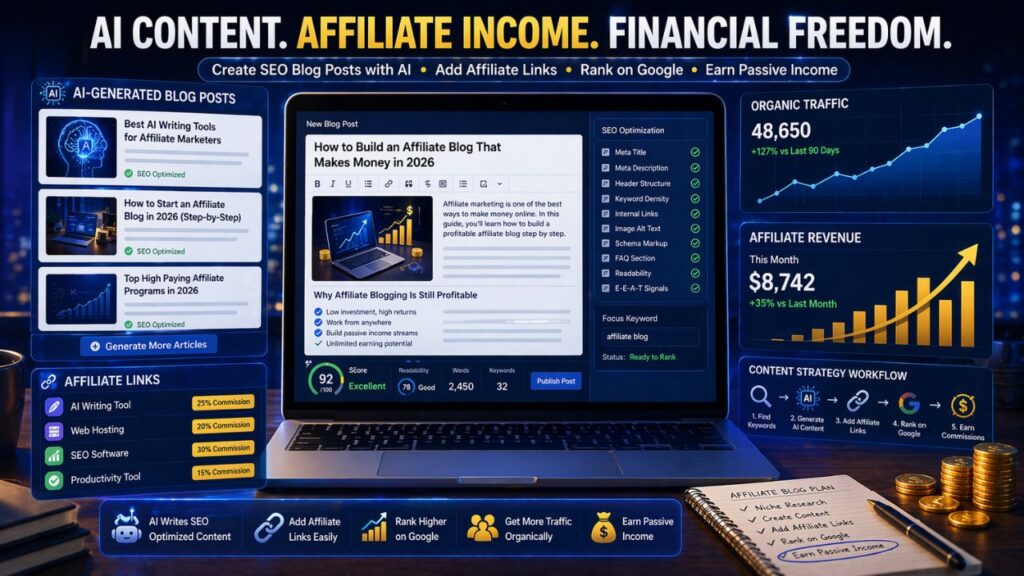
AI Lead Generation Tools for Affiliate Marketers in 2026: Build Lists and Convert Faster

AI Lead Generation Tools for Affiliate Marketers in 2026

Affiliate marketing beginners usually chase more traffic first.

More blog posts. More social posts. More YouTube videos. More AI-generated content. More links.

Traffic matters, but traffic alone is fragile.

If a reader visits your review, clicks nothing, joins nothing, and disappears forever, you only had one chance to earn trust. That is why lead generation matters so much for affiliate marketers in 2026.

The right AI tools can help you turn casual visitors into email subscribers, segment those subscribers by interest, send helpful follow-up emails, and recommend affiliate products more naturally over time.
 

AI Lead Generation Tools for Affiliate Marketers in 2026


This guide covers the best AI lead generation tools for affiliate marketers, how each tool fits into a real funnel, where AI actually helps, and what beginners should avoid if they do not want their site to feel spammy or salesy.

If you are still learning the basics, read our AI affiliate marketing beginner guide first. This article focuses specifically on building lists, capturing leads, and converting faster with AI-assisted workflows.

What AI Lead Generation Means for Affiliate Marketers

Lead generation means collecting contact details from people who are interested in your topic, product category, or recommendation.

For bloggers and affiliate marketers, the most common lead is an email subscriber.

A visitor lands on your blog, reads a helpful article, sees a relevant free resource, enters their email address, and joins your list. Then you can send follow-up emails, tutorials, comparison guides, product updates, discount alerts, and honest recommendations.

AI lead generation means using artificial intelligence to make that process faster and smarter.

AI can help with:

  • Lead magnet ideas
  • Landing page copy
  • Popup copy
  • Email welcome sequences
  • Subscriber segmentation
  • Subject line testing
  • Send-time optimization
  • Personalized follow-up content
  • Lead scoring inside a CRM
  • Repurposing blog posts into email campaigns

The goal is not to trick people into joining your list.

The goal is to offer something genuinely useful at the right moment, then follow up in a way that helps the subscriber make a better decision.

That is why the best AI lead generation tools for affiliate marketers are not just popup tools or email tools. They support the full path from visitor to subscriber to informed buyer.

Why Traffic Without Leads Is Risky

Affiliate blogs often depend on search traffic.

That can work well, but it is risky to depend only on Google rankings, social algorithms, or one traffic source.

If an update reduces your rankings, if a social platform changes reach, or if one article stops ranking, your income can drop quickly.

An email list gives you an asset you control more directly.

You still need to follow email laws, platform policies, and good deliverability practices, but your list lets you:

  • Bring readers back to new posts
  • Promote updated reviews
  • Send comparison guides
  • Test affiliate offers with warmer readers
  • Build trust beyond one article
  • Launch your own digital products later

This matters because affiliate conversions often happen after multiple touches.

A reader may not buy the first time they see your review. But if they join your list, read a helpful tutorial, compare alternatives, and then receive a thoughtful recommendation, the buying decision feels safer.

Lead generation turns one-time traffic into an audience.

The Best AI Lead Generation Tools for Affiliate Marketers in 2026

There is no single tool that does everything perfectly.

The strongest setup is usually a small stack: one email platform, one lead capture tool, one form or quiz tool if needed, one automation tool, and one AI writing assistant for copy and testing.

Here are the tools worth considering.

1. Kit – Best Creator Email Platform for Simple Affiliate Funnels

Kit, formerly ConvertKit, is built for creators, newsletter writers, bloggers, and solo businesses.

For affiliate marketers, Kit is useful because it combines landing pages, opt-in forms, email broadcasts, automated sequences, and visual automations in a creator-friendly interface.

Kit is not the most AI-heavy platform on this list, but it is one of the easiest places to build a clean affiliate email system.

Use Kit for:

  • Simple lead magnets
  • Newsletter signups
  • Welcome sequences
  • Tag-based segmentation
  • Creator-focused affiliate funnels
  • Digital product follow-up later

The practical affiliate workflow is simple.

Create a lead magnet such as “AI Tool Review Checklist,” add a Kit form inside your relevant blog posts, tag subscribers based on the form they joined through, and send a short email sequence that teaches first and recommends second.

Kit is best for affiliate bloggers who want fewer moving parts, not the most advanced enterprise CRM.

2. MailerLite – Best Budget Email and Landing Page Tool

MailerLite is a strong budget-friendly option for bloggers who want email marketing, landing pages, forms, popups, and automation without a steep learning curve.

It is a good fit for beginners because the interface is clean and the main features are easy to understand.

MailerLite can help affiliate marketers with:

  • Signup forms
  • Landing pages
  • Email automations
  • Newsletter campaigns
  • AI-assisted writing
  • Send-time optimization on supported plans

The best use case is a simple blog funnel:

  1. Publish a review or comparison post.
  2. Offer a relevant checklist or buyer guide.
  3. Capture the email with a MailerLite form.
  4. Send a three to five email sequence.
  5. Recommend your strongest affiliate resource naturally.

MailerLite is not perfect for complex sales teams, but for a solo affiliate blogger, it covers the essentials well.

3. Mailchimp – Best for AI-Assisted Email Optimization

Mailchimp has added more AI-assisted features around email content, automation, predictive analytics, send-time recommendations, and campaign optimization.

For affiliate marketers, the useful part is not just writing emails faster. It is using AI and audience data to improve when and how your subscribers receive messages.

Mailchimp can help with:

  • Email content generation
  • Subject line help
  • Automated customer journeys
  • Send-time optimization
  • Audience segmentation
  • Campaign performance insights

Mailchimp is especially useful if you want a more mature email platform and you care about templates, reporting, and AI-assisted campaign improvement.

The main downside is that pricing and plan limits can become less beginner-friendly as your list grows.

For affiliate marketers, always check Mailchimp’s acceptable use and affiliate-related rules before sending promotional campaigns. Email tools can have strict policies around certain niches and offers.

4. HubSpot Breeze – Best CRM-First AI Lead Generation System

HubSpot is more than an email tool. It is a CRM and customer platform with built-in AI through Breeze.

This makes it more powerful than most beginner email platforms, but also more serious than many new bloggers need.

HubSpot Breeze can help with:

  • CRM-based lead tracking
  • AI-assisted marketing and sales tasks
  • Lead segmentation
  • Contact activity tracking
  • Sales and service workflows
  • AI agents connected to customer data

HubSpot is best for affiliate marketers who are moving beyond a simple blog and into consulting, B2B lead generation, agency work, SaaS referrals, or high-ticket affiliate programs where tracking lead quality matters.

If you are writing basic product reviews, HubSpot may be more than you need.

If you are building a serious lead generation business, it may become useful because every contact has a record, history, source, and follow-up path.

5. OptinMonster – Best for Turning Blog Visitors Into Subscribers

OptinMonster is a lead capture and conversion optimization platform.

It is useful for affiliate blogs because many visitors leave without taking action. OptinMonster lets you create targeted popups, floating bars, inline opt-in forms, slide-ins, and exit-intent campaigns.

Use OptinMonster for:

  • Exit-intent popups
  • Content upgrade offers
  • Page-level targeting
  • Scroll-based offers
  • Campaign A/B testing
  • Recovering abandoning visitors

The key is relevance.

If someone reads a Jasper review, offer an AI writing checklist. If someone reads a hosting comparison, offer a WordPress launch checklist. If someone reads an automation guide, offer a workflow template.

Generic popups convert poorly and can annoy readers. Relevant offers feel helpful.

6. Typeform AI or Formless – Best for Quizzes and Conversational Lead Capture

Quizzes can work extremely well for affiliate marketers because they turn lead capture into a decision tool.

Instead of saying “join my newsletter,” you can offer:

  • Find your best AI writing tool
  • Choose the right hosting plan for your blog
  • Discover your affiliate marketing starter stack
  • Pick the right automation tool for your workflow

Typeform AI helps build forms, surveys, and quizzes from prompts. Formless by Typeform goes further with conversational forms that can ask and answer questions more naturally.

For affiliate marketers, a quiz can segment subscribers before they even join your list.

Example:

  • Beginner blogger gets a low-cost starter stack.
  • SEO-focused affiliate marketer gets writing and SEO tools.
  • Automation-heavy creator gets Zapier, Make.com, and n8n resources.
  • Video-focused blogger gets InVideo, Pictory, and Descript resources.

This creates more useful follow-up emails and better affiliate recommendations.

7. Make.com – Best for Automating the Lead Workflow

Make.com is not a lead capture tool by itself. It is the automation layer that connects your tools.

For affiliate marketers, Make.com can connect forms, email platforms, spreadsheets, CRMs, Slack, WordPress, Google Sheets, and AI tools.

Example workflows:

  • New Typeform lead -> tag in MailerLite -> log in Google Sheets -> send welcome email.
  • New Kit subscriber -> classify interest with AI -> add to the right sequence.
  • New lead magnet download -> notify you in Slack -> update affiliate campaign tracker.
  • New blog post published -> create newsletter draft -> add internal links and CTA notes.

Make.com becomes more valuable once your funnel is already working.

Do not automate a broken process. Prove the workflow manually first, then automate the repetitive parts.

Our Make.com review explains why it is one of the best-value automation platforms for bloggers.

8. ChatGPT or Claude – Best for Lead Magnet and Email Drafting

General AI assistants like ChatGPT and Claude are not lead generation platforms, but they are extremely useful for creating the content around lead generation.

Use them to draft:

  • Lead magnet outlines
  • Checklist content
  • Welcome emails
  • Quiz questions
  • Segmentation logic
  • Subject line variations
  • CTA copy
  • Landing page sections

The best approach is to give AI your audience, offer, article topic, and affiliate goal.

Do not ask, “write me an email funnel.”

Ask something more specific:

Create a five-email welcome sequence for beginner affiliate bloggers who downloaded an AI review checklist. The goal is to teach trust-first review writing before recommending an AI writing tool. Keep the tone helpful, not aggressive.

Specific prompts create better output.

Quick Comparison Table

Tool Best For Best Affiliate Use Case Main Limitation
Kit Creator email funnels Simple lead magnets and welcome sequences Not the most AI-heavy option
MailerLite Budget email marketing Forms, landing pages, automations Less advanced for complex CRM workflows
Mailchimp AI-assisted email campaigns Optimization, segmentation, automations Pricing can rise as the list grows
HubSpot Breeze CRM-first lead management B2B, high-ticket, agency, SaaS leads May be too much for small beginner blogs
OptinMonster Website lead capture Exit popups, content upgrades, targeting Needs a good offer to convert well
Typeform AI Quizzes and forms Tool finder quizzes and segmentation Not a full email platform
Make.com Workflow automation Connecting forms, email, CRM, sheets, AI Requires workflow planning
ChatGPT or Claude Copy and strategy help Lead magnet, email, quiz, CTA drafts No built-in subscriber management

Best Lead Magnets for Affiliate Marketers

The tool matters less than the offer.

A weak lead magnet will not convert even with the best software. A strong lead magnet can work with a simple form.

Good lead magnets for affiliate blogs include:

  • Product comparison checklist
  • AI tool buyer guide
  • Blog launch checklist
  • Affiliate review template
  • Email sequence swipe file
  • Automation workflow map
  • Hosting setup checklist
  • AI prompt pack
  • Tool stack quiz
  • Beginner mistake checklist

The best lead magnet should be directly connected to the page where it appears.

If your article is about affiliate review writing, offer a review checklist. If your article is about automation, offer a workflow template. If your article is about AI writing tools, offer a tool comparison worksheet.

Relevance beats size.

A one-page checklist that solves the next problem can convert better than a 40-page ebook nobody wants to read.

A Simple AI Lead Generation Funnel for Affiliate Bloggers

Here is a practical beginner funnel using the AI lead generation tools for affiliate marketers above.

Step 1: Publish a Buyer-Intent Blog Post

Start with a post that attracts readers who are already researching a problem or product.

Examples:

  • Best AI writing tools for bloggers
  • Jasper vs Writesonic
  • Best web hosting for AI blogs
  • How to write affiliate review posts with AI
  • Best automation tools for bloggers

If you need content strategy first, our best AI tools for affiliate marketing guide shows how writing, SEO, design, automation, and email tools fit together.

Step 2: Create a Relevant Lead Magnet

Use ChatGPT or Claude to draft a checklist, worksheet, or short guide connected to the article.

For example:

Create a one-page checklist for beginner bloggers choosing an AI writing tool. Include budget, SEO needs, editing needs, publishing frequency, and affiliate review use cases.

Edit the checklist manually and make it simple.

Step 3: Add an Opt-In Form

Use Kit, MailerLite, Mailchimp, or another email platform to create the form.

Place it:

  • After the introduction
  • In the middle of the article
  • Before the final verdict
  • Inside an exit-intent popup if using OptinMonster

Do not overwhelm the page with too many popups. One good offer placed well is better than five interruptions.

Step 4: Send a Helpful Welcome Sequence

A simple sequence can be enough.

  1. Email 1: Deliver the lead magnet and explain how to use it.
  2. Email 2: Teach the biggest mistake beginners make.
  3. Email 3: Share a practical workflow.
  4. Email 4: Compare two or three tool options.
  5. Email 5: Recommend the best next step with an affiliate disclosure.

This sequence builds trust before asking for a click.

Step 5: Segment Based on Interest

Tag subscribers based on what they downloaded or clicked.

Examples:

  • AI writing tools
  • Hosting
  • Automation
  • Affiliate review writing
  • AI video tools

Segmentation helps you avoid sending every offer to every subscriber.

If someone joined from an automation article, send automation resources first. If someone joined from a hosting article, send blog setup resources first.

Step 6: Track Results

Track simple numbers:

  • Page visits
  • Form conversion rate
  • Email open rate
  • Email click rate
  • Affiliate link clicks
  • Sales where available

Do not optimize everything at once.

Start by improving the lead magnet offer and the first email. Those two pieces usually create the biggest early gains.

Recommended Starter Stack

If you are a beginner, keep the stack simple.

Do not buy eight tools on day one.

A practical starter stack:

  • WordPress hosting: Hostinger
  • Email platform: MailerLite or Kit
  • Lead capture: Built-in forms first, OptinMonster later
  • AI copy help: ChatGPT or Claude
  • Automation: Make.com after the funnel works manually
  • Design: Canva for checklists, PDFs, and thumbnails

This is enough to build a real lead generation system without overspending.

Build Your Affiliate Lead Funnel on a Blog You Control

Your email list, lead magnets, reviews, and opt-in pages need a fast WordPress foundation. Start simple, then add automation once the funnel works.

Start your affiliate blog with Hostinger

If you want someone to set up the opt-in forms, landing pages, email sequence, or tracking sheet for you, hiring help can save time.

Need Help Setting Up Lead Capture?

A freelancer can help build your landing page, signup form, lead magnet design, email automation, and tracking workflow so you can focus on content.

Find lead generation experts on Fiverr

Useful AI Prompts for Lead Generation

Use these prompts with ChatGPT, Claude, or your preferred AI assistant.

Lead Magnet Prompt

Create 10 lead magnet ideas for an affiliate blog about [topic]. The audience is [reader type]. Each idea should solve one specific problem and naturally connect to an affiliate recommendation later.

Landing Page Prompt

Write a simple opt-in landing page for a free [lead magnet name]. The audience is [reader type]. Keep the tone helpful, not pushy. Include headline, subheadline, bullet benefits, form CTA, and privacy reassurance.

Welcome Sequence Prompt

Create a five-email welcome sequence for subscribers who downloaded [lead magnet]. Teach first, recommend second. Include email goal, subject line, short body outline, and affiliate disclosure reminder where needed.

Segmentation Prompt

Build a segmentation plan for an affiliate blog covering [topics]. Suggest tags, lead magnets, follow-up sequences, and which affiliate offers should be recommended to each segment.

CTA Improvement Prompt

Rewrite these opt-in CTAs to sound more specific and less salesy. The offer is [lead magnet]. The page topic is [topic]. Avoid hype, urgency tricks, and exaggerated claims.

Downsides and Compliance Risks

Lead generation can grow your affiliate business, but it also creates responsibilities.

Email Compliance Matters

If you send commercial email in the United States, the FTC’s CAN-SPAM guidance matters. Your emails should avoid misleading headers, avoid deceptive subject lines, identify commercial messages where required, include a valid postal address, and give people a clear way to opt out.

This is not just legal housekeeping. It also protects trust.

AI Can Create Overpromising Copy

AI tools often write stronger claims than you should publish.

Remove phrases like:

  • Guaranteed income
  • Push-button profits
  • Instant leads
  • Passive income machine
  • Effortless conversions

Replace hype with specific, realistic language.

Popups Can Hurt User Experience

Lead capture should not make your blog annoying.

If popups cover the page immediately, repeat too often, or interrupt mobile readers, they can reduce trust.

Use fewer campaigns and make them more relevant.

Bad Lead Magnets Attract Bad Leads

A vague freebie attracts low-quality subscribers.

A specific freebie attracts the right people.

“Free AI ebook” is vague. “AI affiliate review checklist for beginner bloggers” is specific.

Do Not Manipulate Search or Users

Google’s spam policies warn against tactics designed to deceive users or manipulate search systems. Affiliate lead generation should support helpful content, not hide links, mislead readers, or create pages only for search engines.

Affiliate Disclosures Still Apply

If your emails or landing pages include affiliate links, disclose the relationship clearly.

Trust is the asset. Do not trade it for a slightly higher short-term click rate.

Final Verdict: Which Tool Should You Start With?

The best AI lead generation tools for affiliate marketers depend on your stage.

If you are just starting, use MailerLite or Kit for email capture, ChatGPT or Claude for lead magnet and email drafts, and Canva for the downloadable resource.

If your blog already gets traffic, add OptinMonster for better page-level targeting and exit-intent offers.

If you want quizzes, use Typeform AI or Formless to segment subscribers before follow-up.

If you are building a more serious CRM-driven lead system, HubSpot Breeze becomes more relevant.

If your funnel already works and repetitive tasks are slowing you down, add Make.com to connect the moving parts.

The tool stack is important, but the real strategy is simple:

Create useful content. Offer a relevant next step. Follow up with helpful emails. Recommend products honestly.

That is how AI-assisted lead generation becomes an affiliate asset instead of another shiny object.

Frequently Asked Questions

What are AI lead generation tools for affiliate marketers?

AI lead generation tools for affiliate marketers are tools that help capture subscribers, create lead magnets, write email sequences, segment contacts, personalize follow-up, and automate parts of the affiliate funnel.

Do affiliate marketers need an email list?

No, but an email list is one of the safest long-term assets. It lets you follow up with readers after they leave your site and reduces dependence on one traffic source.

What is the best beginner tool for affiliate lead generation?

MailerLite and Kit are the strongest beginner-friendly options. Both support forms, landing pages, email broadcasts, and automated sequences without requiring complex setup.

Can AI write affiliate email sequences?

Yes, AI can draft affiliate email sequences, but you should edit them carefully. Remove hype, verify claims, add disclosures, and make the emails genuinely useful before sending.

What lead magnet works best for affiliate blogs?

The best lead magnet is specific to the article topic. Checklists, comparison worksheets, buyer guides, tool stack quizzes, and prompt packs usually work better than generic ebooks.

Is it legal to send affiliate emails?

Affiliate emails can be legal, but you need to follow applicable email laws, platform rules, and disclosure requirements. For US commercial email, review FTC CAN-SPAM guidance and include a clear opt-out method.

Can AI lead generation replace traffic?

No. Lead generation captures and nurtures interested visitors, but you still need traffic from SEO, social media, paid ads, partnerships, or other channels.

Should I use popups on an affiliate blog?

Yes, but carefully. Use relevant popups with useful offers and avoid interrupting readers too aggressively, especially on mobile.

Conclusion

AI can make lead generation faster, but it does not remove the human part of affiliate marketing.

You still need to understand your reader, choose relevant products, create useful content, offer a valuable lead magnet, and follow up honestly.

The best AI lead generation tools for affiliate marketers help you do those jobs more consistently. They do not turn random traffic into automatic commissions.

Used well, AI lead generation tools for affiliate marketers turn your best content into a repeatable relationship-building system.

Start simple.

Build one lead magnet for one strong article. Add one form. Write one welcome sequence. Track the results. Improve it.

That small system is more valuable than buying a large stack of tools you do not use.

How We Checked This Guide

Before writing this guide, we checked official pages from email, CRM, form, and lead capture platforms, plus FTC email compliance guidance and Google Search spam policies. Tool features, pricing, free plans, and AI capabilities may change, so verify each official pricing and policy page before subscribing.

Affiliate Disclosure

Some links in this article are affiliate links, which means I may earn a commission at no extra cost to you if you purchase through them. I only recommend tools, books and services that may help beginners build better blogs, improve their affiliate content, or grow their online work more effectively.


How to Use AI for Affiliate Marketing Without Sounding Fake or Salesy

How to Use AI for Affiliate Marketing Without Sounding Fake or Salesy

AI can help affiliate marketers move faster, but it can also make their content sound fake very quickly.

You have probably seen those reviews that call every tool “game-changing,” “powerful,” “revolutionary,” and “perfect for everyone.” The writing looks polished, but it does not feel real.

Readers can sense that.

They know when a review is only trying to push a link. They know when the writer has no real opinion. They know when the content sounds like it was generated from a product page and published without thought.

That is the risk with AI affiliate content.

AI can help you research, outline, draft, edit, and repurpose content. But if you let AI control the voice, judgment, and recommendation, your content can become generic and salesy.

How to Use AI for Affiliate Marketing Without Sounding Fake or Salesy

In this guide, we will explain how to use AI for affiliate marketing without sounding fake or salesy. You will learn how to keep your content human, practical, helpful, compliant, and trustworthy while still using AI to save time.

The safest way to learn how to use AI for affiliate marketing is to keep the reader’s decision first and the commission second.

How to Use AI for Affiliate Marketing Without Losing Trust

The safest way to use AI for affiliate marketing is to treat AI as an assistant, not as the reviewer.

AI can organize information. It can suggest outlines. It can rewrite awkward sections. It can turn one article into social captions or email drafts. It can help you build comparison tables and FAQs.

But AI should not decide whether a product is worth recommending.

That judgment should come from research, product understanding, reader needs, and your honest opinion.

Affiliate marketing works when people trust your recommendation. If the reader feels like your article is only written to earn commission, they will leave. If the reader feels helped, they are more likely to click, subscribe, return, and buy later.

That is why the goal is not to use AI to publish more shallow content. The goal is to use AI to create better content with less manual struggle.

If you are brand new to the model, read this beginner guide to AI affiliate marketing for beginners first. This article focuses on making AI-assisted affiliate content sound more human and trustworthy.

Why Most AI Affiliate Content Sounds Fake

Most weak AI affiliate content fails for predictable reasons.

It overhypes products. It repeats the same phrases. It gives generic pros and cons. It pretends every tool is ideal for every user. It hides limitations. It has too many CTAs. It uses fake enthusiasm instead of useful explanation.

Common problems include:

  • Fake personal experience
  • Generic product descriptions
  • No real examples
  • No clear audience fit
  • No meaningful alternatives
  • Weak comparison tables
  • Unsupported income claims
  • Overuse of words like “ultimate” and “game-changing”
  • Affiliate links placed too aggressively

This kind of content does not build trust.

Google’s review guidance also focuses on high-quality reviews with original research, insightful analysis, and useful comparison. A generic AI rewrite of a sales page is not enough.

The better approach is to make AI work from your research notes, not from a blank prompt.

What AI Is Actually Good At in Affiliate Marketing

AI is very useful when you give it the right job.

For affiliate marketers, AI can help with:

Research Organization

AI can help organize product notes, feature lists, pricing details, support docs, user pain points, competitor pages, and FAQ ideas into a useful structure.

It should not invent missing information. You provide the research. AI helps arrange it.

Outline Creation

AI is strong at creating review outlines, comparison structures, tutorial flows, and beginner guide frameworks.

This saves time because you do not need to start from a blank page.

Drafting Sections

AI can draft one section at a time, such as pricing, pros and cons, alternatives, FAQs, or a final verdict draft.

Section-by-section drafting is safer than asking for one full article at once.

Editing and Rewriting

AI can rewrite a stiff paragraph, simplify a technical explanation, or remove overly promotional language.

This is one of the best uses of AI for affiliate content.

Content Repurposing

AI can turn a review into a newsletter section, LinkedIn post, Pinterest description, YouTube script, or short social caption.

This helps you get more value from each article.

If you want a wider tool stack, the next useful article in this category should be a guide to the best AI tools for affiliate marketing.

Use AI for Structure, Not Personality

One of the biggest mistakes beginners make is letting AI write the entire personality of the article.

AI can sound smooth, but smooth is not the same as trustworthy.

Use AI for structure:

  • Headings
  • Review frameworks
  • Comparison tables
  • FAQ ideas
  • Section order
  • Rewrite suggestions

Keep the human part for:

  • Opinions
  • Final verdict
  • Reader empathy
  • Product fit
  • Honest limitations
  • Examples from your workflow

For example, AI may write:

This amazing tool revolutionizes the affiliate marketing workflow and helps users maximize revenue effortlessly.

A more human version would be:

This tool can save time if you already have product research notes and need help turning them into a clear review outline. It will not fix a weak niche or a review with no useful opinion.

The second version sounds more believable because it is specific and limited.

Add Real Use Cases Instead of Generic Claims

Generic claims make affiliate content sound fake.

Specific use cases make it useful.

Instead of writing:

AI tools help affiliate marketers save time.

Write something like:

A beginner affiliate blogger can use ChatGPT to outline a review, Grammarly to polish the final draft, Canva to create a featured image, and Make to add the published post URL to a tracking spreadsheet.

That gives the reader a real workflow.

Useful examples include:

  • How a tool fits into a blogger’s workflow
  • What kind of user benefits most
  • What problem the tool solves
  • What the tool does not solve
  • How it compares with a simpler alternative
  • When a beginner should wait before buying

The more specific the use case, the less salesy your content feels.

Show Pros and Cons Honestly

Every product has limitations.

If your review includes only positives, it starts to sound like an ad.

Honest cons can actually improve conversions because they help the right reader understand the tradeoff before buying.

Weak pros and cons look like this:

  • Easy to use
  • Great features
  • Saves time
  • Affordable

Better pros and cons explain why the point matters:

  • The template system is useful for bloggers who publish repeatable review posts.
  • The AI draft can save time, but only if you provide good research notes first.
  • The paid plan may be hard to justify if your blog is not earning yet.
  • The tool is beginner-friendly, but advanced automation still takes setup time.

That sounds more human because it helps the reader make a decision.

Avoid Fake Personal Experience

This is one of the most important rules.

Do not say “I tested this tool” unless you actually tested it.

Do not say “we used this for 90 days” unless you really did.

Do not ask AI to create personal experience that never happened.

Fake experience is a trust killer. It can also create compliance and reputation problems.

If you researched a tool but did not deeply test it, say that carefully.

Safer wording includes:

  • Based on the official pricing page…
  • According to the help center…
  • For beginners, the most important feature appears to be…
  • This tool may be useful if…
  • Before buying, check the current plan limits…

You can still write helpful content without pretending to have done something you did not do.

Use Fewer, Better Affiliate Links

Too many affiliate links can make a page feel desperate.

A beginner mistake is placing a CTA after every small section. That creates pressure instead of trust.

Use affiliate links where they help the reader take the next step.

Good places include:

  • After explaining who the product is best for
  • After pricing or plan recommendations
  • After a tutorial section
  • After the final verdict
  • Inside a helpful resource block

Bad places include:

  • Before explaining the product
  • After every paragraph
  • Inside unrelated sections
  • Where the link interrupts the reader
  • In fake urgency banners

Affiliate CTAs should feel like an option, not a push.

This is another practical part of how to use AI for affiliate marketing: let the content earn the click before you ask for it.

Write Like a Real Person

AI writing often sounds too balanced, too polished, and too predictable.

Human writing has more variation.

To make affiliate content sound less fake:

  • Use shorter sentences.
  • Break long paragraphs.
  • Remove hype words.
  • Add practical examples.
  • Use direct explanations.
  • Include small caveats.
  • Write for one specific reader.

For example, instead of writing:

This platform empowers affiliate marketers to unlock unprecedented revenue potential through advanced AI-driven content workflows.

Write:

This tool can help affiliate bloggers create review outlines faster, but the final article still needs product research and a human verdict.

The second sentence is less dramatic, but much more trustworthy.

Best AI Tools for Human-Sounding Affiliate Content

You do not need a huge stack to use AI for affiliate marketing.

Start simple.

TaskTool TypeExample Tools
Brainstorming and outlinesAI assistantChatGPT, Claude
Structured blog draftsAI writing toolWritesonic, Rytr
Editing and clarityWriting assistantGrammarly
VisualsDesign toolCanva, Leonardo AI
AutomationWorkflow toolMake, Zapier, n8n
TrackingSpreadsheet or analyticsGoogle Sheets, Search Console

If you are still choosing your writing stack, read this guide to AI writing tools in 2026.

How to Create Authentic AI Affiliate Reviews

A strong affiliate review should feel like a useful decision guide, not a sales page.

A good structure looks like this:

  1. Start with the reader’s problem.
  2. Explain what the product is.
  3. Say who it is best for.
  4. Say who should skip it.
  5. Explain key features in simple language.
  6. Show practical use cases.
  7. Include honest pros and cons.
  8. Compare alternatives.
  9. Check pricing from official sources.
  10. Write a human final verdict.

This structure works because it follows the reader’s decision process.

They do not only want to know what the product does. They want to know if it fits them.

If your goal is reviews specifically, the detailed workflow is here: write affiliate review posts with AI.

SEO Tips for AI Affiliate Content

AI can help with SEO, but it does not replace SEO judgment.

For affiliate content, focus on these basics:

Match Search Intent

A reader searching for “best AI tools for affiliate marketing” wants a list and comparison. A reader searching for “[tool name] review” wants a verdict. A reader searching for “[tool] alternatives” wants options.

Match the structure to the intent.

Build Topic Clusters

Do not publish random disconnected posts.

For example, an AI affiliate marketing cluster could include:

  • AI affiliate marketing for beginners
  • How to write affiliate review posts with AI
  • Best AI tools for affiliate marketing
  • AI prompts for affiliate marketers
  • How to create affiliate product reviews with AI

This helps readers and search engines understand your topical focus.

Use Internal Links Naturally

Internal links help readers move to the next useful article.

For example, this post naturally links to beginner affiliate marketing, AI review writing, and AI writing tools because those are real next steps.

Add FAQs

FAQs help answer long-tail questions and can make the article more complete.

Use AI to draft FAQ ideas, but answer them clearly yourself.

Disclose Affiliate Links Clearly

Trust also depends on transparency.

The FTC’s endorsement guidance says people should understand when a recommendation may involve compensation or a material connection.

In simple language: if you may earn a commission, tell readers clearly.

A basic disclosure can say:

Some links in this article are affiliate links, which means I may earn a commission at no extra cost to you if you buy through them.

Do not make disclosures hard to find. Do not hide affiliate relationships. Do not pretend a sponsored or affiliate recommendation is completely neutral.

Clear disclosure does not hurt trust. It improves it.

Simple Workflow: AI Affiliate Content Without Sounding Salesy

Here is a repeatable workflow you can use.

  1. Choose one product or topic.
  2. Collect real research from official sources.
  3. Write notes about who the product is for.
  4. Ask AI to organize the notes into an outline.
  5. Draft one section at a time.
  6. Add examples and limitations manually.
  7. Ask AI to remove hype and salesy phrases.
  8. Check pricing and claims.
  9. Add affiliate disclosure.
  10. Add natural CTAs.
  11. Edit the final article for voice and clarity.

Use this prompt before publishing:

Edit this affiliate content to sound more honest, practical, and human. Remove hype, fake urgency, unsupported claims, and overly salesy language. Keep the recommendation useful and balanced.

This one prompt can improve weak AI affiliate drafts quickly.

Before and After: Salesy AI Copy vs Trustworthy Affiliate Copy

One of the easiest ways to learn how to use AI for affiliate marketing is to compare weak AI copy with a better human-edited version.

Here is a salesy version:

This revolutionary platform is the ultimate solution for affiliate marketers who want effortless profits, powerful automation, and guaranteed growth.

That sounds dramatic, but it does not help the reader. It also makes promises that are hard to prove.

Here is a better version:

This platform can help affiliate bloggers organize product research, draft review sections, and create social promotion ideas faster. It works best if you already understand your niche and are willing to edit the output before publishing.

The second version is stronger because it explains what the tool helps with, who it is for, and what condition matters.

Here is another example.

Salesy version:

If you want to dominate affiliate marketing, this tool is a must-have for every serious creator.

Trustworthy version:

This tool is worth considering if you publish regular affiliate content and need help turning research notes into structured drafts. If you only publish once a month, a free AI assistant may be enough for now.

This is the tone you want. It recommends the tool, but it also gives the reader permission to skip it if it is not a fit.

Useful Prompts to Make AI Affiliate Content Less Salesy

If you want to learn how to use AI for affiliate marketing without sounding fake, prompts matter.

Use prompts that force balance, specificity, and honesty.

Trust Edit Prompt

Edit this affiliate review section to sound more honest, practical, and human. Remove hype, fake urgency, vague claims, and overly promotional wording. Keep the tone beginner-friendly.

Use Case Prompt

Turn these product features into practical use cases for beginner bloggers. Explain how each feature helps in a real affiliate marketing workflow.

Pros and Cons Prompt

Create a balanced pros and cons section from these notes. Make every point specific and explain why it matters for affiliate bloggers.

Audience Fit Prompt

Explain who this product is best for, who should skip it, and what beginner users should check before buying.

Final Verdict Prompt

Write a careful final verdict for this affiliate review. Recommend the product only for the right audience. Include the main benefit, main limitation, and one alternative path for beginners.

These prompts help AI act like an editor and organizer instead of a salesperson.

That is the core lesson of how to use AI for affiliate marketing: guide the tool toward useful decision-making, not louder promotion.

Recommended Setup for Affiliate Bloggers

If you want affiliate content to rank and earn over time, build it on a website you control.

Social media can help, but a blog gives you more control over SEO, internal links, email capture, disclosures, and long-term updates.

For beginners, WordPress is still a practical foundation.

Build Your Affiliate Content on a Real Blog

A self-hosted WordPress site gives your reviews, tutorials, and comparison posts a long-term home.

Start your affiliate blog with Hostinger

When to Hire Help

You can build an affiliate content workflow yourself, but hiring help can save time when you are stuck.

You may hire help for:

  • WordPress setup
  • SEO formatting
  • Content editing
  • Comparison tables
  • Blog graphics
  • Affiliate tracking sheets
  • Automation workflows

Need Help Making Affiliate Content Sound More Human?

A freelancer can help with editing, SEO formatting, WordPress setup, comparison tables, and affiliate content workflows.

Find affiliate content help on Fiverr

Recommended Resource Before the Verdict

Want a Human AI Affiliate Content Checklist?

A checklist can help you remove hype, add use cases, check disclosures, improve CTAs, and make AI-assisted affiliate content sound more trustworthy.

CTA idea: Access the AI Sage Labs human affiliate content checklist.

Note: When you create your own Google Doc, PDF, Gumroad product, Digistore24 offer, or JVZoo resource for affiliate content editing, turn the CTA text above into a real sponsored affiliate or product link.

Recommended Book for Affiliate Marketers

If you want to understand affiliate marketing beyond writing blog posts, a useful beginner-friendly book to explore is Affiliate Marketing For Dummies.

It can help you understand traffic, offers, commissions, and the wider business model before you publish dozens of reviews.

Check Affiliate Marketing For Dummies on Amazon

How to Use AI for Affiliate Marketing Verdict

The honest verdict is simple: AI is useful for affiliate marketing, but it should never make your content sound less human.

Use AI for research organization, outlines, drafts, rewrites, FAQs, comparison tables, and repurposing.

Keep human control over product fit, opinions, limitations, final verdicts, and trust.

Readers do not need more fake enthusiasm. They need clear help making a decision.

If you use AI to publish shallow content faster, you will blend into the noise. If you use AI to explain products better, compare options more fairly, and edit your content more carefully, it can become a real advantage.

That is how to use AI for affiliate marketing without sounding fake or salesy.

FAQs About Using AI for Affiliate Marketing

Can I use AI for affiliate marketing?

Yes. You can use AI for affiliate marketing research, outlines, drafts, editing, comparison tables, FAQs, social posts, and email copy. You should still fact-check and add human judgment before publishing.

How do I make AI affiliate content sound human?

Add specific use cases, honest limitations, real examples, natural wording, and a human final verdict. Remove hype, fake urgency, and generic claims.

Can AI write affiliate reviews?

AI can help draft affiliate reviews, but it should not invent personal experience, pricing, or results. Use AI with real research notes and edit carefully.

Is AI affiliate content bad for SEO?

AI-assisted content is not automatically bad for SEO. The risk is low-quality content that is generic, inaccurate, or created only to manipulate rankings. Helpful and reliable content is the safer goal.

Should I disclose affiliate links?

Yes. If you may earn a commission, disclose that clearly. Readers should understand when a recommendation includes an affiliate relationship.

How many affiliate links should I add?

Use affiliate links where they naturally help the reader take the next step. Avoid adding links after every paragraph or using aggressive CTAs that interrupt the article.

What AI tools are best for affiliate marketers?

Useful tools include ChatGPT or Claude for outlining, Writesonic or Rytr for drafts, Grammarly for editing, Canva for visuals, and Make or Zapier for automation.

What is the biggest mistake with AI affiliate content?

The biggest mistake is publishing raw AI content that sounds confident but has no real research, no examples, no limitations, and no useful human recommendation.

Conclusion

AI is not replacing good affiliate marketers.

It is helping thoughtful creators work faster.

The difference comes down to how you use it.

If you use AI to create fake authority, overhype products, and publish generic reviews, your content will sound salesy. If you use AI to organize research, simplify explanations, improve clarity, and repurpose helpful content, it can make your workflow much stronger.

The best affiliate content still feels human.

It explains who a product is for, who should skip it, what tradeoffs matter, and what the reader should do next.

Use AI for speed. Keep trust in human hands.

Start your affiliate blog with Hostinger

Hire affiliate content help on Fiverr

Learn affiliate marketing basics on Amazon

How We Checked This Guide

Before writing this guide, we checked official guidance from the FTC and Google Search Central about affiliate disclosures, AI-generated content, helpful content, and review quality. This helps keep the article safer for bloggers who want to use AI without losing trust.

Affiliate Disclosure

As an Amazon Associate, I earn from qualifying purchases. Some links in this article are affiliate links, which means I may earn a commission at no extra cost to you if you buy through them. I only recommend tools, books, and services that may help beginners build better blogs, improve their affiliate content, or grow their online work more effectively.

Best AI Tools for Affiliate Marketing in 2026: Write Reviews, Emails and Funnels Faster

Best AI Tools for Affiliate Marketing in 2026

Affiliate marketing gets much easier when you have the right tools.

But it also gets messy very quickly.

One tool writes blog drafts. Another creates graphics. Another checks SEO. Another sends emails. Another builds automations. Another helps with funnels. Before long, a beginner affiliate marketer can spend more time switching between tools than creating content that actually helps readers.

That is why choosing the best AI tools for affiliate marketing in 2026 is not about buying every shiny platform.


best-ai-tools-for-affiliate-marketing


It is about building a simple stack that helps you write better reviews, create useful emails, design stronger visuals, automate repetitive work and guide readers toward the right product without sounding fake or pushy.

This guide breaks down the best AI tools for affiliate marketing based on practical blogging use cases: reviews, comparison posts, email sequences, social content, funnels, SEO optimization and workflow automation.

The goal is simple: help you move faster without losing trust.

Best AI Tools for Affiliate Marketing: What Should They Actually Do?

An AI affiliate marketing tool should help with one or more parts of the affiliate workflow.

That workflow usually looks like this:

  1. Choose a product or niche.
  2. Research the product and audience.
  3. Create a review, comparison, tutorial, or buying guide.
  4. Edit the content so it sounds human and trustworthy.
  5. Create graphics, thumbnails, pins, and social posts.
  6. Add affiliate links and disclosures.
  7. Send readers to the right offer.
  8. Repurpose the content into email and social formats.
  9. Track what is working.
  10. Update content when products, pricing, or features change.

The best tools make those steps easier. They do not remove the need for research, honesty, or human judgment.

When you choose the best AI tools for affiliate marketing, think in terms of workflow problems first and tool names second.

If you are still new to the business model, start with this guide to AI affiliate marketing for beginners. This article focuses on the tool stack after you understand the basics.

How We Chose These Tools

For this list, we focused on tools that support real affiliate marketing tasks for bloggers and creators.

We looked for tools that help with:

  • Product research and content planning
  • Affiliate review writing
  • Email and funnel copy
  • SEO and content optimization
  • Editing and trust-building
  • Visual content creation
  • Automation and tracking
  • Beginner-friendly workflows

We also considered limitations. A tool can be useful and still not be right for every affiliate marketer.

For example, a powerful SEO tool may be too expensive for a brand-new blogger. A flexible AI assistant may be excellent for brainstorming but weak for built-in SEO. A design tool may help with Pinterest traffic but not with writing better reviews.

The goal is not to crown one magic tool. The goal is to help you choose the right tool for the right job.

Quick Comparison: Best AI Tools for Affiliate Marketing in 2026

Tool Best For Main Affiliate Use Best Stage
ChatGPT Research, outlines, prompts Planning reviews, emails, and funnels Any stage
Writesonic SEO-style blog drafts Review posts and comparison content Growing blogs
Grammarly Editing and trust Polishing AI-assisted content Any stage
Canva AI Visual content Featured images, pins, thumbnails Any stage
Make.com Automation Publishing workflows and tracking Active bloggers
SurferSEO SEO optimization Ranking competitive review content SEO-focused blogs
Copy.ai Email and funnel copy Subject lines, CTAs, landing copy Creators with offers


1. ChatGPT: Best AI Assistant for Affiliate Research and Planning

ChatGPT is one of the most useful starting points for affiliate marketers because it is flexible.

You can use it to brainstorm niches, organize product research, create review outlines, draft FAQ sections, rewrite weak paragraphs, build email ideas and turn a blog post into social content.

For beginners, ChatGPT is often the best first tool because it helps with almost every part of the workflow.

How Affiliate Marketers Can Use ChatGPT

  • Create review outlines from research notes
  • Generate product comparison questions
  • Rewrite salesy copy into neutral copy
  • Create email newsletter drafts
  • Plan funnel steps
  • Generate FAQ ideas
  • Turn one article into social media posts

The key is giving ChatGPT real input. Do not ask it to guess product details from memory. Paste your research notes, official pricing details, feature notes, and personal observations into the prompt.

A better prompt looks like this:

I am writing an affiliate review for beginner bloggers. Use only the notes below. Create a review outline with sections for who it is best for, who should skip it, features, pricing notes, pros, cons, alternatives, and final verdict. Do not invent facts.

Where ChatGPT Falls Short

ChatGPT is not a dedicated SEO platform. It does not automatically know your affiliate program rules. It can still create confident-sounding mistakes if you give it weak instructions.

Use it for thinking, structure, and drafting. Keep fact-checking in human hands.

If you want to avoid robotic affiliate writing, read this guide on how to use AI for affiliate marketing without sounding fake or salesy.

2. Writesonic: Best for AI Affiliate Review Drafts

Writesonic is useful for bloggers who want structured long-form content, SEO-style drafts, and repeatable article workflows.

For affiliate marketing, this matters because review posts and comparison articles usually follow predictable structures. You need an introduction, product overview, features, pricing notes, pros and cons, alternatives, use cases, FAQs and a final verdict.

Writesonic can help create that first structured draft faster.

How Affiliate Marketers Can Use Writesonic

  • Draft product reviews
  • Create best-tools list posts
  • Write alternatives articles
  • Generate comparison sections
  • Create meta descriptions
  • Rewrite content for clarity
  • Build FAQ sections

The strongest use case is turning product research into a draft you can edit.

For example, if you are writing a review of a video tool, you can collect pricing, features, target users, pros, cons and alternatives first. Then you can use Writesonic to create a draft section by section.

That gives you speed without handing over the final judgment.

Where Writesonic Falls Short

Like every AI writing tool, the output still needs editing. If you publish the first draft without checking facts, adding examples and removing generic language, the article may feel like every other AI-generated review.

Writesonic is best when you already know the topic and need help producing a usable first draft.

For a deeper comparison of writing platforms, see our guide to AI writing tools in 2026.

3. Grammarly: Best AI Tool for Editing Affiliate Content

Affiliate content needs trust.

Trust is not only about facts. It is also about how your writing feels.

If your review is full of awkward sentences, unclear claims, grammar errors, and robotic phrases, readers may not trust your recommendation.

That is where Grammarly helps.

How Affiliate Marketers Can Use Grammarly

  • Fix grammar and spelling issues
  • Improve sentence clarity
  • Check tone
  • Rewrite stiff paragraphs
  • Polish AI-generated drafts
  • Reduce overly complex wording
  • Check for possible plagiarism issues on paid plans

For affiliate bloggers, Grammarly is not mainly about writing faster. It is about publishing cleaner, more professional content.

A simple workflow is:

  1. Draft your review with your notes and AI assistant.
  2. Edit manually for accuracy and opinion.
  3. Run the final draft through Grammarly.
  4. Accept only the suggestions that improve clarity.
  5. Ignore suggestions that remove your natural voice.

Where Grammarly Falls Short

Grammarly is not a full affiliate content generator. It will not choose your niche, research your product, or decide whether an offer is worth recommending.

Use it as the final editing layer. That is where it shines.

Our full Grammarly review explains why it is one of the best-value tools for bloggers.

4. Canva AI: Best for Affiliate Graphics, Pins, and Thumbnails

Affiliate marketing is not only text.

Your article may need a featured image. Your Pinterest strategy may need pins. Your YouTube version may need a thumbnail. Your email lead magnet may need a cover. Your comparison post may need simple graphics.

Canva AI helps with those visual tasks.

How Affiliate Marketers Can Use Canva AI

  • Create blog featured images
  • Design Pinterest pins
  • Create YouTube thumbnails
  • Build lead magnet covers
  • Design comparison graphics
  • Create social posts from blog content
  • Resize one design for multiple platforms

Visuals can improve click-through rate, time on page, and perceived professionalism. That matters for affiliate content because readers are deciding whether to trust you.

Canva is especially useful for bloggers because you can create repeatable templates. Once you have a review-post thumbnail template, every new review becomes faster.

Where Canva AI Falls Short

Canva templates can look generic if you do not customize them. Change colors, fonts, spacing, images, and layouts so your visuals feel like your brand.

Also remember that a good image cannot save a weak review. Visuals support trust. They do not replace useful content.

Our Canva AI review explains how bloggers can use it as a full visual content system.

5. Make.com: Best AI Automation Tool for Affiliate Workflows

Affiliate marketing includes many small repeated tasks.

You publish a post. Then you create social updates. Then you add the URL to a spreadsheet. Then you update an email draft. Then you track the affiliate program. Then you schedule reminders to update pricing later.

Make.com helps automate those workflows.

How Affiliate Marketers Can Use Make.com

  • Add new WordPress posts to a tracking sheet
  • Generate social captions from a new article
  • Send published-post alerts to email or Slack
  • Move leads from forms into email tools
  • Create update reminders for review posts
  • Connect AI tools with spreadsheets and content systems
  • Track affiliate content production

For example, a blogger could build a scenario like this:

New WordPress post published → Make.com adds post details to Google Sheets → AI creates three social captions → Buffer schedules the posts → update reminder is created for 90 days later.

That saves time without changing the quality of the recommendation itself.

Where Make.com Falls Short

Make.com has a learning curve. It is more visual and flexible than many simple automation tools, but beginners may need a few hours to understand scenarios, modules, filters, and credits.

Start with one simple workflow. Do not try to automate your entire affiliate business in one day.

Our Make.com review explains how it compares with Zapier for bloggers.

6. SurferSEO: Best for Ranking Affiliate Review Content

Affiliate content needs traffic.

If your review never gets seen, it will not earn clicks.

SurferSEO helps bloggers optimize articles based on what is already ranking for a keyword. It can suggest related terms, content structure, word count ranges and on-page improvements.

How Affiliate Marketers Can Use SurferSEO

  • Create SEO briefs for review posts
  • Optimize comparison articles
  • Find missing topic coverage
  • Improve existing affiliate articles
  • Plan content around related keywords
  • Check whether a post is too thin compared with competitors

SurferSEO is most useful when you are targeting competitive keywords like tool reviews, alternatives, best-tools lists, and software comparisons.

For example, before writing a “best AI video tools” article, you can use SEO data to understand what subtopics top-ranking pages cover. Then you can add your own angle, testing notes, tables and verdict.

Where SurferSEO Falls Short

SEO tools can make content more complete, but they cannot make it more honest.

Do not chase a content score so hard that your article becomes bloated. A review should still be clear, readable, and useful.

SurferSEO may also be too expensive for beginners who are not publishing consistently yet. Start with lower-cost tools if your blog is not earning.

7. Copy.ai: Best for Affiliate Emails, CTAs, and Funnel Copy

Affiliate marketing is not only blog posts.

Once you have traffic, you may want email sequences, lead magnets, landing pages, social posts, and simple funnels.

Copy.ai is useful for short-form marketing copy.

How Affiliate Marketers Can Use Copy.ai

  • Create email subject lines
  • Draft newsletter sections
  • Write landing page copy
  • Create CTA variations
  • Generate social post hooks
  • Rewrite product descriptions into benefit-focused copy
  • Brainstorm lead magnet angles

For example, if you publish a review of an AI writing tool, you can use Copy.ai to create a three-email sequence:

  1. Email 1: Explain the writing problem.
  2. Email 2: Show the tool workflow.
  3. Email 3: Share the final recommendation and alternative.

That turns one blog post into a simple funnel.

Where Copy.ai Falls Short

Copy.ai is better for short-form marketing copy than deep review articles. For long-form SEO content, a dedicated writing and SEO workflow may be better.

Also, funnel copy can become too aggressive if you are not careful. Keep the tone helpful, not desperate.

Best AI Tool Stack for Beginner Affiliate Marketers

If you are just starting, do not buy every tool on this list.

A smart beginner stack is:

  • ChatGPT for brainstorming and outlines
  • Grammarly for editing and clarity
  • Canva for featured images and pins
  • Google Sheets for tracking posts and links
  • WordPress hosting for your affiliate blog

This gives you a simple system without a heavy monthly bill.

Once your blog starts publishing consistently, you can add Writesonic for faster drafts, Make.com for automation, and SurferSEO for stronger optimization.

Start Your Affiliate Blog on a Website You Control

AI tools work best when they support a real content hub. A WordPress blog gives your reviews, comparisons, emails, and lead magnets a long-term home.

Start your affiliate blog with Hostinger

Best AI Tool Stack for Growing Affiliate Blogs

If your blog already has content and you want to scale, your stack can be more advanced.

A growing affiliate blog may use:

  • Writesonic for structured review drafts
  • SurferSEO for content optimization
  • Grammarly for polish and trust
  • Canva AI for Pinterest pins and thumbnails
  • Make.com for automating post tracking and social distribution
  • Copy.ai for email and funnel copy

This stack is more expensive, so it should match your publishing volume.

If you only publish one article per month, keep things simple. If you publish weekly and actively promote offers, the time saved can justify more tools.

How to Use These Tools Together

The real power comes from combining tools into a workflow.

Here is a practical affiliate review workflow:

  1. Use ChatGPT to create a product research checklist.
  2. Collect details from official product pages, pricing pages, docs, and user feedback.
  3. Use Writesonic to draft the review section by section.
  4. Use SurferSEO to check missing subtopics and related terms.
  5. Edit manually for examples, limitations, and final verdict.
  6. Use Grammarly to polish clarity and tone.
  7. Use Canva AI to create a featured image and Pinterest pin.
  8. Use Copy.ai to draft an email promoting the article.
  9. Use Make.com to add the post to your tracking sheet and create update reminders.

This workflow is faster than doing everything manually, but it still keeps the important decisions human.

AI Prompts for Affiliate Marketing Tools

Good prompts make these tools more useful.

Product Research Prompt

Create a product research checklist for an affiliate review of [product]. Include pricing, features, use cases, limitations, alternatives, audience fit and questions a beginner buyer may have.

Review Outline Prompt

Use the notes below to create an affiliate review outline for beginner bloggers. Do not invent facts. Include who it is best for, who should skip it, pricing notes, pros, cons, alternatives and final verdict.

Email Funnel Prompt

Create a three-email sequence that promotes this affiliate review in a helpful way. Email one should explain the problem, email two should show the workflow and email three should recommend the tool with a clear limitation.

Trust Edit Prompt

Edit this affiliate content to sound more honest, practical, and human. Remove hype, fake urgency, unsupported claims and salesy language.

CTA Prompt

Create five natural CTA options for this affiliate review. Each CTA should feel helpful, not aggressive and should match a reader who is close to comparing tools.

Common Mistakes When Using AI Tools for Affiliate Marketing

Buying Too Many Tools Too Early

A beginner does not need seven paid tools. Start with free or low-cost tools and upgrade only when a limitation slows you down.

Publishing Raw AI Reviews

AI drafts are starting points. Add research, examples, screenshots, limitations, and your own verdict before publishing.

Ignoring Affiliate Disclosures

If you may earn a commission, disclose that clearly. Trust and compliance matter more than hiding the relationship.

Using AI to Fake Experience

Do not claim you tested a tool unless you did. If you researched it, say that. If you tested it, explain what you tested.

Letting SEO Tools Overwrite Reader Experience

SEO recommendations are useful, but your article still needs to be readable. Do not add unnecessary sections just to chase a score.

Can AI Tools Really Help Affiliate Marketers Make Money?

Yes, but not automatically.

AI tools help affiliate marketers make money by supporting activities that can lead to income:

  • Publishing more helpful reviews
  • Improving SEO structure
  • Creating cleaner email campaigns
  • Designing better visuals
  • Repurposing content across platforms
  • Tracking and updating posts more consistently
  • Reducing time spent on repetitive work

But the income comes from useful content, targeted traffic, product fit, and reader trust.

AI tools make the work faster. They do not guarantee commissions.

If you want a broader monetization roadmap, read this guide on how to make money with AI tools.

When to Hire Help Instead of Buying Another Tool

Sometimes the problem is not the tool stack.

Sometimes you need help setting up WordPress, building comparison tables, creating templates, designing graphics, writing email sequences, or automating your workflow.

Hiring a freelancer can make sense if:

  • You are stuck on technical setup
  • You need a clean blog design
  • You want reusable review templates
  • You need help with SEO formatting
  • You want automation workflows built for you
  • You need email or funnel copy edited

Want Help Building Your AI Affiliate Workflow?

A freelancer can help with WordPress setup, SEO formatting, review templates, email funnels, affiliate tracking sheets and automation workflows.

Find affiliate marketing help on Fiverr

Recommended Resource Before the Verdict

Want an AI Affiliate Tool Stack Checklist?

A simple checklist can help you choose the right tool for reviews, SEO, email, funnels, visuals, automation and tracking without wasting money on overlapping subscriptions.

Access the AI Sage Labs AI affiliate tool stack checklist.

Recommended Book for Affiliate Marketers

If you want to understand affiliate marketing beyond AI tools, a useful beginner-friendly book to explore is Affiliate Marketing For Dummies.

It can help you understand programs, offers, traffic, commissions, disclosures and the business model behind affiliate income.

Check Affiliate Marketing For Dummies on Amazon

Best AI Tools for Affiliate Marketing Verdict

The best AI tool for affiliate marketing depends on the job.

If you need planning and flexible thinking, start with ChatGPT.

If you need structured review drafts, consider Writesonic.

If you need cleaner, more trustworthy writing, Grammarly is one of the easiest upgrades.

If you need visuals, Canva AI is hard to beat for bloggers.

If you need automation, Make.com can save hours once your workflow grows.

If you need SEO optimization for competitive review keywords, SurferSEO can help.

If you need email and funnel copy, Copy.ai can speed up short-form marketing assets.

The smartest approach is not to buy everything at once. Start with the bottleneck that is slowing you down most.

For most beginners, that means starting with ChatGPT, Grammarly, Canva and a WordPress blog. Add paid writing, SEO, automation, and funnel tools only when your publishing workflow justifies the cost.

That is how the best AI tools for affiliate marketing become a real business advantage instead of another subscription pile.

FAQs About AI Tools for Affiliate Marketing

What are the best AI tools for affiliate marketing beginners?

The best beginner stack is ChatGPT for planning, Grammarly for editing, Canva for visuals, Google Sheets for tracking, and WordPress for publishing. Add paid tools only when you need more speed or structure.

Can AI tools write affiliate reviews?

AI tools can help draft affiliate reviews, but they should not invent personal experience, pricing, or results. Use real research notes and edit the final review carefully.

Which AI tool is best for affiliate review posts?

Writesonic is useful for structured review drafts, while ChatGPT is useful for outlines and research organization. Grammarly is useful after drafting to polish clarity and tone.

Which AI tool is best for affiliate emails?

Copy.ai and ChatGPT are both useful for email ideas, subject lines, and simple promotional sequences. The final email should still sound helpful and not overly aggressive.

Do AI tools guarantee affiliate income?

No. AI tools can save time and improve workflows, but affiliate income depends on traffic, trust, product fit, content quality, and consistent execution.

Should I use AI tools for SEO affiliate content?

Yes, but use them carefully. SEO tools can help with structure and topic coverage, but your article still needs original insight, useful examples, and accurate information.

How many AI tools should a beginner buy?

Start with as few as possible. One AI assistant, one editor, one design tool, and a simple website are enough for many beginners. Upgrade only when a clear workflow bottleneck appears.

Are AI-generated affiliate posts safe for Google?

AI-assisted content can be safe when it is helpful, accurate, original, and written for people. Thin content created only to manipulate rankings is risky.

Conclusion

Affiliate marketing in 2026 rewards creators who can publish useful content consistently without losing trust.

AI tools can help with that.

They can speed up research, drafting, editing, graphics, email copy, funnel planning, automation, and SEO optimization. But they cannot replace product understanding, audience empathy, or honest recommendations.

The best stack is the one that solves your current bottleneck.

If writing is slow, use an AI writing tool. If editing is weak, use Grammarly. If visuals are slowing you down, use Canva. If repetitive tasks are eating time, use Make.com. If rankings are the main challenge, use an SEO optimization tool.

Do not chase every tool. Build a simple system. Publish helpful content. Track what works. Improve over time.

That is the practical way to use the best AI tools for affiliate marketing without turning your blog into a collection of generic AI content.

Start your affiliate blog with Hostinger

Hire affiliate marketing help on Fiverr

Learn affiliate marketing basics on Amazon

How We Checked This Guide

Before finalizing this guide, we checked official and trusted sources for affiliate disclosures, AI content quality guidance, and current tool plan pages where pricing and usage limits can change. Always check each tool’s official pricing page before buying because AI tool plans change often.

Affiliate Disclosure

As an Amazon Associate, I earn from qualifying purchases. Some links in this article are affiliate links, which means I may earn a commission at no extra cost to you if you buy through them. I only recommend tools, books, and services that may help beginners build better blogs, improve their affiliate content, or grow their online work more effectively.

 

AI Affiliate Marketing for Beginners 2026: Step-by-Step Guide to Start

AI Affiliate Marketing for Beginners 2026

Affiliate marketing sounds simple from the outside.

You recommend a product, someone clicks your link, and you earn a commission. That part is true, but it is only the surface.

The real work is choosing the right niche, understanding your audience, creating useful content, joining trustworthy affiliate programs, disclosing links clearly, and building enough trust that readers actually believe your recommendation.

AI can help with that process, but it cannot replace the business model.

If you are searching for AI affiliate marketing for beginners, you are probably wondering how to use tools like ChatGPT, Claude, Writesonic, Canva, Grammarly, and automation platforms to start faster without creating low-quality content.

AI Affiliate Marketing for Beginners 2026

That is the right question.

In this guide, we will break down AI affiliate marketing for beginners in simple language. You will learn what it means, how it works, which tools help, how to choose a niche, how to create content, how to disclose affiliate links, and how to start without falling for fake passive income promises.

AI Affiliate Marketing for Beginners: What Does It Mean?

AI affiliate marketing means using artificial intelligence tools to help create, manage, improve, and promote affiliate marketing content.

In simple words, you use AI to make affiliate work faster.

AI can help you:

  • Research product ideas
  • Create review outlines
  • Write first drafts
  • Improve readability
  • Create comparison tables
  • Generate email ideas
  • Design blog graphics
  • Repurpose content into social posts
  • Build simple automation workflows

But AI does not create trust for you.

Affiliate marketing still depends on helping readers make better decisions. If your content is fake, thin, or only written to push links, readers will leave. If your content is useful, honest, and clear, AI can help you publish more consistently.

The beginner rule is simple:

Use AI to organize and improve your affiliate content, not to fake experience or hide weak research.

How Affiliate Marketing Works

Affiliate marketing is a commission-based business model.

You join an affiliate program, get a special tracking link, and promote a product or service. If someone clicks your link and buys, you may earn a commission.

The basic process looks like this:

  1. Choose a niche.
  2. Find products or services your audience needs.
  3. Join affiliate programs.
  4. Create helpful content around those products.
  5. Add affiliate links naturally.
  6. Disclose that you may earn a commission.
  7. Send traffic to the content.
  8. Improve the content over time.

For bloggers, the most common affiliate content types are reviews, comparisons, best-tools lists, tutorials, alternatives posts, buying guides, and beginner guides.

AI can help with each of those content types, but the final recommendation should still come from you.

If you want a deeper review-writing workflow, read this guide on how to write affiliate review posts with AI without losing trust.

Why AI Affiliate Marketing Matters in 2026

Affiliate marketing is more competitive now.

Many niches are full of reviews, comparison posts, YouTube videos, Reddit threads, social posts, and AI-generated articles. Publishing generic content is not enough.

AI matters because it can help beginners move faster through the parts that usually slow them down:

  • Blank-page writing
  • Topic planning
  • Content outlining
  • Editing and polishing
  • Repurposing content
  • Creating visuals
  • Organizing workflows

But AI also creates a risk.

Because it is easier to publish content, many beginners publish weak articles that sound confident but offer no real help. That is not a strong long-term strategy.

Google’s guidance around AI-generated content focuses on helpful, reliable content made for people. The safest approach is to use AI as an assistant while still adding research, useful examples, clear limitations, and human judgment.

That is how AI affiliate marketing for beginners becomes a real opportunity instead of another shortcut trap.

Step 1: Choose a Simple Affiliate Niche

The first step is choosing a niche.

A niche is the topic area your site or content focuses on.

Beginner affiliate marketers often make the mistake of choosing a niche that is too broad. For example, “technology” is too broad. “AI tools for bloggers” is more focused. “AI video tools for YouTube creators” is even more specific.

A good beginner niche should have:

  • Products people already buy
  • Problems you can explain clearly
  • Enough search demand
  • Affiliate programs available
  • Room for many blog posts
  • A reader you understand

For AI Sage Labs, strong affiliate niche angles include:

  • AI tools for bloggers
  • AI writing tools
  • AI video tools
  • AI automation tools
  • AI design tools
  • WordPress hosting for AI blogs
  • Affiliate marketing tools for beginners

AI can help you brainstorm niche ideas, but do not let AI choose the niche alone. You should choose a topic you are willing to study for months.

Step 2: Pick Products That Fit the Reader

After choosing a niche, choose products that actually help your reader.

This is where many beginners go wrong. They choose products only because the commission looks high.

That can backfire.

If the product does not fit your audience, the content will feel forced. If readers click and regret buying, trust drops. If every recommendation is based only on commission, your site becomes hard to believe.

Better product choices usually have:

  • A clear use case
  • Good product-market fit for your audience
  • Transparent pricing
  • Decent reputation
  • Useful features
  • Fair affiliate terms
  • Enough content angles for reviews and tutorials

For example, if your audience is beginner bloggers, useful products may include hosting, writing tools, grammar tools, design tools, SEO tools, email platforms, automation tools, and video repurposing tools.

AI can help you build a product research table, but you should check official product pages, pricing pages, help docs, and real user feedback before writing.

Step 3: Join Affiliate Programs

Once you know which products fit your niche, the next step is joining affiliate programs.

Affiliate programs can be direct or marketplace-based.

Direct programs are run by the company itself. Marketplace programs are hosted on platforms such as Impact, PartnerStack, ShareASale, CJ, Amazon Associates, Fiverr Affiliates, or other affiliate networks.

Before joining, check:

  • Commission rate
  • Cookie duration
  • Payout method
  • Minimum payout threshold
  • Approved traffic sources
  • Brand rules
  • Disclosure requirements
  • Prohibited keywords or ad rules

Do not skip the rules.

Some programs do not allow certain ad bidding, coupon content, email promotion, or misleading claims. If you break the rules, you may lose commissions.

For Amazon Associates, the Operating Agreement and program policies include specific requirements around affiliate links and disclosures. Always read the current rules before promoting Amazon products.

Step 4: Build a Website You Control

You can promote affiliate links on social media, YouTube, email, and communities, but a website gives you long-term control.

A blog lets you publish review posts, comparison articles, tutorials, buying guides, and evergreen content that can rank over time.

For beginners, WordPress is still one of the strongest options because it gives you control over SEO, plugins, categories, internal links, affiliate disclosures, and monetization.

A simple affiliate blog needs:

  • Fast hosting
  • A clear niche
  • Simple design
  • SEO-friendly structure
  • Affiliate disclosure page
  • Contact page
  • Privacy policy
  • Useful categories

Do not spend months perfecting the design. Start with a clean site, publish helpful content, and improve the site as you grow.

Start Your Affiliate Blog on a Website You Control

A self-hosted WordPress blog gives you a place to publish reviews, tutorials, comparison posts, and affiliate guides that can grow over time.

Start your affiliate blog with Hostinger

Step 5: Create Trust-First Affiliate Content

Content is where affiliate marketing becomes real.

You need articles that help readers make decisions.

Beginner affiliate content types include:

  • Product reviews
  • Best tools lists
  • Product comparisons
  • Alternatives posts
  • Beginner tutorials
  • How-to guides
  • Problem-solution posts
  • Case-study style posts

AI can help you create these faster.

For example, you can ask AI to create an outline for a review, rewrite a confusing section, create FAQs, build a comparison table, or turn a tutorial into an email.

But trust-first content needs more than AI output.

Each review should include:

  • Who the product is best for
  • Who should skip it
  • Honest pros and cons
  • Pricing notes
  • Alternatives
  • Real use cases
  • Limitations
  • A clear final verdict

If you want to see how this fits into income strategy, read this guide on how to make money with AI tools.

Step 6: Use AI Tools the Right Way

AI tools are useful in affiliate marketing, but only when you use them correctly.

A simple AI affiliate workflow looks like this:

  1. Research the product from official sources.
  2. Save notes in a document.
  3. Ask AI to organize the notes into an outline.
  4. Draft each section separately.
  5. Add your own examples and opinions.
  6. Fact-check pricing and features.
  7. Run the draft through Grammarly or another editor.
  8. Add affiliate disclosure and natural CTAs.
  9. Publish and update later.

Useful tools for beginners include:

  • ChatGPT or Claude for brainstorming and outlines
  • Writesonic for structured content drafts
  • Grammarly for editing
  • Canva for blog graphics and Pinterest pins
  • Make or Zapier for simple automations
  • Google Sheets for tracking posts and links

If you need a full tool list, this upcoming category should include a dedicated guide to the best AI tools for affiliate marketing.

Step 7: Add Affiliate Links Naturally

Affiliate links should feel helpful, not desperate.

Do not place a buy button after every paragraph. Do not push the same product to every reader. Do not make fake urgency claims. Do not hide that you may earn a commission.

Better affiliate link placement looks like this:

  • After explaining who the tool is for
  • After a pricing or plan recommendation
  • After a strong use case
  • In the final verdict
  • In a helpful resource section

The link should match the reader’s decision point.

For example, after explaining why a hosting platform is useful for beginner affiliate bloggers, you can naturally link to the hosting provider. After explaining why a freelancer can help with setup, you can link to a service marketplace.

Natural CTAs convert better than aggressive ones because they respect the reader.

Step 8: Disclose Affiliate Links Clearly

Affiliate disclosure is not optional.

The FTC’s endorsement guidance says people should be able to understand when a recommendation may involve compensation or a material connection.

In plain beginner language: if you may earn a commission, tell the reader clearly.

A simple disclosure can say:

Some links in this article are affiliate links, which means I may earn a commission at no extra cost to you if you buy through them.

Do not hide disclosures at the bottom only if the reader sees affiliate links near the top. Use clear disclosure language where it makes sense for your site and content.

Also remember that Amazon Associates has its own required disclosure language. If you use Amazon links, include the required Amazon Associate wording.

Step 9: Promote Your Content

Publishing is not the end.

Beginner affiliate marketers often write a post and wait. Sometimes it ranks. Often it does not.

You need promotion.

AI can help repurpose one article into:

  • LinkedIn posts
  • Pinterest pin descriptions
  • YouTube video scripts
  • Email newsletter sections
  • Short social captions
  • Twitter/X threads
  • Quora-style answers

For example, one affiliate review can become a YouTube summary, three LinkedIn posts, five Pinterest pins, and a newsletter feature.

This is where AI helps you get more value from the content you already created.

Step 10: Track What Works

Affiliate marketing improves when you track results.

At a minimum, track:

  • Post title
  • Publish date
  • Affiliate program
  • Affiliate links used
  • Main keyword
  • Internal links
  • Update date
  • Clicks if available
  • Conversions if available

You can start with Google Sheets.

Later, you can use automation tools like Make or Zapier to save new posts, create update reminders, and track affiliate content.

Tracking helps you know which products, topics, and content types actually create income.

This is one of the most overlooked parts of AI affiliate marketing for beginners: AI can help you create content, but tracking tells you what is actually working.

Best AI Tools for Beginner Affiliate Marketers

Here is a simple beginner-friendly tool stack.

Need Tool Type Example Tools
Brainstorming and outlines AI assistant ChatGPT, Claude
Blog drafts AI writing tool Writesonic, Rytr
Editing Writing assistant Grammarly
Graphics Design tool Canva
Automation Workflow tool Make, Zapier
Tracking Spreadsheet Google Sheets

Start simple. Do not buy every tool at once.

For most beginners, one AI assistant, one editor, one design tool, and one website are enough.

Common Mistakes Beginners Make

Choosing Products Only for High Commission

High commission is attractive, but product fit matters more. Promote products that genuinely help your reader.

Publishing Raw AI Content

Raw AI drafts often sound generic and may include incorrect claims. Edit everything before publishing.

Pretending to Have Used a Product

Do not say you tested something unless you actually did. Use honest wording based on your level of research.

Ignoring Disclosure Rules

Clear affiliate disclosure builds trust and helps you stay compliant.

Starting Too Broad

A narrow niche is easier to build than a broad site with random products.

Not Updating Posts

Pricing, features, and affiliate terms change. Review posts should be updated regularly.

30-Day AI Affiliate Marketing Action Plan

If you are starting from zero, use the next 30 days to build your first small affiliate system.

Week 1: Choose Niche and Products

Pick one niche and three products. Research their official pages, pricing, affiliate programs, and alternatives.

Week 2: Build Your Website Foundation

Set up WordPress, create basic pages, choose categories, install an SEO plugin, and prepare your affiliate disclosure.

Week 3: Publish Your First Review

Use AI to create an outline and draft sections. Add research, screenshots, pros and cons, alternatives, and your final verdict.

Week 4: Promote and Track

Repurpose the review into social posts, Pinterest descriptions, and an email. Track the post in a spreadsheet and plan your next article.

This action plan will not build a full income business in 30 days. It will give you your first working system.

How to Make Money With AI Affiliate Marketing

AI affiliate marketing can support several income paths.

Affiliate Blog Reviews

Create review posts and comparison guides that rank on Google and include affiliate links naturally.

Email Recommendations

Build an email list and send useful product recommendations over time.

YouTube and Short Videos

Use AI to turn reviews into scripts and video summaries with affiliate links in descriptions.

Freelance Affiliate Content Services

Offer review outlines, content editing, comparison tables, or AI-assisted affiliate content services to clients.

Digital Products

Create prompt packs, checklists, templates, or mini-guides for affiliate marketers.

If you want help building your affiliate system, a freelancer can help with setup, writing, design, tracking, or automation.

Need Help Starting Affiliate Marketing?

A freelancer can help with WordPress setup, blog design, affiliate content, SEO formatting, tracking sheets, and review templates.

Find affiliate marketing freelancers on Fiverr

Recommended Resource Before the Verdict

Want an AI Affiliate Marketing Starter Checklist?

A beginner checklist can help you choose a niche, pick products, collect research, write your first review, add disclosures, and track your affiliate links.

Access the AI Sage Labs AI affiliate marketing starter checklist.

Recommended Book for Affiliate Marketing Beginners

If you want to understand affiliate marketing beyond blog posts, a useful beginner-friendly book to explore is Affiliate Marketing For Dummies.

It can help you understand affiliate programs, offers, traffic, commissions, and the wider business model before you write dozens of reviews.

Check Affiliate Marketing For Dummies on Amazon

AI Affiliate Marketing for Beginners Verdict

The honest verdict is simple: AI can help beginners start affiliate marketing faster, but it does not remove the need for trust.

AI can help you research, outline, draft, edit, design, repurpose, and automate. But the business still depends on helping readers make better buying decisions.

If you use AI to publish generic reviews, you will blend in with everyone else.

If you use AI to organize real research, explain products clearly, compare options fairly, and publish useful content consistently, it can become a serious advantage.

The best beginner path is:

  1. Choose one niche.
  2. Pick a few useful products.
  3. Build a simple WordPress site.
  4. Write trust-first content.
  5. Use AI to speed up the workflow.
  6. Disclose affiliate links clearly.
  7. Track and improve over time.

That is how AI affiliate marketing for beginners becomes a real business system instead of another online shortcut.

FAQs About AI Affiliate Marketing for Beginners

Can beginners use AI for affiliate marketing?

Yes. Beginners can use AI to research products, create outlines, draft review sections, edit content, build comparison tables, and repurpose posts. They should still fact-check everything and add human judgment.

Is AI affiliate marketing legal?

Using AI for affiliate marketing is legal in many cases, but you must follow affiliate program rules, disclose affiliate links clearly, avoid misleading claims, and follow relevant advertising guidelines in your country.

Do I need a website for AI affiliate marketing?

You can promote affiliate links through several channels, but a website gives you long-term control over SEO, content, branding, email capture, and affiliate placements.

What is the best AI tool for affiliate marketing beginners?

The best tool depends on the task. ChatGPT or Claude can help with brainstorming and outlines, Writesonic can help with drafts, Grammarly can polish content, Canva can create visuals, and Make or Zapier can automate workflows.

Can AI write affiliate reviews?

AI can help write affiliate review drafts, but it should not invent experience, pricing, or results. Use AI with real research notes and edit the final review carefully.

How long does it take to make money with affiliate marketing?

It depends on your niche, traffic, content quality, affiliate programs, and consistency. Some methods can earn faster, but SEO-based affiliate blogging often takes months of steady publishing and updating.

Should I disclose AI use in affiliate content?

Rules vary by platform and location. At minimum, disclose affiliate relationships clearly. If AI plays a major role, make sure the content is original, accurate, useful, and not misleading.

What is the biggest beginner mistake?

The biggest mistake is using AI to publish shallow content quickly instead of building trust. Affiliate income comes from useful recommendations, not just more articles.

Conclusion

This guide explained AI affiliate marketing for beginners in a practical way.

The most important lesson is that AI is a helper, not the business itself.

Affiliate marketing still needs a clear niche, useful products, honest content, proper disclosures, traffic, and reader trust. AI can make many of those steps faster, but it cannot fake credibility.

Start with one niche. Choose products that fit your audience. Build a simple website. Write one helpful review. Use AI to organize and improve the work. Then repeat the process.

That is how beginners can turn AI from a shiny tool into a real affiliate marketing workflow.

Start your affiliate blog with Hostinger

Find affiliate marketing help on Fiverr

Learn affiliate marketing basics on Amazon

How We Checked This Guide

Before writing this guide, we checked official guidance from the FTC, Google Search Central, and Amazon Associates. This helps keep the article safer for beginners who want to use AI tools without ignoring affiliate disclosure, content quality, or program rules.

Affiliate Disclosure

As an Amazon Associate, I earn from qualifying purchases. Some links in this article are affiliate links, which means I may earn a commission at no extra cost to you if you buy through them. I only recommend tools, books, and services that may help beginners build better blogs, improve their affiliate content, or grow their online work more effectively.

How to Write Affiliate Review Posts with AI Without Losing Trust

Write Affiliate Review Posts with AI

Affiliate review posts can earn real income, but only when the reader believes you are helping them make a better decision.

That is the part many beginner affiliate marketers miss. They think the review is only about ranking on Google and placing links. But a review is more personal than that. A reader is often close to buying something. They are comparing options, checking risks, and trying to avoid wasting money.

AI can make the writing process much faster, but it can also make reviews feel empty if you use it the wrong way.

In 2026, you can ask ChatGPT, Claude, Writesonic or another AI writing tool to create a long review draft in minutes. The headings may look clean. The pros and cons may sound confident. The article may even look ready to publish at first glance.

But if the review feels fake, generic, or copied from a product page, readers can sense it. And when readers do not trust the review, they do not click the affiliate link.


Write Affiliate Review Posts with AI


That is why this guide focuses on how to write affiliate review posts with AI without losing trust. AI should not be used to fake experience. It should be used to organize real research, explain findings clearly, compare options fairly, and make your writing process easier.

The goal is not to publish more low-quality reviews. The goal is to publish better, more useful affiliate reviews with less manual struggle.

Can You Write Affiliate Review Posts With AI?

Yes, you can write affiliate review posts with AI, but you should use AI as an assistant, not as the final judge.

AI is useful for:

  • Organizing product research
  • Creating review outlines
  • Drafting individual sections
  • Explaining features in simple language
  • Building comparison tables
  • Creating FAQ sections
  • Improving readability
  • Repurposing reviews into social posts

But AI should not control the whole review.

Do not use AI to invent personal experience, create fake test results, make up pricing, pretend you used a product you have never touched, hide limitations, rewrite product pages in slightly different words, or push every reader toward the same affiliate offer.

The trust-first rule is simple:

Use AI to organize your review, not fake your experience.

Start with one product you actually understand. Then use AI to help structure, draft, edit, and improve the review. That is the safest and smartest way to use AI for affiliate content.

Why Trust Matters More Than Speed

AI has made writing faster. That is useful. But affiliate marketing is not just a writing game. It is a trust game.

Readers come to a review post because they are trying to make a decision. They want to know whether a product is worth their money, whether it fits their situation, and whether there are better alternatives.

If your article only repeats marketing claims, the reader learns nothing.

If your review sounds like every other AI-generated article, the reader has no reason to believe you.

If every tool is described as powerful, game-changing, and perfect for everyone, the reader can tell the post is written for commission, not usefulness.

A trustworthy affiliate review does something different. It helps the reader decide.

That means your review should explain who the product is best for, who should avoid it, what it does well, where it feels limited, what pricing means, how it compares with alternatives and whether it is worth buying for a specific type of user.

AI can help you write those sections, but it cannot replace your judgment.

The bloggers who win with AI-assisted affiliate reviews are the ones who use AI to make honest content clearer, not dishonest content faster.


ChatGPT Plus
Canva Pro
Midjourney
Claude Pro
⚡ SAVE 80%
Market: ₹15,000 → ₹2,999/year

132+ Premium AI Tools
Instant
Verified
24/7

What Makes an Affiliate Review Trustworthy?

A trustworthy affiliate review is not just long. It is useful, specific, balanced and clear.

Google’s official review guidance focuses on quality and originality. A useful review should help readers compare options, understand tradeoffs, and see evidence behind the recommendation. You can read Google’s official guide on writing high-quality reviews for a deeper look at how review content should be improved.

Here are the main qualities that make an affiliate review feel trustworthy.

Real Research

Before writing, collect facts from official product pages, pricing pages, support docs, demos, screenshots, user reviews, competitor pages and your own testing where possible.

Do not ask AI to guess.

AI can summarize research, but the research needs to exist first. If you give AI weak input, it will usually create weak output with polished wording.

Clear Audience Fit

A good review does not say, “This tool is best for everyone.”

It says something more specific:

“This tool is best for bloggers who publish regular long-form content and need a repeatable review workflow. It may be too expensive for beginners who only publish one article per month.”

That kind of recommendation builds trust because it helps the right reader make a decision.

Honest Pros and Cons

Every product has limitations. If your review only includes positive points, it starts to feel like an ad.

Useful cons might include pricing, learning curve, limited free plan, missing features, weak templates, slow support, export issues or niche-specific limitations.

Honest cons do not destroy conversions. They improve the quality of conversions because the right reader understands the tradeoff before clicking.

Practical Use Cases

Readers want to know how the product works in real life.

Instead of saying, “This tool saves time,” explain exactly how it saves time.

For example:

“A blogger can use this tool to turn one product research document into a review outline, then use the editor to rewrite weak sections before adding screenshots, pricing notes, and affiliate CTAs.”

That is more helpful than a vague feature list.

Human Verdict

The verdict is where your judgment matters most.

AI can help polish the wording, but the recommendation should come from you. Your verdict should answer whether you recommend the product, who it is best for, who should skip it, what alternative may be better, and what the reader should check before buying.

That is what separates a real review from a generic AI article.

The Trust-First AI Review Workflow

The best way to write affiliate review posts with AI is to keep the workflow simple and controlled.

Here is the process I recommend:

  1. Choose one product you understand.
  2. Collect real research.
  3. Define the reader and search intent.
  4. Build a review outline.
  5. Ask AI to organize your notes.
  6. Draft section by section.
  7. Add honest pros, cons, and use cases.
  8. Fact-check pricing and features.
  9. Add screenshots, examples, and personal notes where possible.
  10. Write a human verdict.
  11. Edit for clarity, tone, and trust.
  12. Add affiliate disclosure and natural CTAs.

This workflow keeps AI in the right role. AI helps with structure and speed. You provide accuracy, judgment and trust.

Step 1: Choose a Product You Actually Understand

If your goal is to write affiliate review posts with AI that people trust, product understanding has to come before drafting.

The safest affiliate review starts with a product you have used, tested, researched deeply, or at least understand well enough to explain honestly.

This does not mean you need to be a world expert. But you should know more than what appears on the homepage.

For example, if you are reviewing an AI writing tool, you should understand:

  • What type of content it creates
  • Whether it supports long-form writing
  • How templates work
  • Whether brand voice is available
  • What the pricing tiers include
  • Whether there is a free plan or trial
  • Which alternatives compete with it
  • Who benefits most
  • What limitations beginners may face

If you cannot answer those basics, do more research before writing.

AI can help you create a review faster, but it cannot responsibly replace product understanding.

Beginner rule: review fewer products more deeply instead of reviewing many products shallowly.

That is better for SEO, trust, and affiliate conversion.

Step 2: Research Before Prompting AI

Do not start your review with a prompt like, “Write a review of this product.”

That is how you get generic content.

Instead, gather research first. Useful research sources include the official product homepage, pricing page, feature pages, help docs, demo videos, free trial or free plan, user reviews, competitor pages, your own screenshots, and notes from testing the tool.

Create a simple research document with these sections:

  • Product overview
  • Main features
  • Pricing notes
  • Best use cases
  • Pros
  • Cons
  • Alternatives
  • Personal notes
  • Final opinion

Then use AI to organize those notes.

A better prompt would be:

I am writing an affiliate review of [product] for beginner bloggers. Here are my research notes. Organize them into a review outline with sections for features, pricing, pros, cons, best use cases, alternatives, and final verdict. Do not invent facts.

That prompt gives AI real material to work with.

Step 3: Define the Reader and Search Intent

Every affiliate review should be written for a specific reader.

A review for beginner bloggers is different from a review for agencies. A review for YouTubers is different from a review for SEO content teams. A review for budget users is different from a review for enterprise buyers.

Before writing, define who is reading, what they are worried about, what decision they are trying to make, what alternatives they are considering, and what would make them trust the review.

For AI Sage Labs, the reader is usually a beginner to intermediate blogger, creator, freelancer, or affiliate marketer who wants to use AI tools to save time, grow traffic, and make money online.

For this audience, the review should be practical, simple, and honest.

For example, someone searching for a review of an AI writing tool probably wants to know whether the tool is worth the price, how it compares with alternatives, whether it can help bloggers make money, what plan makes sense, and what the real limitations are.

That search intent should shape the review.

If you want a broader income strategy before writing reviews, read this guide on how to make money with AI.

Step 4: Build a Review Outline First

Do not ask AI for a full article first. Start with the outline.

A strong affiliate review outline usually includes:

  • Short introduction with the reader’s problem
  • What the product is
  • Who it is best for
  • Who should skip it
  • Key features
  • Pricing notes
  • Pros and cons
  • Real use cases
  • Alternatives
  • Comparison table
  • Honest limitations
  • Final verdict
  • FAQs

Example prompt:

Create a 3000-word affiliate review outline for [product]. The audience is beginner bloggers and affiliate marketers. Focus on whether the product is worth it, who it is best for, pricing, pros and cons, alternatives, income use cases and final verdict. Keep the tone honest and beginner-friendly.

Once AI creates the outline, edit it manually. Remove weak sections. Add missing questions. Make sure the structure follows the reader’s decision process.

Step 5: Use AI to Draft Section by Section

Section-by-section drafting gives you better quality control than asking for one long article at once.

Instead of asking AI to write a full 3000-word review, ask it to write one section using your notes.

For example:

Write the pricing section for this review using only the pricing notes below. Explain which plan is best for beginner bloggers. Do not invent prices.

Or:

Write the pros and cons section for this review. Use a balanced tone. Include practical explanations, not just bullet points.

This approach works better because you can review each section before moving on.

A good AI-assisted review workflow looks like this:

  1. Ask AI to write the overview.
  2. Edit it.
  3. Ask AI to write the features section.
  4. Edit it.
  5. Ask AI to write pricing.
  6. Fact-check it.
  7. Ask AI to write pros and cons.
  8. Add your own judgment.
  9. Ask AI to draft FAQs.
  10. Rewrite weak answers.

The more control you keep, the more trustworthy the final review becomes.

Step 6: Add Honest Pros and Cons

Pros and cons are one of the fastest ways to build or lose trust.

Weak pros sound like this:

  • Easy to use
  • Great features
  • Saves time
  • Affordable

Those points are too generic.

Better pros and cons explain why the point matters.

For example:

  • The template system is useful for bloggers who publish repeatable review formats.
  • Brand voice can help keep long-form content more consistent across multiple posts.
  • The workflow can reduce first-draft time, especially for comparison and list posts.
  • The higher price may be harder to justify for bloggers publishing only one article per month.

Notice the difference. The better version explains the practical meaning behind each point.

When writing cons, do not hide real issues. Honest limitations might include a limited free plan, higher learning curve, expensive pricing, overlapping features, weak integrations or output that depends heavily on prompt quality.

The reader who still clicks after understanding the limitation is more likely to be the right buyer.

Step 7: Explain the Income Mechanism

AI Sage Labs posts should always explain how a tool can help bloggers or affiliate marketers make money.

Do not just say, “This tool is good for affiliate marketers.”

Explain the income mechanism.

For example:

“This tool can help affiliate bloggers by reducing the time required to create detailed review drafts. If a blogger can publish two high-quality reviews per week instead of one, they can build more ranking assets, test more affiliate offers and update content more consistently.”

That is more useful because it connects the product to the business outcome.

Possible income mechanisms include faster review production, better SEO optimization, improved content quality, higher trust, stronger comparison tables, better CTAs, faster content updates, more email leads and more consistent publishing.

Every affiliate review should answer one question:

How does this product help the reader save time, make money or make a better decision?

Step 8: Add Alternatives and Comparisons

A trustworthy review does not pretend one product is the only option.

Readers usually compare multiple tools before buying. If you include alternatives, you become more useful.

For example:

“A dedicated AI writing platform may be best for bloggers who want templates and long-form workflows. ChatGPT may be better for flexible brainstorming and lower-cost research. Writesonic may be better for bloggers who want AI writing plus SEO-style features at a different price point.”

That kind of comparison helps readers choose.

Tool Type Best For Main Strength Main Limitation
Dedicated AI writing tool Long-form bloggers Structured writing workflows May cost more than general AI chat tools
General AI assistant Beginners and flexible research Useful for brainstorming and outlining Needs stronger prompting and editing
SEO content tool Search-focused publishers Helps with optimization and content planning Can still produce generic writing without human edits


Comparison sections also create good future internal-link opportunities when you publish review and versus posts.

If you want an example of a tool review format, see this Writesonic review for bloggers.

Step 9: Fact-Check Pricing and Features

When you write affiliate review posts with AI, this is the step that protects you from one of the most common trust problems: outdated or invented details.

This step is non-negotiable.

AI can get pricing wrong. It can confuse old plans with new plans, invent free trials, or mention features that no longer exist.

Before publishing any affiliate review, check the current pricing, free plan or trial, refund policy, key features, plan limits, usage limits, supported platforms, and affiliate program terms if relevant.

Use official sources whenever possible.

If pricing changes often, write carefully. Use phrases like:

  • At the time of writing…
  • Pricing may change, so check the official pricing page before buying.
  • The best plan depends on your publishing volume and feature needs.

That wording protects trust. Do not include fake certainty when the information may change.

Step 10: Add Screenshots, Examples, and Personal Notes

AI-written reviews often feel empty because they do not include evidence.

Add evidence wherever possible. Useful trust signals include screenshots from the tool, a sample workflow, before-and-after examples, short testing notes, real use cases, comparison tables, clear limitations, and specific plan recommendations.

Even a simple personal note helps.

For example:

“For beginner bloggers, the most useful part is not the advanced dashboard. It is the ability to create repeatable review outlines without starting from a blank page every time.”

That sounds more human because it reflects judgment. AI can polish this kind of note, but the insight should come from you.

Step 11: Write a Human Final Verdict

The final verdict is one of the most important parts of the review.

This is where you tell the reader what to do.

A weak verdict says:

“Overall, this is a great tool and I recommend it.”

A stronger verdict says:

“I recommend this tool for bloggers who publish at least two long-form posts per month and want a repeatable AI writing workflow. I would not recommend it for complete beginners who are still choosing a niche or anyone who only needs occasional social media captions. In that case, start with a free AI assistant first and upgrade later.”

The strong verdict helps the reader decide.

Your verdict should include who should buy, who should skip, the best starting point, the main reason to choose the product, the main limitation to understand, and the best alternative if it is not a fit.

This is the section where trust can turn into conversions.

Step 12: Edit for Voice, Clarity, and Trust

The final editing pass is where AI-assisted content becomes genuinely useful. This is especially important when you write affiliate review posts with AI for readers who are close to making a buying decision.

After AI helps draft the post, edit manually.

Look for repeated phrases, overhyped claims, generic wording, unsupported promises, weak pros and cons, fake-sounding personal experience, missing limitations, outdated pricing and too many affiliate CTAs.

Remove phrases like:

  • Game-changing
  • Revolutionary
  • Best ever
  • Guaranteed results
  • Passive income machine
  • Effortless profits

Replace hype with practical explanation.

Instead of writing, “This tool will transform your affiliate business,” write something like, “This tool can reduce drafting time if you already have a clear content strategy and product research notes.”

That sounds more believable because it is specific and realistic.

Affiliate Review Post Template You Can Reuse

Here is a simple structure you can reuse when you write affiliate review posts with AI:

  • SEO title
  • Short intro with the reader’s problem
  • What the product is
  • Who it is best for
  • Who should skip it
  • Key features
  • Pricing notes
  • Pros and cons
  • How it helps bloggers or affiliate marketers
  • Real use cases
  • Alternatives
  • Comparison table
  • Honest limitations
  • Final verdict
  • FAQs
  • Natural CTA

This structure works because it follows the reader’s decision path. First, they want to know if the product is relevant. Then they want features. Then pricing. Then pros and cons. Then alternatives. Then your final recommendation.

AI can help draft each section, but you should control the judgment.

Useful AI Prompts for Affiliate Reviews

Good prompts keep AI focused on your research and your reader.

Research Organization Prompt

Organize these product research notes into a clear affiliate review outline. The audience is beginner bloggers. Do not add facts that are not in my notes.

Feature Explanation Prompt

Explain these product features in simple language for beginner affiliate marketers. Focus on practical use cases, not marketing hype.

Pros and Cons Prompt

Create a balanced pros and cons section from these notes. Make each point specific and explain why it matters for bloggers.

Pricing Prompt

Write a pricing section using only the pricing details below. Include a reminder that readers should check the official pricing page because plans can change.

Verdict Prompt

Draft a final verdict for this product. Recommend it only for the right audience. Include who should buy, who should skip, and the best alternative for beginners.

Trust Edit Prompt

Edit this review section to sound more honest, practical and human. Remove hype, unsupported claims and generic AI wording.

Common Mistakes That Make AI Affiliate Reviews Lose Trust

Publishing Without Research

If the whole review is based on AI’s general knowledge, the post will feel shallow. Research first. Use AI second.

Pretending to Have Used a Product

Never say “I tested this” unless you actually did. If you researched the product but did not test it deeply, be honest with your wording.

Making Every Product Sound Perfect

No product is perfect. Readers trust reviews that explain trade-offs.

Ignoring Pricing Reality

Affiliate reviews lose trust when pricing is wrong or unclear. Always check official pricing before publishing.

Using Too Many CTAs

If every section screams “buy now,” the review feels desperate. Use CTAs naturally after useful sections.

Forgetting the Reader’s Stage

A tool that is excellent for advanced marketers may be wrong for beginners. Always match the recommendation to the reader’s stage.

Recommended Setup for Affiliate Bloggers

If you want to publish affiliate reviews seriously, build your own website instead of depending only on social media platforms. A self-hosted blog gives you more control over SEO, branding, email capture, affiliate placements and long-term content updates.

For beginners, Hostinger is a practical option for starting a WordPress blog or affiliate website because it keeps the setup simple.

Start Your Affiliate Blog

If you want your reviews to rank, convert, and keep earning over time, build them on your own WordPress site instead of only posting on social media.

Start your affiliate blog with Hostinger

When to Hire Help for Affiliate Review Content

You can write affiliate reviews yourself, but there are times when hiring help makes sense.

For example, you may want help with WordPress setup, logo design, SEO formatting, product screenshots, comparison tables, content editing, or technical automation. This is especially useful if you are trying to publish consistently while learning the business side.

Fiverr can be useful for finding freelancers who help with blog setup, SEO tasks, website design, content editing and affiliate marketing support.

Need Help With Affiliate Review Content?

If you need help with SEO formatting, WordPress setup, comparison tables, content editing, or affiliate blog tasks, hiring a freelancer can save time.

Find affiliate marketing and blog freelancers on Fiverr

Recommended Book for Affiliate Review Writers

If you want to understand affiliate marketing beyond writing articles, a useful beginner-friendly resource to explore is Affiliate Marketing For Dummies. It can help you understand the wider affiliate business model, not just the writing side.

This is a good fit for bloggers who want to learn how affiliate programs, offers, traffic and commissions work together.

Learn Affiliate Marketing Basics

If you are new to affiliate marketing, this book can help you understand the business model before you write dozens of reviews.

Check Affiliate Marketing For Dummies on Amazon

The Honest Truth About AI and Affiliate Reviews

AI can help you write affiliate review posts with AI faster, but it cannot create trust by itself.

Trust comes from usefulness. Usefulness comes from research, clarity, honesty and good judgment.

If you use AI to publish generic review articles at scale, you may get more pages online, but those pages will not automatically rank, convert or build a brand.

If you use AI to organize real research, explain products clearly, compare options fairly and polish your writing, then AI becomes a serious advantage.

The difference is intent.

Are you using AI to help the reader make a better decision? Or are you using AI to push another affiliate link onto the internet?

Readers can feel the difference.

For AI Sage Labs, the best approach is simple: write for the reader first, use AI for speed and structure, and keep the verdict human.

Final Checklist Before Publishing an AI-Written Affiliate Review

Before publishing, check these points:

  • Did I research the product from official sources?
  • Did I avoid fake personal experience?
  • Did I explain who the product is best for?
  • Did I include honest limitations?
  • Did I fact-check pricing and features?
  • Did I add alternatives?
  • Did I include a clear final verdict?
  • Did I remove hype and generic AI wording?
  • Did I include natural internal links?
  • Did I add a trusted external source?
  • Did I create a useful featured image?
  • Did I include affiliate disclosure?

If the answer is yes, your review is already stronger than a typical AI-generated affiliate post.

Start With One Product You Understand

The best way to begin is not to build a huge review site overnight.

Start with one product you actually understand. Research it properly. Use AI to organize your notes. Draft the review section by section. Add your honest verdict. Publish it. Then improve it after you see how readers respond.

That is how affiliate review writing becomes a system.

Start with one product you actually understand, then use AI to organize your review, not fake your experience.

Frequently Asked Questions

Can I use AI to write affiliate review posts?

Yes, you can use AI to write affiliate review posts with AI, but you should use it as an assistant. AI is best for outlines, drafting, editing, FAQs and comparison tables. You should still provide research, fact-checking, honest pros and cons and the final recommendation.

Is it bad to use AI for affiliate marketing content?

No. Using AI is not bad if the content is helpful, accurate, and honest. The problem is using AI to create fake experience, generic reviews or misleading claims.

How do I make AI-written reviews sound human?

Add specific examples, real limitations, product screenshots, clear recommendations and your own verdict. Remove generic phrases, hype, and vague claims. Write for one specific reader instead of trying to impress everyone.

Should I say I used AI to write a review?

You should follow platform rules and legal requirements for your location. At minimum, include a clear affiliate disclosure when using affiliate links. If AI played a major role in content creation, make sure the content is well-edited, fact-checked, original and transparent.

Can AI write honest pros and cons?

AI can help draft pros and cons from your notes, but you should decide which points are fair and accurate. The best pros and cons come from real research, product testing and understanding the reader’s needs.

What is the best AI tool for affiliate review writing?

The best tool depends on your workflow. ChatGPT is flexible for research and structure. Claude can be useful for long drafting and editing. Writesonic can work well for blog drafts and SEO-style content. The tool matters less than the quality of your research and editing.

How long should an affiliate review post be?

For competitive affiliate keywords, a strong review is often 2500 to 3500 words or more. Length alone does not matter. The review should be long enough to answer the reader’s buying questions clearly.

Conclusion

AI can be a powerful tool for affiliate review writing, but only when you use it with the right mindset.

Do not use AI to fake experience. Do not use it to publish shallow reviews. Do not let it invent claims, pricing or results.

Use AI to organize research, create outlines, draft sections, improve readability, build comparison tables and polish your final article. Keep the human part where it matters most: research, honesty, judgment and the final recommendation.

If you follow that approach, AI can help you create affiliate review posts that are faster to write, easier to read and more useful for real people.

That is the kind of content that has a better chance of earning trust, clicks and long-term search traffic.

Affiliate Disclosure

As an Amazon Associate, I earn from qualifying purchases. Some links in this article are affiliate links, which means I may earn a commission at no extra cost to you if you buy through them. I only recommend tools, books and services that may help beginners build better blogs, improve their affiliate content or grow their online work more effectively.
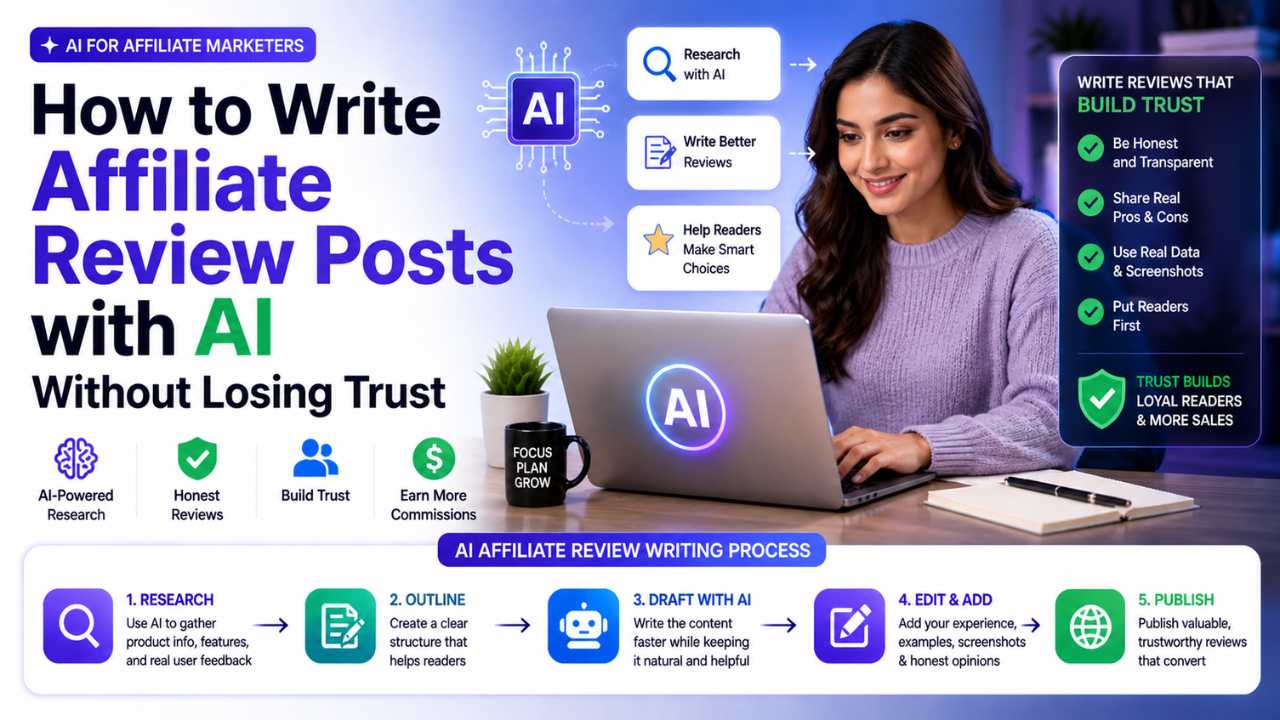
Writer-GPT Review 2026: Complete Guide to This AI SEO Content Tool for Bloggers, Affiliates and Agencies

Writer-GPT Review 2026 Complete Guide

AI content tools are not impressive anymore just because they can write paragraphs.

In 2026, almost every major AI assistant can generate a blog draft. The real question is whether the tool helps you create content that is structured, useful, edited, optimized, and ready for a real publishing workflow.

That is why this Writer-GPT review 2026 matters for bloggers, affiliate marketers, freelancers, and agencies.

Most beginners do not struggle because they have no ideas. They struggle because the full content process has too many moving parts. You need keyword research, article structure, headings, search intent, internal links, screenshots, CTAs, editing, SEO checks, and updates after publishing.

Writing is only one part of the system.


Writer-GPT Review 2026

Writer-GPT, also commonly searched as WriteGPT, is positioned as an AI-powered writing and productivity tool that can help users create, rewrite, summarize, and improve content faster. For bloggers, the appeal is simple: if a tool can reduce drafting time and help create more structured content, it may become part of a serious content workflow.

But there is an important warning before we begin. No AI writing tool should be treated as a one-click ranking machine. Google does not reward content just because it is long or AI-assisted. The content still needs to be helpful, accurate, original, and written for people first.

In this guide, we will look at what Writer-GPT is, how it works, who it is best for, its likely strengths and limitations, how bloggers can use it safely, and whether it is worth considering in 2026.

Writer-GPT Review 2026: What Is Writer-GPT?

Writer-GPT is an AI-powered content tool designed to help users write, rewrite, summarize, and improve text faster.

Depending on the version or product page you are using, Writer-GPT may also be branded as WriteGPT. The public product information focuses on AI writing support, workflow assistance, and productivity for users who want to create content more efficiently.

For bloggers and affiliate marketers, the main idea is simple:

Instead of starting every post from a blank page, you can use Writer-GPT to help with outlines, draft sections, summaries, rewrites, emails, social captions, and content repurposing.

That can save time, especially if you already have research notes and a clear publishing structure.

However, the tool should not replace research, editing, fact-checking, or human judgment. If you publish raw AI output, the content may feel generic and may not build reader trust.

Who Is Writer-GPT Best For?

This Writer-GPT review 2026 is written mainly for AI Sage Labs readers: bloggers, affiliate marketers, creators, freelancers, and small agencies who want to create more content without losing quality.

Writer-GPT may be useful for:

  • Bloggers who need help drafting long-form articles
  • Affiliate marketers writing product reviews and comparisons
  • Freelancers who want to speed up first drafts
  • Agencies producing content for multiple clients
  • Creators repurposing blog posts into emails or social captions
  • Beginners who need help organizing ideas into a structure

Writer-GPT may not be ideal for:

  • People expecting one-click SEO rankings
  • Users who do not want to edit AI output
  • Writers who need deep investigative journalism
  • Brands with strict legal or compliance review needs
  • Advanced SEO teams that already use a full content operations stack

The tool makes the most sense when you treat it as a writing assistant, not as a replacement for your content strategy.


Writer-GPT Review 2026

Why AI SEO Content Tools Matter in 2026

Content creation has changed dramatically over the past few years. A blogger is no longer competing only with other bloggers. They are competing with content systems.

Large websites use teams, templates, editors, SEO tools, automation, and AI-assisted workflows. Solo bloggers cannot always match that manually.

That is where AI writing tools become useful. They help reduce repetitive work so you can focus on research, examples, trust, and better recommendations.

A strong AI content workflow can help with:

  • Creating article outlines faster
  • Drafting first versions of sections
  • Rewriting weak paragraphs
  • Summarizing research notes
  • Creating FAQ answers
  • Repurposing posts into social captions
  • Improving readability
  • Maintaining a consistent publishing schedule

But the important word is workflow.

AI is useful when it supports a good process. It becomes risky when people use it to publish generic content at scale without fact-checking or adding real value.

Google’s official guidance says the focus should be helpful, reliable, people-first content. That applies whether content is created manually, with AI assistance, or with a mix of both.

How Writer-GPT Works

A useful Writer-GPT review 2026 should explain the workflow, not just list features. The tool becomes more valuable when you use it inside a repeatable content process.

Most AI writing tools follow a similar workflow, and Writer-GPT appears to fit that pattern.

Step 1: Enter a Topic, Keyword, or Prompt

You start by giving the tool a task. That could be a keyword, blog title, paragraph, content brief, email idea, or rewrite instruction.

For example:

Create a beginner-friendly blog outline about AI writing tools for affiliate marketers.

The quality of your input matters. A vague prompt creates a vague result. A clear prompt creates a more useful draft.

Step 2: Choose the Content Goal

Depending on the tool interface, you may choose a content type or use a direct prompt. The goal could be a blog section, summary, rewrite, caption, email, or article draft.

For bloggers, the best approach is to work section by section instead of asking for a full article in one prompt.

Step 3: Generate the Draft

Writer-GPT can then generate text based on your instructions. This may include headings, paragraphs, bullet points, summaries, or rewritten content.

This is where the tool saves time. Instead of staring at a blank page, you get a first draft to edit.

Step 4: Edit and Improve

This is the step beginners should never skip.

AI output needs editing. You should check facts, remove generic wording, add examples, improve flow, verify claims, and make sure the article matches your audience.

Step 5: Publish or Repurpose

After editing, you can move the content into WordPress, email, social media, or your content calendar.

For serious bloggers, Writer-GPT should be one part of a larger publishing system that includes SEO, internal linking, visuals, CTAs, and content updates.

Key Features of Writer-GPT

This Writer-GPT review 2026 focuses on the features that matter most for bloggers and content creators.

1. AI Content Drafting

The core benefit is AI-assisted writing. Writer-GPT can help create drafts for articles, blog sections, emails, summaries, and marketing content.

This is useful for bloggers who publish regularly and do not want to start from scratch every time.

Best use case: turning research notes into a rough article draft.

Real limitation: the first draft still needs editing, examples, and fact-checking.

2. Rewriting and Content Improvement

AI rewriting can be useful when a paragraph feels awkward or too long.

You can use Writer-GPT to simplify complex sections, rewrite introductions, improve readability, or create alternate versions of a CTA.

For affiliate content, this is helpful because clarity affects conversions. A confusing review loses readers before they reach the recommendation.

Best use case: rewriting weak sections of a review or guide.

Real limitation: rewriting should not become copying. Always keep the content original and useful.

3. Summarization

Summarization is valuable for research-heavy posts.

For example, if you collect notes from official product pages, help docs, or feature pages, Writer-GPT may help summarize those notes into a cleaner structure.

This can save time when preparing review posts or comparisons.

Best use case: turning messy research notes into a content brief.

Real limitation: summaries can miss important details, so review the original source before publishing.

4. Blog Outline Support

A strong outline is one of the most important parts of SEO content.

Writer-GPT can help organize a topic into headings and subheadings, especially when you provide the audience, focus keyword, search intent, and article type.

For example, an affiliate review outline should include what the product is, who it is best for, key features, pricing notes, pros and cons, alternatives, final verdict, and FAQs.

Best use case: creating a repeatable structure for long-form blog posts.

Real limitation: AI outlines can miss unique angles unless you add your own content strategy.

5. Content Repurposing

One blog post can become many smaller content assets.

Writer-GPT can help turn a blog section into:

  • Social media captions
  • Email newsletter drafts
  • Short summaries
  • Video script ideas
  • LinkedIn posts
  • FAQ answers

This matters because bloggers should not depend only on Google traffic. Repurposing helps you get more value from every article.

Best use case: turning one review post into social and email content.

Real limitation: repurposed content still needs platform-specific editing.

Writer-GPT Review 2026

Writer-GPT for Bloggers

The blogging angle is the most important part of this Writer-GPT review 2026 because bloggers need more than a draft. They need a repeatable publishing system.

Bloggers can use Writer-GPT to reduce the friction of publishing.

A practical blogging workflow could look like this:

  1. Choose a low-competition keyword.
  2. Create a search-intent brief.
  3. Ask Writer-GPT for an outline.
  4. Edit the outline manually.
  5. Draft the article section by section.
  6. Add internal links and examples.
  7. Check facts from official sources.
  8. Create the featured image.
  9. Publish in WordPress.
  10. Repurpose into email and social content.

This kind of workflow is better than asking the tool for a complete article and publishing it without review.

If you are still building your content workflow, read this related guide on AI writing tools tested in 2026.

Writer-GPT for Affiliate Marketers

For affiliate marketers, this Writer-GPT review 2026 needs a clear warning: AI can speed up content, but it should never fake product experience.

Affiliate marketers can use Writer-GPT for review posts, comparison articles, alternatives posts, and buying guides.

But affiliate content has a higher trust requirement than basic informational content.

If you use AI to write an affiliate review, do not let it invent experience. Give it real notes from official sources, product pages, pricing pages, screenshots, and your own observations.

Writer-GPT can help with:

  • Review outlines
  • Feature explanations
  • Pros and cons
  • Comparison tables
  • FAQ drafts
  • CTA variations
  • Final verdict polishing

The final recommendation should come from you.

If you want a deeper workflow, read this guide on how to write affiliate review posts with AI.

Writer-GPT for Agencies and Freelancers

Agencies and freelancers may find Writer-GPT useful because content work often repeats across clients.

For example, an agency may need:

  • Blog outlines for multiple clients
  • Social captions from blog posts
  • Newsletter drafts
  • Content briefs
  • Rewrite options
  • FAQ drafts

AI tools can speed up that work, but agencies need strict review systems. Client content must be accurate, original, and brand-safe.

If you use Writer-GPT for client work, create clear rules:

  • Do not publish raw AI output.
  • Fact-check every claim.
  • Follow the client’s tone.
  • Check for duplicated phrasing.
  • Add human examples and expertise.
  • Keep client data private.

This makes the tool useful without risking trust.

Writer-GPT Pricing

Pricing is another reason to read a Writer-GPT review 2026 before signing up, because AI writing tools often use credits, limits, or feature tiers that are not obvious at first.

Pricing can change, so always check the official Writer-GPT or WriteGPT pricing page before buying.

When reviewing any AI writing tool, do not only look at the monthly price. Check what the plan includes.

Important pricing questions include:

  • Is there a free plan or free trial?
  • How many words, credits, or generations are included?
  • Are advanced features locked behind higher plans?
  • Can you export content easily?
  • Does the plan support team use?
  • Does usage reset monthly?
  • Is annual billing cheaper?

For bloggers, the right plan depends on publishing volume. If you publish one post per week, you may need less than an agency producing dozens of drafts every month.

Writer-GPT Pros and Cons

Pros

  • Can speed up first drafts
  • Useful for rewriting and improving sections
  • Helpful for summarizing research notes
  • Can support blog outlines and content structure
  • Useful for repurposing content into social and email formats
  • Good fit for bloggers, affiliates, freelancers, and agencies

Cons

  • Still requires human editing
  • May produce generic content if prompts are weak
  • Pricing and plan limits need to be checked before buying
  • Should not be used to fake product experience
  • Not a complete SEO strategy by itself
  • Independent third-party review data may be limited depending on the exact product version

Writer-GPT vs ChatGPT

ChatGPT is more flexible. You can use it for research, planning, writing, coding, analysis, brainstorming, and many different tasks.

Writer-GPT is more focused on writing and content improvement workflows.

If you want a general AI assistant, ChatGPT may be more flexible. If you want a writing-focused tool with a simpler content workflow, Writer-GPT may feel easier for specific writing tasks.

The best choice depends on your working style.

Writer-GPT vs Writesonic

Writesonic is a more established AI writing platform with a clearer blogging and marketing content position.

Writer-GPT may appeal to users who want a simpler writing assistant, but Writesonic may offer a broader set of content marketing features depending on your plan and needs.

If you are comparing options, read this Writesonic review for bloggers.

How to Use Writer-GPT Safely for SEO Content

The most practical takeaway from this Writer-GPT review 2026 is that safe SEO content comes from process, not from one-click generation.

The safest way to use Writer-GPT is to keep humans in control of the strategy.

Use this workflow:

  1. Pick a clear keyword.
  2. Study the search intent.
  3. Collect real research from trusted sources.
  4. Create an outline with Writer-GPT.
  5. Draft one section at a time.
  6. Add your own examples and judgment.
  7. Fact-check every important claim.
  8. Add internal links.
  9. Add a trusted external source.
  10. Edit for human tone.
  11. Publish only after review.

This approach protects quality and reduces the risk of thin AI content.

How to Make Money With Writer-GPT

Writer-GPT does not make money for you automatically. It can only support the work that creates income.

Here are practical ways bloggers can use it.

1. Affiliate Blogging

You can use Writer-GPT to draft product reviews, comparison posts, and buying guides. Then you add real research, screenshots, pros and cons, and affiliate CTAs.

2. Freelance Writing

Freelancers can use AI to speed up outlines, first drafts, and rewrites. This can help increase output, but the final quality still depends on editing.

3. Content Agency Work

Agencies can use AI tools to create briefs, outlines, and draft sections faster across multiple clients.

4. Content Repurposing Services

You can turn long blog posts into social captions, newsletters, scripts, and summaries for clients.

5. Niche Website Publishing

If you publish helpful content consistently on a focused niche site, AI tools can speed up production and updates.

Start Your AI Content Blog

If you want to turn AI content tools into a real affiliate or niche website, you need a WordPress blog where your articles can rank, convert, and grow over time.

Start your blog with Hostinger

Need Help With AI Content Workflows?

If you do not want to build your content workflow alone, you can hire freelancers to help with WordPress setup, content briefs, SEO formatting, blog editing, or AI workflow setup.

Hire AI Content Help

A freelancer can help you set up a repeatable blog workflow, format posts, design content templates, or build an AI-assisted content system.

Find AI content freelancers on Fiverr

Recommended Book for AI Content Creators

If you want to understand how AI fits into modern writing, work, and creativity, Co-Intelligence: Living and Working with AI by Ethan Mollick is a useful book to explore.

It is not a Writer-GPT manual, but it can help bloggers think more clearly about how to use AI as a collaborator instead of a shortcut.

Recommended Reading

If you want to build better AI-assisted writing habits, this book is a helpful next step.

Check Co-Intelligence on Amazon

Final Verdict: Is Writer-GPT Worth It?

This Writer-GPT review 2026 comes down to one practical point: Writer-GPT can be useful if you need help creating and improving content faster, but it should not replace your strategy or editing.

It is best for bloggers, affiliate marketers, freelancers, and agencies who already understand that AI writing needs human review.

It is not ideal for people who want to publish one-click AI content without research, editing, or SEO thinking.

If you use Writer-GPT as a drafting and improvement assistant, it can save time. If you use it as a replacement for judgment, the content may become generic and weak.

The smartest approach is simple: use Writer-GPT for speed, then add human research, examples, trust, and final editing.

Frequently Asked Questions

Is Writer-GPT good for beginners?

Yes, Writer-GPT can be useful for beginners who need help drafting, rewriting, and organizing content. Beginners should still edit the output and learn basic SEO principles.

Can Writer-GPT replace human writers?

No. Writer-GPT can support the writing process, but it should not replace human research, judgment, editing, examples, or final recommendations.

Is Writer-GPT good for SEO?

Writer-GPT can help with structure and drafting, but SEO depends on keyword research, search intent, helpful content, internal links, site authority, and regular updates. It is not a complete SEO system by itself.

Can I use Writer-GPT for affiliate marketing?

Yes, you can use Writer-GPT for affiliate marketing content such as reviews, comparisons, and buying guides. Do not let it invent experience or claims. Use real research and edit carefully.

Does Writer-GPT create full blog posts?

Writer-GPT can help create blog drafts, but the best workflow is to draft section by section, then edit and fact-check before publishing.

Is Writer-GPT better than ChatGPT?

ChatGPT is more flexible as a general AI assistant. Writer-GPT may be more focused for writing and content improvement tasks. The better choice depends on your workflow.

Should agencies use Writer-GPT?

Agencies can use Writer-GPT to speed up briefs, drafts, rewrites, and repurposing. However, client content should always go through human review and quality control.

Conclusion

AI writing tools are changing content creation, but they are not magic.

Writer-GPT can help bloggers and marketers draft faster, rewrite better, summarize research, and repurpose content. That can be valuable if you are trying to publish consistently and build a content system.

But the tool is only one part of the workflow.

To create content that ranks and converts, you still need search intent, useful structure, trusted sources, internal links, examples, editing, and a clear reader-first purpose.

If you use Writer-GPT with that mindset, it can become a helpful part of your blogging toolkit.

Start small, test it on one real article, and judge the tool by how much better your final edited content becomes.

Sources Used

Affiliate Disclosure

As an Amazon Associate, I earn from qualifying purchases. Some links in this article are affiliate links, which means I may earn a commission at no extra cost to you if you buy through them. I only recommend tools, books, and services that may help bloggers, creators, and online business owners save time, build better systems, or grow their business.

How to Make Money with AI Tools in 2026 (7 Proven Methods for Bloggers)

How to Make Money with AI Tools in 2026

AI tools can help bloggers earn money, but not in the magical way most social media posts describe.

You have probably seen big claims about people using one prompt, one tool, or one hidden system to make thousands of dollars overnight. Some creators really are earning with AI. But the shortcut version is usually missing the important part: income comes from a real business model, not from the tool alone.

AI helps you move faster. It can help you write drafts, design graphics, create videos, repurpose content, automate admin work, plan emails, and research ideas. But you still need an audience, a useful offer, honest recommendations, and consistent execution.

That is the realistic way to make money with AI tools in 2026.

For bloggers, this is good news. You do not need to chase every shiny AI app. You need to choose one income path, build a repeatable workflow, and use AI tools to reduce the time it takes to publish, promote, and monetize useful content.


7 Trending AI Tools That Are Actually Making Bloggers Money in 2026


Workflows that previously required a team — content production, video creation, automation, social media management, email marketing — are now achievable for one person with the right AI stack.

But the honest answer to “how do you make money with AI tools” is not simply “use these tools and earn money.” The income comes from specific activities that AI tools make more efficient. This guide breaks down seven proven methods, the AI tools that power each one, and realistic income expectations based on what bloggers are actually reporting in 2026 — not what marketers are promising.

The Best Tool to Start With

Need AI Writing Help to Build Your Income Blog?

Jasper AI is the most complete AI writing platform for bloggers building affiliate income. The 7-day free trial gives you full access to test it on your actual content before committing.

Try Jasper AI Free for 7 Days →

7-day free trial. No credit card charged until trial ends.

The Reality of Making Money with AI Tools in 2026

Before diving into methods, one honest framing is necessary. AI tools in 2026 do not create income by themselves — they accelerate income-generating activities that require human strategy, expertise, and consistent execution.

The bloggers who have successfully built income using AI tools are doing the same things that successful bloggers have always done: creating valuable content, building an audience, promoting relevant products, and executing consistently over time. AI tools allow them to do those things faster, at higher volume, and often with better quality than they could achieve manually.

With that framing in place, here are seven specific methods that are working for bloggers in 2026, along with the AI tools that power each one and realistic income ranges based on real-world examples.

In this guide, we will break down how to make money with AI tools in 2026 using seven proven methods for bloggers: affiliate reviews, YouTube repurposing, display ads, digital products, freelance services, email newsletters, and launch-review content.

How to Make Money With AI Tools: The Honest Reality

Making money with AI tools means using AI to support work that already has value.

For a blogger, that work may include publishing helpful articles, reviewing products, creating videos, designing templates, building email sequences, offering services, or helping businesses save time.

The AI tool does not create income by itself. It helps you complete income-producing tasks faster.

For example:

  • AI writing tools can help you draft review posts faster.
  • AI video tools can help turn blog posts into YouTube videos.
  • AI design tools can help create thumbnails and Pinterest pins.
  • AI automation tools can help connect forms, email lists, spreadsheets, and publishing tasks.
  • AI research tools can help organize product comparisons and FAQs.

But you still need to edit, fact-check, add human judgment, disclose affiliate links, and publish content that helps a real reader.

If you are brand new, this simple framing will save you a lot of wasted time: use AI to improve a real business model, not to avoid building one.

Why Bloggers Are Using AI Tools for Income in 2026

Blogging in 2026 is more competitive than it was a few years ago.

A single article often needs supporting assets: images, short videos, email copy, social posts, internal links, comparison tables, FAQs, screenshots, and updates. Doing all of that manually can slow down a solo blogger fast.

AI tools help because they reduce production friction.

A blogger can write an outline faster, create a draft faster, design visuals faster, repurpose the article into video faster, and automate follow-up tasks faster.

That does not guarantee income. But it improves your ability to stay consistent, and consistency is one of the biggest advantages in blogging.

This is especially useful if you are building a site around AI tools, affiliate marketing, software reviews, content creation, or online business. The same tools you write about can also support your publishing workflow.

If you want the broader beginner version of this topic, you can also read this guide on how to make money with AI. This article focuses more specifically on the tools and workflows bloggers can use.

7 Proven Methods to Make Money With AI Tools in 2026

There are many ways to earn online, but bloggers should start with methods that connect naturally to content, traffic, trust, and recommendations.

Here are seven realistic methods to make money with AI tools as a blogger in 2026.

1. Affiliate Marketing Through AI-Powered Review Content

Affiliate marketing is one of the most natural income methods for bloggers.

The model is simple: you publish helpful content about products or services, include affiliate links where relevant, and earn a commission if readers buy through your links.

AI tools can help with this workflow by creating outlines, first drafts, comparison tables, FAQ ideas, meta descriptions, social captions, and content updates.

Common affiliate blog post types include:

  • Product reviews
  • Best tools lists
  • Alternatives posts
  • Comparison posts
  • Beginner tutorials
  • Use-case guides

For example, a blogger in the AI niche could publish reviews of writing tools, video tools, automation tools, image tools, hosting platforms, and online business tools.

AI can make the first draft faster, but the final review still needs human judgment. Readers want to know who the tool is best for, who should skip it, what the limits are, what alternatives exist, and whether the recommendation is honest.

Google’s guidance focuses on useful and reliable content. That means raw AI output is not enough. You should add real examples, screenshots when possible, clear pros and cons, updated pricing checks, and a trustworthy verdict.

The FTC also expects affiliate relationships to be disclosed clearly and conspicuously. If you earn a commission from a recommendation, say so in plain language.

Useful AI tools for this method include:

  • ChatGPT or Claude for outlines and editing support
  • Writesonic for structured long-form content workflows
  • Grammarly for cleanup and tone polishing
  • Canva for review graphics and thumbnails
  • Rank Math for WordPress SEO checks

Realistic expectation: affiliate marketing is not usually instant. A new blog may need several months of consistent publishing before it sees meaningful search traffic. But over time, a library of honest review content can become one of the strongest ways to make money with AI tools.

If this path interests you, read this guide on how to write affiliate review posts with AI without losing reader trust.

2. YouTube Repurposing With AI Video Tools

YouTube can become a second income layer for bloggers.

The advantage is simple: if you already write blog posts, you already have video ideas. A tutorial, list post, review, comparison, or how-to article can become a YouTube script.

AI video tools can help turn written content into videos, captions, voiceovers, B-roll, thumbnails, and short clips.

For example:

  • Use a blog post as the source.
  • Rewrite it into a short video script.
  • Create a video draft with an AI video tool.
  • Design a thumbnail in Canva.
  • Add affiliate links and blog links in the description.
  • Embed the video back into your article.

YouTube monetization can come from ads, affiliate links, sponsorships, product sales, and traffic back to your website.

But be careful with low-effort video automation. A video that only reads generic AI text over random stock footage will not build much trust. Strong YouTube content still needs useful topics, clean structure, good pacing, helpful visuals, and a reason for people to watch.

YouTube’s Partner Program also has eligibility rules. The standard ad-revenue path requires thresholds such as subscribers and valid watch hours or Shorts views, plus policy compliance. That means YouTube ad income usually takes time.

Useful AI tools for this method include:

  • Pictory for blog-to-video style workflows
  • InVideo AI for text-to-video creation
  • Descript for editing recorded videos and podcasts
  • Canva for thumbnails
  • ChatGPT or Claude for scripts and descriptions

Realistic expectation: YouTube can be powerful, but beginners should treat it as a long-term content channel. Affiliate links in descriptions may earn earlier than ads if your videos solve clear buyer problems.

For video-specific tools, you may want to compare Pictory AIInVideo AI, and Descript.

3. Display Advertising From Consistent AI-Supported Content

Display ads are one of the simplest blog monetization methods to understand.

You publish content, bring traffic to your site, and earn money when ads are shown to readers. The income depends on traffic volume, niche, country mix, ad network, page experience, and advertiser demand.

AI tools help with display ad income indirectly.

They help you publish more consistently, update old posts, create supporting visuals, build content clusters, and repurpose article ideas. More useful content can create more opportunities to rank and attract traffic.

That said, publishing more is not enough. Display ad income depends on traffic, and traffic depends on quality, search intent, topical authority, site speed, internal linking, and patience.

Useful AI tools for this method include:

  • Writesonic or ChatGPT for article outlines and first drafts
  • Rank Math for SEO checks
  • Canva for featured images and Pinterest pins
  • Zapier or Make for content tracking automations
  • Google Search Console for performance data

Realistic expectation: display ads are usually slow at first. They become more meaningful once your blog has steady traffic. For a new blogger, ads are often a later income layer, not the first paycheck.

If you are building an income blog, hosting also matters. A slow site can hurt user experience and make content feel less professional.

Start With a Blog Foundation You Control

All seven income methods work better when your content lives on a fast, reliable website that you own.

Start your AI income blog with Hostinger

4. Digital Products Created With AI Tools

Digital products can be a strong income stream because they are created once and sold many times.

For bloggers, simple digital products often work better than complicated ones.

Examples include:

  • Prompt packs
  • Checklists
  • Canva templates
  • Notion templates
  • Mini ebooks
  • Workflow templates
  • Blog planning spreadsheets
  • Short video script packs

AI can help you outline the product, draft the content, create examples, write the sales page, design the cover, and prepare promotional emails.

But the product must still solve a clear problem.

A generic “100 AI prompts” PDF is not enough if the prompts are weak. A better product would be specific, practical, and outcome-driven, such as “50 AI Prompts for Writing Affiliate Review Posts” or “AI Blog Thumbnail Canva Templates for Software Review Sites.”

Useful AI tools for this method include:

  • ChatGPT or Claude for product outlining
  • Canva for templates, covers, and PDFs
  • Leonardo AI or Stable Diffusion for visual backgrounds
  • Google Docs or Notion for product drafting
  • Gumroad, Payhip, or your own WordPress site for selling

Realistic expectation: digital products work best when you already understand your audience. A small audience with a clear pain point can outperform a large audience that does not trust you.

5. Freelance AI Content Services

Freelancing is often the fastest way to make money with AI tools because you do not need to wait for Google traffic.

You can offer services that businesses already need and use AI to deliver faster.

Examples include:

  • Blog post outlines
  • SEO content briefs
  • AI-assisted blog writing
  • Product descriptions
  • Email newsletters
  • Social media captions
  • Canva graphics
  • Podcast show notes
  • Video script drafts

This is a good bridge strategy for bloggers. You can earn from client work while your own blog grows in the background.

The key is to sell human-edited outcomes, not raw AI output.

Clients pay for judgment, clarity, research, editing, formatting, reliability, and communication. If you simply paste AI content and deliver it as finished work, you will damage trust quickly.

Useful AI tools for this method include:

  • ChatGPT or Claude for drafts and editing support
  • Writesonic for content workflows
  • Grammarly for proofreading
  • Canva for simple graphics
  • Descript for podcast notes and video repurposing

Realistic expectation: freelancing can create income faster than SEO blogging, but it is active income. You trade time for money. The best approach is to use freelance income to fund your long-term blog, tools, and products.

Want to Offer AI Services Faster?

You can study existing service categories, create a simple offer, and test demand with small projects before building a full agency.

Explore AI service ideas on Fiverr

6. Email List Monetization With AI Newsletters

An email list is one of the most valuable assets a blogger can build.

Search traffic is useful, but it is not fully under your control. Social platforms change algorithms. AI search summaries may reduce some clicks. Email gives you a direct channel to readers who already chose to hear from you.

AI tools can help you create newsletter drafts, welcome sequences, product recommendation emails, lead magnet ideas, and content repurposing workflows.

For example, one blog post can become:

  • A short newsletter summary
  • A product recommendation email
  • A weekly roundup section
  • A lead magnet idea
  • A follow-up sequence

Email monetization can happen through affiliate recommendations, digital products, sponsored placements, services, and course sales.

The most important rule is trust. Do not send constant promotions. Send useful advice, honest recommendations, and tools that fit your reader’s actual problem.

Useful AI tools for this method include:

  • ChatGPT or Claude for newsletter drafts
  • ConvertKit, MailerLite, or similar tools for email delivery
  • Canva for lead magnets
  • Zapier or Make for subscriber automations
  • Google Sheets for simple tracking

Realistic expectation: email monetization takes time because you need subscribers and trust. But once it works, it can become one of the most reliable income channels for a blogger.

7. Software Launch Reviews and Timely Product Content

Software launch reviews can create faster affiliate opportunities when done carefully.

Some platforms and marketplaces feature new tools, courses, software products, and limited-time launches. When a product launches, people often search for reviews, bonuses, alternatives, and honest opinions.

AI tools can help you publish timely review content faster.

However, this method has a trust problem if handled badly. Many launch reviews online are thin, overly positive, and written only to capture commissions. That may create short-term clicks, but it does not build a trustworthy brand.

A better launch-review workflow is:

  1. Research the product carefully.
  2. Check the sales page and refund terms.
  3. Look for real use cases and limitations.
  4. Write a balanced review.
  5. Disclose affiliate links clearly.
  6. Offer a helpful bonus only if it adds real value.
  7. Update the post after the launch period if needed.

Useful AI tools for this method include:

  • ChatGPT or Claude for outline support
  • Writesonic for draft structure
  • Canva for bonus PDFs and graphics
  • Grammarly for editing
  • Rank Math for SEO checks

Realistic expectation: launch reviews can create income faster than evergreen SEO content, but they are less stable. Build evergreen content alongside launch content so your blog does not depend only on short-term spikes.


ChatGPT Plus
Canva Pro
Midjourney
Claude Pro
⚡ SAVE 80%
Market: ₹15,000 → ₹2,999/year

132+ Premium AI Tools
Instant
Verified
24/7


Best AI Tools for Each Income Method

You do not need a huge tool stack to make money with AI tools. In fact, collecting too many subscriptions too early can hurt your budget.

Start with a simple stack and upgrade only when the tool saves time or helps you earn more.

Income Method Helpful AI Tools Why They Help
Affiliate reviews ChatGPT, Claude, Writesonic, Grammarly Outlines, drafts, editing, FAQs, and review structure
YouTube repurposing Pictory, InVideo AI, Descript, Canva Scripts, video drafts, editing, captions, and thumbnails
Display ads Writesonic, Rank Math, Canva, Google Search Console Consistent publishing, SEO checks, visuals, and performance tracking
Digital products ChatGPT, Claude, Canva, Leonardo AI Product ideas, templates, covers, PDFs, and sales copy
Freelance services ChatGPT, Writesonic, Grammarly, Canva Faster client drafts, editing, graphics, and delivery support
Email monetization ChatGPT, Claude, Make, Zapier Newsletter drafts, automations, sequences, and subscriber workflows
Launch reviews Writesonic, Canva, Grammarly, Rank Math Faster timely posts, polish, graphics, and SEO checks


For most beginners, a simple starting stack is enough: one AI assistant, Canva Free, Grammarly Free, WordPress, and a basic SEO plugin.

Upgrade later when your workflow proves the need.

Best Starting Path for Beginner Bloggers

The biggest mistake beginners make is trying all seven methods at once.

Affiliate marketing, YouTube, display ads, digital products, freelancing, email, and launch reviews are all different workflows. If you divide your attention too early, none of them gets enough momentum.

For most bloggers, the cleanest starting path is:

  1. Start a focused blog.
  2. Publish helpful review and tutorial content.
  3. Add affiliate links with clear disclosure.
  4. Use AI tools to improve speed, not replace judgment.
  5. Build an email list with a simple lead magnet.
  6. Add YouTube or digital products after you understand your audience.

If you need faster income while the blog grows, add freelance services. That lets you earn active income while building a long-term asset.

This approach is slower than the hype, but it is much safer.

30-Day Beginner Action Plan

If you want to make money with AI tools but feel overwhelmed, use the next 30 days to build one small proof of progress.

Week 1: Choose One Niche and One Income Method

Pick a niche you can write about consistently. For AI Sage Labs-style content, good niches include AI tools for bloggers, AI automation, AI writing tools, AI video tools, or online business tools.

Choose one main income method. For most beginners, affiliate review content or freelancing is the best starting point.

Week 2: Build Your First Workflow

Create a simple workflow for one article or one service offer.

For affiliate blogging, write one review outline, gather current product details, draft the article, edit it, add disclosure, and prepare a featured image.

For freelancing, create one sample service page or gig description and one portfolio sample.

Week 3: Publish or Offer Something Real

Publish the article, launch the service, or create the first version of your digital product.

Do not wait until everything is perfect. A published asset teaches you more than another week of planning.

Week 4: Improve Based on Feedback

Check what happened.

Did anyone click? Did anyone ask a question? Did the article get indexed? Did the service offer feel clear? What part took too long?

Use AI to improve the workflow, not just create more noise.

Common Mistakes to Avoid

Believing Push-Button Income Claims

AI can help you work faster, but it does not remove the need for skill, trust, traffic, offers, and consistency.

Publishing Raw AI Content

Raw AI drafts often sound generic. Edit them, fact-check them, add examples, and make the final content genuinely useful.

Buying Too Many Tools Too Early

Start with free or low-cost tools. Upgrade only when a tool clearly saves time or supports income.

Ignoring Affiliate Disclosures

If you earn commissions from links, disclose that clearly. Trust is worth more than hiding a relationship.

Trying Every Method at Once

Pick one method first. Build momentum. Then add another layer when the first one is working.

Recommended Resource Before the Verdict

Want an AI Income Blog Starter Checklist?

A simple checklist can help beginners choose a niche, plan review posts, set up affiliate disclosures, create visuals, build a starter email list, and avoid buying too many tools too early.

Access the AI Sage Labs AI income blog starter checklist.

Recommended Book for AI Income Beginners

If you want a broader mindset for using AI in work and business, a useful book to explore is Co-Intelligence: Living and Working with AI by Ethan Mollick.

It is not a get-rich-quick book. That is exactly why it is useful. It helps you think about AI as a work partner, not a magic button.

Check Co-Intelligence on Amazon

How to Make Money With AI Tools Verdict

The best way to make money with AI tools in 2026 is to stop chasing random tool hacks and start building a real system.

For bloggers, the strongest beginner path is usually affiliate review content supported by AI writing, design, SEO, and repurposing tools. Over time, you can add display ads, email monetization, YouTube, digital products, freelance services, and launch reviews.

The most realistic strategy is not to do everything at once.

Pick one income method. Choose a small tool stack. Publish useful content. Add affiliate disclosures. Build trust. Improve the workflow every week.

AI can help you move faster, but your judgment is still the business advantage.

If you are serious about this path, start with a blog you control, create helpful content, and use AI tools to make the workflow lighter.

Build your AI income blog with Hostinger

FAQs About Making Money With AI Tools

Can bloggers really make money with AI tools?

Yes, bloggers can make money with AI tools, but the income comes from real methods such as affiliate marketing, ads, digital products, freelancing, email marketing, and video content. AI tools help speed up the work.

What is the fastest way to make money with AI tools?

Freelancing is usually the fastest path because you can sell a service directly. Blogging and affiliate marketing can scale better over time, but they usually take longer because they depend on traffic and trust.

What is the best AI income method for bloggers?

Affiliate review content is one of the best methods for bloggers because it connects naturally with search traffic, product research, tutorials, and buyer-intent keywords.

Do I need paid AI tools to start?

No. Beginners can start with free or low-cost tools such as ChatGPT, Canva Free, Grammarly Free, Google Docs, and WordPress. Upgrade only when the tool saves enough time or supports income.

Can AI write affiliate reviews for me?

AI can help draft affiliate reviews, but you should not publish raw AI output. Add real research, honest pros and cons, pricing checks, examples, alternatives, screenshots when possible, and a human verdict.

Can I make passive income with AI tools?

You can build passive-style income with AI-supported blogs, affiliate content, digital products, and YouTube videos. But these still require upfront work, updates, and ongoing quality control.

How long does it take to make money with AI tools?

It depends on the method. Freelance services can earn faster, sometimes within weeks. Blogging, affiliate marketing, display ads, and YouTube usually take months of consistent work before income becomes meaningful.

Is AI content safe for SEO?

AI-assisted content can be used responsibly, but it should be helpful, accurate, edited, and written for people. Low-quality content created only to manipulate rankings is risky.

Conclusion

This guide showed how bloggers can make money with AI tools in 2026 without falling for unrealistic promises.

The honest truth is that AI is not the income source. It is the speed layer.

It helps you write faster, design faster, edit faster, repurpose faster, and automate repeated tasks. But the income comes from the business model behind the workflow.

For bloggers, the best starting point is usually a focused blog with helpful review content, clear affiliate disclosures, useful visuals, and a simple email list. From there, you can add YouTube, digital products, freelancing, display ads, and launch reviews.

Start small. Choose one method. Build one workflow. Publish something useful. Improve it every week.

That is how AI tools become part of a real online income system.

Start offering AI services on Fiverr

Launch your AI tools blog with Hostinger

Explore Co-Intelligence on Amazon

How We Checked This Guide

Before writing this guide, we checked official guidance from Google, the FTC, and YouTube around AI-assisted content, affiliate disclosures, and YouTube monetization requirements. This helps keep the article practical, accurate, and safer for bloggers who want to build income without using risky shortcuts.

Affiliate Disclosure

As an Amazon Associate, I earn from qualifying purchases. Some links in this article are affiliate links, which means I may earn a commission at no extra cost to you if you buy through them. I only recommend tools, books, and services that may help beginners, creators, and online business owners create better content or grow their work more effectively.