

5 Best AI SaaS Business Ideas to Start in 2026: Real Lessons for Solo Founders

Best AI SaaS Business Ideas to Start in 2026

It has never been easier to build a software product with a small team or even as a solo founder.

AI coding assistants, vibe coding platforms, no-code tools, managed hosting, payment processors, and automation software have reduced many of the technical barriers that once made software startups expensive and slow.

But easier building has created a new problem.

Thousands of people can now launch apps. Very few build something customers actually want, discover and pay for.

The winning idea is rarely the most technically impressive one. It usually solves a painful problem for a specific audience, reaches that audience through a clear distribution channel and gives users a reason to keep paying.

 

Best AI SaaS Business Ideas


This guide explores five practical AI SaaS business ideas inspired by real product models discussed in a recent startup case-study video. Instead of copying unverified revenue claims, we will focus on the repeatable lessons behind each model and how a U.S.-focused solo founder could validate a safer, more useful version.

You will learn how to identify painkiller problems, build around distribution, pre-sell before development, create viral product loops, choose pricing models and avoid the mistakes that turn a promising AI app into another forgotten project.

AI SaaS Business Ideas: What Makes One Worth Building?

An AI SaaS business provides software online and uses artificial intelligence to deliver or improve a recurring result.

Customers may pay monthly, annually or based on usage.

Examples include tools that summarize meetings, repurpose videos, analyze documents, respond to reviews, generate proposals, organize research or automate repetitive business tasks.

A strong AI SaaS idea usually has five qualities:

  • It solves a painful or frequent problem.
  • It targets a specific customer group.
  • The result is easy to demonstrate.
  • There is a clear way to reach potential users.
  • The value can support recurring or repeat purchases.

The AI feature itself is not enough.

Customers do not pay because your product uses artificial intelligence. They pay because it saves time, reduces costs, helps them earn more, removes frustration, or delivers a result they already want.

That is the main lesson connecting the five AI SaaS business ideas in this guide.

When comparing AI SaaS business ideas, evaluate the customer problem and distribution path before evaluating the technology.

Important Note About the Case Studies and Revenue Claims

The original video transcript describes products such as StudyBuddy, TrustMRR, LingDrip, Nexus Research, and Crayo. It also mentions specific launch speeds and revenue numbers.

Some product models and public details can be confirmed, but several financial claims cannot be independently verified from reliable public sources.

For that reason, this article treats the examples as business-model case studies rather than guaranteed success stories.

Do not assume you can copy an idea and achieve the same results.

Your results depend on product quality, market demand, competition, pricing, distribution, customer support, legal compliance, timing, and execution.

The Common Playbook Behind Successful AI SaaS Products

Before looking at individual ideas, notice the shared pattern.

  1. Choose a specific audience.
  2. Find a painful or frequently repeated problem.
  3. Build the smallest useful solution.
  4. Validate demand before adding complexity.
  5. Create a clear distribution strategy.
  6. Charge early enough to learn whether customers value the result.
  7. Improve the product using real customer behavior.

This is more important than the exact app idea.

A founder who understands the playbook can apply it to many markets. A founder who only copies features may build a product with no audience or reason to exist.

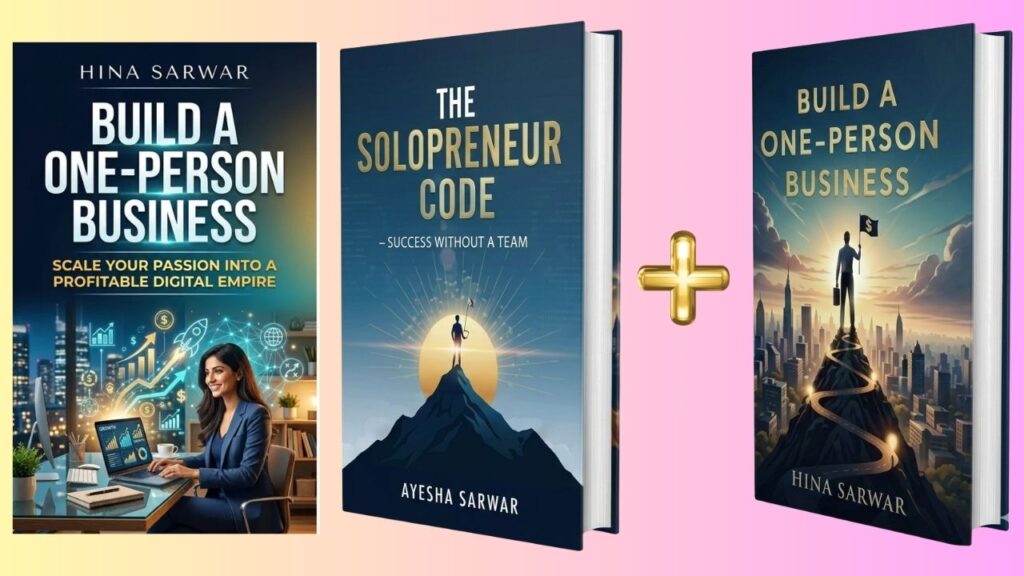
Build a Business Designed for One Person

A useful AI SaaS idea still needs systems for validation, marketing, finances, automation and sustainable growth.

Explore Build A One Person Business
5 Best AI SaaS Business Ideas to Start in 2026

Important: Review the complete product page, pricing, terms and refund conditions before purchasing. Educational products cannot guarantee business results.

1. AI Study and Document Assistant for a Specific Audience

The first case-study model is an AI assistant that processes assignments, quizzes, PDFs, or documents and returns useful answers or organized information.

The original example focused on completing student homework automatically. That version creates serious ethical and academic-integrity concerns.

A safer and more valuable business opportunity is helping users understand material rather than helping them cheat.

Safer Product Variations

  • An AI study guide generator from class notes
  • A PDF question-and-answer assistant with citations
  • A flashcard generator for nursing students
  • A research organizer for graduate students
  • A reading assistant for professional certification exams
  • A document explainer for complex workplace manuals

Why This Model Can Work

The problem is frequent and easy to understand.

Students and professionals regularly need to review long documents, prepare for exams, create notes, and find answers quickly.

The result is also easy to demonstrate in short videos:

Upload a 40-page PDF, ask a question, and receive a clear answer with the relevant section identified.

Products that create a visually obvious before-and-after result are easier to market through TikTok, YouTube Shorts, Instagram Reels, and demonstrations.

Best Customer Niches

  • College students
  • Nursing and medical students
  • Law students
  • Certification candidates
  • Corporate training teams
  • Researchers

Business Lesson

Solve a painkiller problem, but do it ethically.

A product becomes easier to sell when customers immediately understand the result. However, a controversial shortcut can create platform bans, reputation problems, refund requests, and legal risk.

Build something that helps customers succeed without encouraging dishonest behavior.

2. Verified Business Metrics and Trust Platform

The second model is inspired by TrustMRR, a platform that publicly displays verified startup revenue metrics.

TrustMRR’s official site describes itself as a community of startups with verified revenue. Founders can connect Stripe data so visitors can explore reported monthly recurring revenue and company growth.

The broader opportunity is not simply copying a revenue leaderboard.

It is building tools that create trust through verified data.

Possible Product Variations

  • Verified revenue profiles for small SaaS founders
  • Verified campaign results for marketing agencies
  • Verified donation reports for nonprofits
  • Verified project delivery records for freelancers
  • Verified audience-growth dashboards for creators
  • Verified sustainability metrics for small businesses

Why This Model Can Work

Online claims are easy to make and difficult to trust.

A platform that verifies useful metrics can attract a premium audience of founders, investors, agencies, customers or business buyers.

The product may also become a directory. That creates several possible revenue models:

  • Sponsored placements
  • Premium profiles
  • Advertising
  • Data subscriptions
  • Lead generation
  • Verification fees

The Distribution Lesson

This type of product works best when it connects with an active public conversation.

TrustMRR gained attention around the debate over fake startup revenue screenshots. A founder building a similar product should watch communities where people are already discussing trust, transparency, or verification problems.

Timing matters.

A small useful product launched during the right conversation can receive more attention than a larger product launched in isolation.

The Security Warning

A product that connects to financial accounts or business data carries serious responsibility.

Use read-only access where possible, collect only necessary data, explain permissions clearly, protect credentials and obtain professional security review before launch.

This is not an ideal first project for a complete beginner unless experienced technical help is involved.

3. Creator Traffic Attribution and Smart Link Tool

The third model is a tracking-link product for creators.

Creators often publish one long-form video and promote it through short clips on TikTok, Instagram, YouTube Shorts, LinkedIn, newsletters and other platforms.

The problem is understanding which clip or channel actually sends valuable traffic.

A creator traffic attribution tool could generate different smart links for each campaign and show which source produced clicks, subscribers, sales, or other actions.

Possible Product Features

  • Campaign-specific tracking links
  • Source and platform reporting
  • Simple creator dashboard
  • UTM parameter generation
  • Link-in-bio page
  • Conversion tracking
  • Team and agency reports

Why This Model Can Work

Creators already distribute content across multiple channels.

Knowing what drives results helps them decide where to spend time and money.

This type of product can also contain an organic discovery loop. If creators publicly use branded smart links, other creators may discover the tool through those links.

That is called a product-led distribution loop.

The more customers use the product, the more potential customers see it.

How to Validate It Before Building

Do not begin by creating a complex analytics platform.

Interview creators first.

Ask:

  • Which platforms do you use to promote long-form content?
  • How do you currently track traffic?
  • Which metrics matter most?
  • What reporting do sponsors or clients request?
  • Would you pay for simpler attribution?

Then create a basic landing page and pre-sell a limited early-access plan.

The Business Lesson

Validate before building and design distribution into the product.

If customers naturally expose your brand while using the product, growth becomes easier.

4. Niche AI Research and Note-Taking Assistant

The fourth model is a focused document-reading and note-taking tool.

This is not a revolutionary idea. That is exactly why it is worth studying.

Many founders waste time searching for an idea nobody has ever seen. A simpler path is entering a proven category with a sharper audience, better workflow, easier marketing, or clearer positioning.

Possible Niche Versions

  • PDF research assistant for law students
  • Clinical guideline organizer for healthcare learners
  • Contract summary assistant for small agencies
  • Research-paper note tool for graduate students
  • Policy document assistant for HR teams
  • Product manual assistant for customer-support teams

Why Niching Down Matters

A generic “chat with any PDF” tool competes with many established platforms.

A product designed specifically for one audience can provide:

  • Relevant templates
  • Specialized prompts
  • Useful export formats
  • Industry-specific vocabulary
  • Focused marketing content
  • More targeted customer support

The product may use similar underlying technology, but the customer experience and positioning become more valuable.

A Realistic Success Target

Not every solo SaaS needs to become a venture-backed company.

A small focused product earning a few hundred or a few thousand dollars per month can become a useful side business, learning project or foundation for a larger product.

Do not dismiss modest recurring revenue.

A small profitable product can teach you more about customers, marketing, pricing and retention than months of planning.

The Business Lesson

Innovation is not always necessary. Clear positioning and consistent distribution may matter more.

Study proven categories, choose a specific audience, improve one part of the workflow and market where that audience already spends time.

5. AI Short-Form Video Creation Tool for a Specific Market

The fifth model is inspired by AI video creation platforms such as Crayo.

These tools help users generate short-form videos by combining scripts, visuals, captions, voiceovers, music and editing workflows.

The broad category is already competitive.

A new founder should not try to build another generic “AI video generator for everyone.”

The better opportunity is creating a focused version for a specific customer and outcome.

Possible Niche Versions

  • Short product-demo videos for Etsy sellers
  • Property listing videos for real estate agents
  • Educational clips for financial advisors
  • Recruiting videos for local businesses
  • Podcast clip packages for B2B creators
  • Restaurant promotion videos from menu photos

Why This Model Can Work

Video is easy to demonstrate and easy to share.

A strong demo can show the entire value proposition in seconds:

Upload product photos, enter a short description, and receive three vertical promotional videos.

Products that help customers create marketing content can also support repeat usage. Customers return whenever they need another campaign, listing, product launch or social post.

Pricing Model Opportunity

AI video generation can create variable computing costs.

Usage-based credits may be safer than promising unlimited creation. Customers purchase credits based on the amount of content they generate.

This connects pricing with usage and helps protect margins.

The Business Lesson

Products connected to a measurable customer outcome can support repeat purchases.

If your software helps customers attract leads, create content, save production costs or earn revenue, the value is easier to explain.

Do not make guaranteed-income promises. Show the workflow and let customers evaluate the potential value.

Five AI SaaS Ideas Compared

Business Model Best Customer Main Advantage Main Risk
Niche study and document assistant Students and professionals Frequent, easy-to-demonstrate problem Accuracy and academic-integrity concerns
Verified business metrics platform Founders, agencies, investors Trust and premium audience Financial data security
Creator traffic attribution tool Creators and agencies Built-in viral distribution loop Analytics complexity and competition
Niche research assistant Focused professional or student niche Simple MVP and clear positioning Crowded general market
Niche short-video generator Businesses needing repeat video content Visual demos and repeat usage High AI-generation costs

How to Choose the Best AI SaaS Idea for You

Do not choose the idea with the largest claimed revenue.

Choose the idea where you have the strongest combination of customer access, useful insight, distribution ability and realistic execution.

Ask yourself:

  • Which customer group do I understand?
  • Can I interview at least 10 potential users?
  • Does the problem occur frequently?
  • Are customers already paying for alternatives?
  • Can I demonstrate the result clearly?
  • Do I know where potential customers gather?
  • Can I build or manually deliver an MVP within 30 days?
  • Can one person support the first version?

The best idea is often the one you can validate quickly, not the one that sounds most exciting.

The most practical AI SaaS business ideas usually come from problems you can observe directly and customers you can reach without a large marketing budget.

Validate Before You Build

One of the strongest lessons from the transcript is reversing the traditional startup process.

Do not automatically build first and market later.

Try this sequence:

  1. Choose a customer and problem.
  2. Create a clear product promise.
  3. Build a landing page.
  4. Show a mockup or manual demonstration.
  5. Collect emails, demo requests, or paid pilot customers.
  6. Build the smallest useful product after receiving demand signals.

Pre-selling can be useful, but be transparent.

Clearly explain that the product is not finished, what early customers will receive, the expected delivery timeline and the refund terms. Do not imply a finished product exists when it does not.

Build the MVP Without a Large Team

You can build an initial product using a combination of AI tools, no-code platforms, managed services and focused freelance help.

A basic solo-founder stack may include:

  • An AI or vibe coding builder
  • A managed database and authentication service
  • An AI model API
  • A payment processor
  • An email platform
  • An analytics tool
  • An automation platform
  • A customer-support system

Hostinger Horizons can help non-technical founders create and launch browser-based websites and apps through prompts. It may be useful for landing pages, prototypes, internal tools and simple MVPs.

Turn Your AI SaaS Idea Into a Working Prototype

Start with a focused landing page or simple MVP. Validate the problem before investing in a complicated product.

Explore Hostinger for your AI SaaS launch

For complex systems, sensitive customer data, payments or security-critical workflows, get experienced technical review before launch.

Build Distribution Into the Product

Many founders spend months building and only begin thinking about marketing after launch.

The case studies show a better approach: understand distribution before building.

Possible distribution channels include:

  • Short-form demonstration videos
  • SEO content targeting specific problems
  • Founder communities
  • Niche newsletters
  • Direct outreach
  • Partnerships
  • Affiliate programs
  • Public templates or branded links

A strong product-distribution fit means the product itself creates content, links, reports, badges or outputs that users naturally share.

This does not happen automatically. Design it intentionally.

Distribution should therefore be part of your evaluation process when choosing between different AI SaaS business ideas.

Choose a Pricing Model That Protects Your Margins

AI features can create variable costs. Every generated video, processed document or model response may cost money.

Common pricing models include:

Monthly Subscription

Useful when customers receive consistent value and usage is predictable.

Usage-Based Credits

Useful when costs increase directly with AI usage, such as video generation, transcription or document processing.

Tiered Plans

Useful when individual users, professionals and agencies need different limits and features.

Paid Pilot

Useful for validating the product while providing hands-on support to early customers.

Be careful with lifetime deals.

They can generate early cash, but lifetime customers may create support and AI usage costs for years. Calculate the long-term obligation before offering one.

Use Freelancers Without Building a Full Team

A one-person business does not mean doing every task personally.

You can hire focused help for:

  • Security reviews
  • User-interface design
  • Complex integrations
  • Landing-page development
  • Product demo videos
  • Branding
  • Legal document review
  • Technical troubleshooting

Write a clear project brief and begin with a small paid test.

Need Focused Help With Your AI SaaS?

Hire specialists for the tasks that create real bottlenecks while keeping strategy and customer understanding in your hands.

Find AI SaaS freelancers on Fiverr

A Practical 30-Day AI SaaS Validation Plan

Days 1-5: Choose the Customer and Problem

  • Select one narrow customer group.
  • Identify three frequent problems.
  • Interview at least five potential customers.
  • Choose the problem with the strongest evidence.

Days 6-10: Test the Offer

  • Write a clear product promise.
  • Create a landing page.
  • Show a mockup or manual demonstration.
  • Collect waiting-list signups or demo requests.
  • Ask qualified prospects to pay for a pilot.

Days 11-20: Build the Smallest Useful Version

  • Define one essential outcome.
  • Remove unnecessary features.
  • Build the core workflow.
  • Test with early users.
  • Fix issues that prevent customers from receiving value.

Days 21-30: Launch and Learn

  • Set up transparent pricing.
  • Create onboarding instructions.
  • Publish demonstrations and helpful content.
  • Contact relevant users directly.
  • Track activation, feedback, support requests, and cancellations.

The goal after 30 days is evidence, not headlines.

You want to know whether customers care enough to use and pay for the product.

This validation process helps you reject weak AI SaaS business ideas before they consume months of development time.

Want a Solo-Friendly Business System?

Building the app is only one part of the journey. A sustainable one-person business also needs manageable systems for marketing, customers, finances and automation.

Get Build A One Person Business
Best AI SaaS Business Ideas

Downsides and Risks of Starting an AI SaaS

AI has made building faster, but it has not removed business risk.

Revenue Stories Can Create Unrealistic Expectations

Viral startup stories usually highlight exceptional outcomes, not the many products that failed or remained small.

Use success stories for lessons, not income promises.

Distribution Is Often Harder Than Development

You can build a product quickly and still have no customers.

Customer access and marketing ability should influence the idea you choose.

AI Costs Can Damage Margins

Model APIs, video generation, storage and processing costs can grow quickly. Track unit economics before offering generous usage limits.

Security and Privacy Require Expertise

Products handling financial data, customer files, authentication, or sensitive information require careful security practices and professional review.

Copyright and Platform Rules Matter

AI video, content, education and document tools may create copyright, platform-policy, academic-integrity, or privacy concerns. Design the product responsibly.

A One-Person SaaS Is Not Automatically Passive

Customers expect uptime, support, bug fixes, accurate outputs and continued improvement.

Automation can reduce work, but responsibility remains with the founder.

Conclusion

The best AI SaaS business ideas are not necessarily the most innovative.

They solve a clear problem for a specific audience and have a realistic path to distribution.

The five models in this guide show different ways to create value:

  • Help a niche audience understand documents faster.
  • Create trust through verified business information.
  • Help creators understand which channels drive traffic.
  • Improve a proven product category for a focused audience.
  • Help businesses create repeatable short-form video content.

Do not blindly copy a product or revenue claim.

Copy the useful principles: solve painful problems, validate before building, charge early, design distribution into the product and keep the first version simple enough to manage.

Your first SaaS does not need to make millions.

It needs to teach you what customers value and prove that someone is willing to pay.

Explore Build A One Person Business

Launch your AI SaaS website with Hostinger

Hire focused AI SaaS help on Fiverr

Frequently Asked Questions

What are the best AI SaaS business ideas for beginners?

Beginner-friendly ideas usually solve one focused problem, such as organizing documents, generating niche content, tracking marketing links, responding to customer reviews or automating a repetitive business task.

Can one person build an AI SaaS?

Yes. A solo founder can build a focused MVP using AI tools, managed services, no-code platforms, and freelance help. The founder remains responsible for product quality, marketing, security and customer support.

Do I need coding skills to start an AI SaaS?

Coding skills help but are not always required for the first version. Vibe coding and no-code platforms can help create prototypes. Complex or security-sensitive products still require experienced technical review.

Should I copy an existing AI SaaS idea?

You can enter a proven category, but do not copy branding, protected content or proprietary features. Choose a specific audience and create a meaningfully better or more focused experience.

How do I validate an AI SaaS idea?

Interview potential customers, create a landing page, demonstrate the proposed result, offer a manual version, collect signups and ask qualified prospects to pay for a pilot before building a complex product.

How much does it cost to launch an AI SaaS?

Costs vary widely based on AI usage, hosting, development, security, payments and marketing. Start with the smallest useful product and monitor costs carefully.

Which pricing model is best for an AI SaaS?

Subscriptions work well for predictable recurring value. Usage-based credits can work better when AI processing costs increase with customer usage. The right model depends on product economics and customer behavior.

Can an AI SaaS create passive income?

An AI SaaS can generate recurring revenue, but it is not automatically passive. Products require maintenance, customer support, security, marketing and ongoing improvements.

How We Checked This Guide

This guide was developed from the supplied video transcript and independently checked against official or direct product information where available. Several revenue claims from the transcript could not be independently verified, so they were not presented as confirmed facts.

Affiliate Disclosure

Some links in this article are affiliate links, which means I may earn a commission at no extra cost to you if you purchase through them. I only recommend tools, books and services that may help beginners build better products, businesses and online workflows.
Hostinger Horizons Review 2026: Can Beginners Build Web Apps Without Coding?

Hostinger Horizons Review

Building a web app used to feel impossible for most beginners.

You needed a developer, a budget, a server, a database, a design plan, and enough technical knowledge to explain what you wanted without getting lost in the details.

That is why many small business ideas never got built.

A blogger wanted a simple calculator for readers. A freelancer wanted a client portal. A local business wanted a booking tool. A creator wanted a small paid resource app. The idea was useful, but the technical gap was too big.

This is where vibe coding enters the picture.

Vibe coding means building software by describing what you want in plain language and letting AI generate the app, website, or prototype. It does not mean every app becomes perfect. It means the starting point becomes much easier.


Hostinger Horizons Review


In this Hostinger Horizons review, we will look at whether Hostinger’s vibe coding platform is actually useful for beginners, bloggers, affiliate marketers, freelancers, and small business owners who want to build simple web apps without writing code.

The honest answer is this: Hostinger Horizons is a promising beginner-friendly option for turning ideas into working websites and apps faster, but it still requires clear thinking, testing, and caution when your project involves customer data, payments, or logins.

Hostinger Horizons Review 2026: What Is Hostinger Horizons?

Hostinger Horizons is an AI-powered website and app builder from Hostinger.

Instead of starting with code, you describe what you want to build. Horizons then helps generate the website or web app and gives you a path to launch it online.

Hostinger positions Horizons as a no-code AI partner for launching ideas. According to its official page, users can build websites, apps, online stores, and AI apps by describing what they want. The platform also includes hosting, domain support, email, SEO optimization, backend features, user accounts, file storage, and integrations depending on the plan.

That makes this Hostinger Horizons review different from a normal hosting review.

Hostinger Horizons is not only about hosting a website. It is about creating something with AI first, then launching it with hosting and related infrastructure connected.

For AI Sage Labs readers, the practical question is simple:

Can a blogger or beginner use Hostinger Horizons to build useful tools, lead magnets, small apps, or business ideas without hiring a developer from day one?

That is the lens we will use in this review.

What Is Vibe Coding?

Vibe coding is the trend of building software with natural language prompts instead of manually writing every line of code.

You describe the app idea, workflow, page, form, dashboard, or feature you want. The AI generates the code or app structure. Then you review, test, refine, and launch.

In simple words:

Vibe coding lets non-developers explain what they want to build and use AI to create a working version faster.

This does not remove the need for judgment.

You still need to know the problem you are solving. You still need to test the output. You still need to understand what happens if the app handles user accounts, payments, forms, customer data, or business-critical workflows.

But it changes the starting point.

Instead of waiting months or paying thousands before testing an idea, a beginner can create a prototype, landing page, internal tool, calculator, or simple web app much faster.

Why Hostinger Horizons Matters in 2026

Hostinger’s May 29, 2026 vibe coding article makes one thing clear: vibe coding is not only a developer trend anymore.

The article says 63% of vibe coding tool users are not developers. It describes users such as business owners, freelancers, designers, creators, local businesses, and people who have never professionally written code.

That matters because the biggest market for vibe coding may not be technical founders.

It may be people with small practical problems:

  • A fitness coach who needs a booking tool
  • A freelancer who needs a client portal
  • A blogger who wants a niche calculator
  • A local shop owner who wants an inventory tracker
  • An affiliate marketer who wants a comparison tool
  • A creator who wants a simple paid resource app

The Hostinger article also says nearly 70% of Hostinger Horizons users are building businesses or ecommerce stores. That is important because it shows the tool is being framed around real business use, not just AI experiments.

This is why a Hostinger Horizons review belongs on AI Sage Labs.

It connects directly with blogging, affiliate marketing, online business, AI tools, and beginner-friendly execution.

This Hostinger Horizons review is therefore focused on practical use cases, not only feature names.

What Can You Build With Hostinger Horizons?

Hostinger Horizons is most interesting when you think beyond a normal website.

Yes, you can build business sites, landing pages, portfolios, blogs, and online stores. But the more exciting use case is building simple apps that solve a specific problem.

Examples include:

  • Appointment scheduler
  • Invoice generator
  • Cashflow calculator
  • Lead tracker
  • Client portal
  • Product comparison tool
  • Affiliate offer tracker
  • Content calendar
  • AI prompt library
  • Simple ecommerce store
  • Membership-style resource hub

For bloggers, this opens a useful content strategy.

Instead of only writing articles, you can create small tools that support your articles.

For example:

  • A hosting comparison calculator inside a hosting review site
  • An affiliate disclosure checklist for beginner marketers
  • A content score checklist for AI bloggers
  • A YouTube thumbnail prompt generator
  • A simple ROI calculator for AI tools

These are not huge SaaS products.

But they can make your blog more useful, increase time on site, capture emails, and support affiliate conversions.

Hostinger Horizons Key Features

A practical Hostinger Horizons review should focus on the features that matter for beginners and online business users.

1. Prompt-Based Website and App Building

The core feature is simple: describe what you want, and Horizons helps build it.

This is useful for non-developers because it reduces the blank-page problem. You do not need to start by choosing a framework, database, hosting stack, or deployment process.

You start with the business idea.

For example, a blogger could prompt:

Create a simple affiliate link tracker where I can add tool name, affiliate program, link, commission type, category, and update date. Include a dashboard summary and search filter.

This is the type of small internal tool that can save time every week.

2. One-Click Launch

Hostinger says Horizons lets users go live with one click under a custom domain.

This matters because building the app is only one part of the process. Launching is often where beginners get stuck.

Traditional deployment can involve hosting setup, DNS, domains, SSL, backend configuration, and environment variables. Hostinger tries to simplify that path by connecting the builder with hosting infrastructure.

3. Integrated Backend

Hostinger’s Horizons page says the platform includes databases, user accounts, and file storage without needing external tools.

This is a major point for beginners.

Many no-code or AI app builders can create front-end screens, but apps become more serious when they need user accounts, stored data, and file uploads.

The integrated backend makes Horizons more useful for business tools, dashboards, client portals, and member-style apps.

Still, this is also where testing becomes important. If your app stores sensitive data, do not treat the first AI-generated version as production-ready without review.

4. Built-In AI Features

Horizons also promotes built-in AI features such as chatbots and smart search, depending on plan and setup.

For bloggers and creators, this could be useful for:

  • FAQ-style support assistants
  • Searchable content hubs
  • Lead magnet tools
  • Simple recommendation assistants
  • Interactive niche guides

This gives creators a way to make content more interactive without starting from a full custom development project.

5. Ecommerce and Payment Support

Hostinger’s page mentions support for tools like Stripe, PayPal, Google AdSense, online store integration, subscriptions, physical products, and digital products depending on the plan.

This is where the business angle becomes stronger.

A beginner could use Horizons to test:

  • A digital product store
  • A paid template library
  • A small subscription resource
  • A niche micro-tool
  • A service booking page

But payments also increase responsibility. If money and customer data are involved, test carefully and understand the platform’s limits.

6. SEO-Optimized Projects

Hostinger says Horizons projects are SEO optimized and can be found by Google and AI tools.

This is helpful for bloggers because discoverability matters.

However, built-in SEO does not replace content strategy. You still need useful pages, clear titles, good copy, internal links, fast loading, and a reason for people to visit.

Think of SEO support as a foundation, not a guarantee.

7. Templates and Remixable Projects

Horizons includes templates and the ability to start from existing projects. Hostinger also mentions remixable templates and commissions when someone purchases Horizons through a published template.

This is interesting for creators because it creates a possible monetization angle.

If you create a useful template for a specific audience, such as a booking page for fitness coaches or an affiliate tracker for bloggers, it may become more than a personal tool.

It can become a resource others reuse.

Hostinger Horizons Pricing in 2026

Hostinger Horizons pricing can change, so always check the official page before buying.

At the time I checked the official Hostinger Horizons page in June 2026, the plans were listed around these discounted monthly prices on annual billing:

Plan Listed Discount Price AI Credits Best For
Explorer $6.99/month 30 AI credits/month Testing one simple website or app
Starter $13.99/month 70 AI credits/month Most beginners building several projects
Hobbyist $39.99/month 200 AI credits/month Creators building more apps or templates
Hustler $79.99/month 400 AI credits/month Advanced users who want higher limits


The Starter plan appears to be the most practical starting point for many beginners because it includes more projects, a free domain for one year, more AI credits, priority support, subscriptions, ecommerce features, analytics, image and voice prompting, and collaboration features.

The Explorer plan may be enough if you only want to test one simple idea.

The Hobbyist and Hustler plans make more sense for users who are building multiple projects, want code editing, duplicate projects as templates, or need higher credit limits.

Hostinger also lists a 30-day money-back guarantee, with a condition that it applies to accounts with fewer than 30 credits used. Check the current terms before buying because refund conditions matter.

Want to Try Vibe Coding With Hostinger?

If you want to test a simple app, landing page, store, or internal business tool without coding, Hostinger Horizons is worth exploring.

Try Hostinger Horizons here

Who Should Use Hostinger Horizons?

Hostinger Horizons is best for people who have a clear idea but do not want to start with code.

It is a good fit for:

  • Small business owners who need a simple app or store
  • Freelancers who want client portals or calculators
  • Bloggers who want interactive tools for readers
  • Affiliate marketers who want comparison tools or trackers
  • Creators testing digital product ideas
  • Non-technical founders building MVPs
  • Agencies creating quick prototypes for clients

The strongest use case is fast validation.

If you have an idea and want to see whether people care before hiring a developer, Horizons can help you move faster.

Who Should Skip Hostinger Horizons?

Hostinger Horizons is not the right tool for every project.

You may want to skip or limit it if:

  • You need a complex SaaS with advanced custom logic
  • You need full control over every technical layer
  • You are building a highly regulated product
  • Your app handles sensitive customer data and needs deep security review
  • You already have a developer team and custom architecture
  • You want to learn professional software engineering from the ground up

Horizons is best for practical beginner-friendly projects, prototypes, business tools, and early MVPs.

It is not a magic replacement for engineering judgment.

Hostinger Horizons for Bloggers and Affiliate Marketers

This is where the platform becomes especially interesting for AI Sage Labs readers.

Bloggers and affiliate marketers usually think in terms of articles. But small tools can support articles and improve conversions.

Examples:

  • A tool comparison quiz for AI writing tools
  • A hosting cost calculator for new bloggers
  • An affiliate review checklist generator
  • A blog post idea tracker
  • A lead magnet delivery page
  • A prompt library for affiliate marketers
  • A simple client intake form for AI services

These tools can help your blog feel more useful than a normal content site.

For example, if you write a Hostinger review, you could add a simple “blog launch cost calculator.” If you write about affiliate reviews, you could add an “affiliate review checklist” app. If you write about AI automation, you could add a workflow planner.

This is the real opportunity: not building random apps, but building small tools that support your existing content and affiliate offers.

If your goal is an AI affiliate blog, this guide on AI affiliate marketing for beginners connects well with this workflow.

Can You Make Money With Hostinger Horizons?

Yes, Hostinger Horizons can support money-making workflows, but it does not guarantee income.

The tool helps you build faster. The business still depends on your idea, audience, traffic, offer, pricing, and execution.

Possible monetization paths include:

1. Build Micro Tools for Your Blog

Create calculators, checklists, planners, or comparison tools that support affiliate content.

Example: an AI writing tool selector that recommends a tool based on budget, content type, and publishing frequency.

2. Create Lead Magnets as Web Apps

Instead of only offering a PDF, create a small interactive tool.

Example: an affiliate review scorecard that gives readers a checklist and asks for an email before sending results.

3. Sell Simple Templates

If Hostinger’s remixable template system fits your workflow, you may create useful project templates for specific niches.

Examples: landing page template, local booking tool, niche calculator, client portal, or small business dashboard.

4. Offer Freelance Setup Services

Some business owners will not want to learn vibe coding themselves.

You could offer setup services for simple apps, prototypes, landing pages, or business tools.

5. Prototype a SaaS Idea

Use Horizons to test an idea before investing in custom development.

This is not the same as launching a full enterprise SaaS, but it can help validate whether a problem is worth solving.

If you want broader income ideas, read this guide on how to make money with AI tools.

Where Vibe Coding Can Go Wrong

This section is important.

Vibe coding can make beginners move fast, but speed can create risk.

Hostinger’s vibe coding article mentions a cautionary case involving Moltbook, a social networking platform built through vibe coding. Security researchers reportedly found exposed authentication tokens and email addresses because of a misconfigured database.

The lesson is not “avoid vibe coding.”

The lesson is: if your app handles sensitive data, payments, user accounts, or business-critical workflows, testing and security review matter.

Be careful with:

  • User logins
  • Payment systems
  • Customer data
  • Email addresses
  • Database permissions
  • Admin dashboards
  • Public/private data rules
  • Backups and recovery

Hostinger says Horizons users do not manage their own databases or server configurations, which may reduce some beginner mistakes. That is a useful advantage.

But you should still test your app carefully and get technical help for serious products.

Hostinger Horizons vs Hiring a Developer

Hostinger Horizons and hiring a developer solve different problems.

Option Best For Main Strength Main Limitation
Hostinger Horizons Beginners, prototypes, simple apps Fast idea-to-launch workflow Less control than custom development
Hiring a developer Complex apps, custom systems, serious products Deeper technical control Costs more and takes longer
Hybrid approach MVP first, developer review later Fast validation plus safer scaling Still needs planning and budget

The hybrid approach may be the smartest path for many beginners.

Use Horizons to build and test the first version. If the idea gets users, sales, or serious interest, hire a developer or technical expert to review the app before scaling.

Need a Developer to Review Your Vibe-Coded App?

If your app handles logins, payments, customer data, or business workflows, a technical review can save you from painful mistakes.

Find app developers on Fiverr

Hostinger Horizons Pros and Cons

No Hostinger Horizons review should pretend the tool is perfect.

Pros Cons
Beginner-friendly prompt-based app building Complex apps may still need developers
Hosting, domain, email, and launch flow connected AI credits can limit experimentation
Integrated backend for data, users, and storage Security still needs careful testing
Useful for MVPs and business prototypes Pricing can rise as you need more credits and projects
Can help bloggers create interactive tools Not a replacement for product strategy

Best Hostinger Horizons Use Cases

Here are the strongest beginner-friendly use cases:

Small Business Website or Store

A local business can create a basic website, store, or booking page without hiring a developer first.

Internal Business Tool

A freelancer or small team can create a dashboard, tracker, calculator, or client management tool.

Blog Lead Magnet App

A blogger can create an interactive checklist, calculator, quiz, or prompt generator to collect emails and support affiliate content.

MVP for a SaaS Idea

A non-technical founder can test whether a product idea is useful before investing in full custom development.

Client Prototype

A freelancer can quickly show a client what an app or landing page could look like before building the final version.

Best Way to Use Hostinger Horizons

Do not start with a huge idea.

Start with one small problem.

Use this workflow:

  1. Choose one practical problem.
  2. Write a simple app description.
  3. List the pages or screens you need.
  4. List the data the app should store.
  5. Build the first version with Horizons.
  6. Test every button, form, login, and payment flow.
  7. Ask real users to try it.
  8. Fix the confusing parts.
  9. Launch only when the workflow is clear.
  10. Get technical review if the app handles sensitive data.

A good starter prompt might be:

Create a simple web app for affiliate bloggers to track product reviews. It should include fields for product name, affiliate program, category, publish date, update date, affiliate link, CTA location, and notes. Add a dashboard summary and search filter. Keep the design clean and beginner-friendly.

This is specific enough to guide the AI, but still simple enough for a beginner project.

Recommended Resource Before the Verdict

Want a Vibe Coding App Idea Checklist?

A checklist can help you choose a simple app idea, write better prompts, test your workflow, and decide when you need technical review.

Access the AI Sage Labs vibe coding app idea checklist.

Recommended Book for Vibe Coding Beginners

If you want to understand how AI changes creative and technical work, a useful book to explore is Co-Intelligence: Living and Working with AI by Ethan Mollick.

It is not a Hostinger Horizons tutorial, but it can help beginners think about AI as a working partner instead of a magic button.

Check Co-Intelligence on Amazon

Hostinger Horizons Review Verdict: Is It Worth Trying?

My honest verdict is that Hostinger Horizons is worth considering if you are a beginner, blogger, freelancer, small business owner, or non-technical founder who wants to build simple websites and web apps faster.

The biggest value is not that it magically replaces developers.

The biggest value is that it lowers the starting barrier.

You can move from idea to prototype faster. You can test small business tools. You can create interactive blog resources. You can build a landing page, store, portal, tracker, or calculator without starting from code.

The main limitation is that serious apps still need serious review.

If your project involves customer data, payments, user accounts, or business-critical workflows, do not assume the first version is safe just because it works. Test it. Review it. Get help if needed.

For simple ideas and beginner-friendly app building, Hostinger Horizons fits the vibe coding movement very well.

For complex software products, treat it as an MVP builder or starting point, not the final engineering team.

That is the balanced answer in this Hostinger Horizons review.

Try Hostinger Horizons here

FAQs About Hostinger Horizons

What is Hostinger Horizons?

Hostinger Horizons is an AI-powered website and app builder that lets users describe what they want to build and create websites, apps, stores, and AI-powered projects without writing code manually.

Is Hostinger Horizons good for beginners?

Yes, Hostinger Horizons is designed for beginners and non-technical users. It is especially useful for simple websites, business tools, prototypes, stores, and early app ideas.

Can I build a web app with Hostinger Horizons?

Yes. Hostinger Horizons is positioned as an AI app builder that can create web apps, websites, online stores, and AI apps from plain-language prompts.

Is Hostinger Horizons safe?

Hostinger says Horizons includes safeguards such as integrated backend and managed infrastructure. However, any app that handles customer data, payments, user accounts, or private information should still be tested carefully and reviewed before serious use.

How much does Hostinger Horizons cost?

At the time of checking in June 2026, Hostinger Horizons plans were listed from about $6.99/month on discounted annual billing, with higher plans offering more AI credits and features. Always check the official pricing page because prices and terms can change.

Can bloggers use Hostinger Horizons?

Yes. Bloggers can use Hostinger Horizons to build calculators, checklists, comparison tools, prompt libraries, lead magnets, and small apps that support their content and affiliate offers.

Can I make money with Hostinger Horizons?

Hostinger Horizons can support income ideas such as micro tools, client projects, templates, lead magnets, stores, and MVPs. It does not guarantee income. Results depend on your idea, audience, traffic, offer, and execution.

Is Hostinger Horizons better than hiring a developer?

Hostinger Horizons may be better for testing simple ideas quickly. Hiring a developer is better for complex apps, advanced custom systems, and projects that need deep technical control or security review.

Conclusion

Vibe coding is not just hype anymore.

It is becoming a practical way for non-developers to build websites, apps, tools, stores, and prototypes faster than before.

Hostinger Horizons is one of the more beginner-friendly examples of that shift because it combines AI app building with hosting, launch tools, backend features, and business-focused use cases.

For AI Sage Labs readers, the opportunity is clear.

You can use tools like Horizons to create interactive resources that support your blog, affiliate content, lead magnets, freelance services, and small business ideas.

Just keep the right mindset.

Use vibe coding for leverage, not blind trust. Build small. Test carefully. Get technical review when the stakes are higher.

If you do that, Hostinger Horizons can be a useful tool for turning business ideas into working web apps faster.

Start building with Hostinger Horizons

Hire an app developer on Fiverr

Learn how to work better with AI

How We Checked This Review

Before writing this review, we checked Hostinger’s official Horizons page, Hostinger’s May 29, 2026 article about vibe coding, and related security/source references mentioned in that article. Pricing, credits, and plan features can change, so check Hostinger’s official page before buying.

Affiliate Disclosure

As an Amazon Associate, I earn from qualifying purchases. Some links in this article are affiliate links, which means I may earn a commission at no extra cost to you if you buy through them. I only recommend tools, books, and services that may help beginners build better blogs, improve their affiliate content, or grow their online work more effectively.